





1. The Classic: Rava Upma (South India)
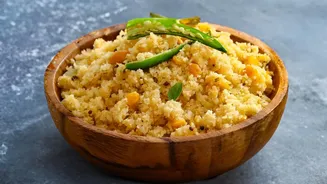
This is the version most people recognize as the quintessential upma. Made from fine, dry-roasted semolina (rava or sooji), it’s the comforting baseline against which all others are measured. The preparation is straightforward: a tempering of mustard
seeds, urad dal (split black gram), and chana dal (split chickpeas) sizzles in oil, followed by curry leaves, green chillies, and ginger. Onions are a common addition for sweetness. The beauty of the classic rava upma lies in its simplicity. Vegetables are often used sparingly, if at all, with maybe a sprinkle of green peas or finely diced carrots to add a pop of colour and texture without overpowering the delicate flavour of the roasted grain. The final consistency is soft and fluffy, never sticky. It’s a quick, reliable, and deeply satisfying breakfast enjoyed across southern India.
2. The Flavour Bomb: Khara Bath (Karnataka)
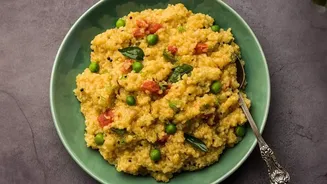
Head to Karnataka, and upma gets a serious flavour upgrade. Khara Bath, as it's known here, is a richer, spicier, and more aromatic version that often stands as a meal in itself. While it also uses roasted rava as its base, the similarity often ends there. The key differentiator is the generous use of vegetables like carrots, beans, and tomatoes, which are sautéed with the onions. More importantly, Khara Bath gets its signature taste from a special spice blend, often a vangi bath powder or a similar masala mix, which infuses the dish with a complex, savoury heat. A generous amount of ghee and a final squeeze of lemon juice brighten the flavours, creating a dish that is soft, moist, and bursting with taste. It’s famously served alongside its sweet counterpart, Kesari Bath, in a combination known as 'Chow Chow Bath'.
3. The Chewy Delight: Sabudana Khichdi (Maharashtra)
While not technically an 'upma' by name, Maharashtra's Sabudana Khichdi fills the exact same breakfast niche and is a fascinating study in grain variation. Here, the base isn't a flour but tapioca pearls (sabudana). After being soaked, these pearls turn translucent and chewy when cooked. The flavour profile is distinctly different from its semolina-based cousins. The primary taste comes from coarsely crushed roasted peanuts, which add both flavour and a much-needed textural contrast to the soft sabudana. The tempering usually involves cumin seeds and green chillies. Boiled and cubed potatoes are almost always included, making the dish even more substantial. A final garnish of fresh coriander and a squeeze of lemon juice ties it all together. It's a beloved dish, especially during fasting periods (vrat), but is a popular breakfast year-round.
4. The Noodle Twist: Semiya Upma (Across India)
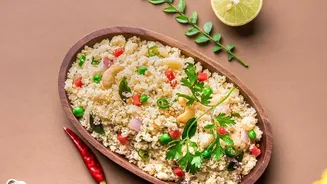
A popular and relatively modern variation, Semiya Upma swaps semolina for vermicelli noodles (semiya). This change in the primary ingredient results in a completely different texture. Instead of a soft porridge, you get distinct, noodle-like strands, making it a favourite among children and adults alike. The cooking process is similar to rava upma, starting with a standard tempering of mustard seeds, dals, and curry leaves. It is often packed with vegetables like carrots, peas, beans, and onions, which make it a colourful and nutritious meal. Because vermicelli cooks faster than rava, it’s an even quicker option for busy mornings. Its appeal is widespread, and while it originated in the south, Semiya Upma is now a common breakfast item across the entire country, appreciated for its light texture and ability to absorb flavours well.
5. The Hearty Grain: Arisi Upma (Tamil Nadu)
For a truly traditional and rustic experience, look no further than Tamil Nadu's Arisi Upma. This version takes us back to the roots of the word 'upma', which translates to salted flour or grain. Here, the grain is coarse, broken raw rice, often ground at home with a bit of toor dal (pigeon peas), black pepper, and cumin seeds. This rice-dal mixture gives the upma a much heartier, coarser texture compared to the light fluffiness of rava. The flavour is earthy and mildly spiced, with the pepper and cumin shining through. The tempering is simple, often with just mustard seeds, red chillies, and curry leaves. Vegetables are not typically a central feature, though grated coconut is a common addition at the end. This dish is deeply comforting and offers a glimpse into the diverse grains that have been used for generations before semolina became dominant.