







The Growing Trust Deficit in AI
In the hyper-competitive field of artificial intelligence, there is immense pressure to publish groundbreaking results. This has contributed to what many researchers call a “reproducibility crisis.” A significant portion of AI research, with some reports
suggesting as high as 70%, has been found to be difficult or impossible for independent researchers to reproduce. This doesn’t necessarily mean the findings are fraudulent, but it does create a fog of uncertainty. When other scientists cannot obtain the same results using the same data and methods, it undermines the original claim’s validity. This issue is compounded by AI models that can “hallucinate” or fabricate information, a problem that risks spreading misinformation if left unchecked. The result is a growing trust deficit that could slow down genuine innovation and public adoption.
The Irreplaceable Human Expert
The first line of defense against questionable research has always been peer review, a process where experts in a field scrutinize a study before it is published. In the age of AI, this human element is more critical than ever. While AI can analyze data at a scale humans cannot, it often lacks the nuanced understanding of context, ethics, and real-world implications. An experienced researcher can spot subtle flaws in methodology, question underlying assumptions, and interpret results in a way that a machine cannot. They bring a layer of critical thinking that is essential for validating not just the 'what' but the 'why' and 'how' of a research claim. This human oversight acts as a crucial safeguard, ensuring that research is not just technically sound but also meaningful and responsible.
Enter Formal Verification Systems
Alongside human expertise, a powerful set of computational tools known as “formal methods” is becoming a key part of the solution. Think of formal verification as a way of mathematically proving that a system will behave as expected. Instead of relying only on testing, which can only cover a limited number of scenarios, formal methods use logic and mathematical models to provide guarantees about an AI system’s behavior across all possible situations. Techniques like model checking, proof assistants, and static analysis can systematically explore an AI model to ensure it adheres to predefined safety and correctness properties. This is particularly vital for high-stakes applications like autonomous vehicles or medical diagnostics, where errors can have severe consequences.
A Powerful Combination for Trust
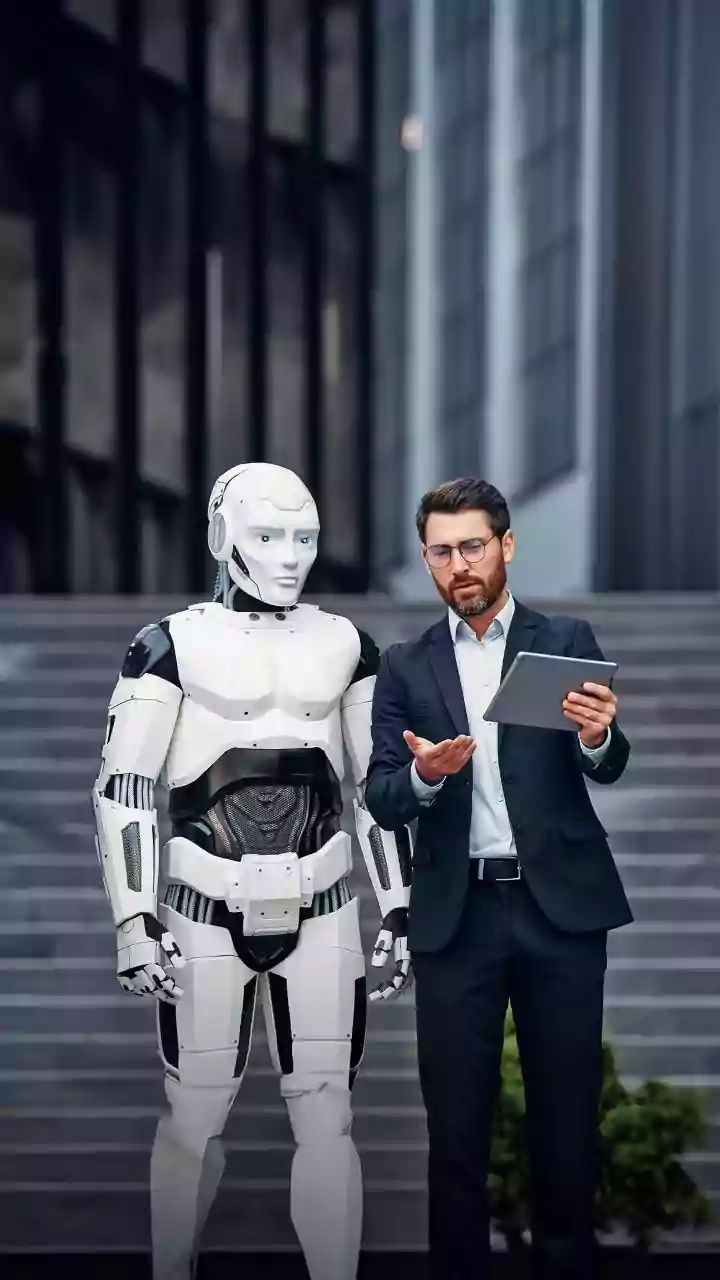
Neither human experts nor formal systems alone are a perfect solution. The true strength lies in their combination. Human experts excel at understanding context, ethics, and high-level goals, but they can miss intricate, code-level vulnerabilities. Formal systems, on the other hand, are brilliant at exhaustively checking for logical and mathematical errors but cannot judge whether the initial goal of the research is sound or ethical. When used together, they create a robust, multi-layered verification process. Experts can define the critical properties that matter—such as safety, fairness, and reliability—and formal systems can then rigorously verify that the AI system meets those specifications. This combination allows for a level of confidence and security that neither approach could achieve on its own.
Why Building Credible AI Matters
The quest for credible AI is not just an academic exercise; it has profound real-world consequences. For AI to be safely integrated into society—in our hospitals, financial systems, and transportation—it must be built on a foundation of trust. Unverified claims and reproducible failures erode public confidence and can lead to the dismissal of valuable research. Businesses risk significant legal and reputational damage from deploying unchecked AI that generates false information or biased outcomes. By embracing a culture of rigorous verification, the AI community can ensure that its innovations are not only powerful but also safe, reliable, and worthy of the public’s trust. This commitment is essential for unlocking the true potential of artificial intelligence to solve some of the world's most pressing challenges.