







A Superstar at a Crossroads
In the late 1990s, Amitabh Bachchan was not the universally revered icon we know today. The legendary 'angry young man' of the 70s and 80s was facing a severe career slump. A string of films had underperformed, and his production company, ABCL, had incurred
massive financial losses, pushing him to the brink of bankruptcy. For a megastar of his stature, the future seemed uncertain. Simultaneously, Indian television was a different world, dominated by daily soaps. The idea of a film superstar, especially one of Bachchan’s magnitude, transitioning to the small screen was almost unthinkable; it was widely perceived as a career demotion. Friends, family, and industry advisors all warned him against it.
The Billionaire Gamble
Enter Star Plus, a channel eager to make its mark with a new, high-stakes format adapted from the wildly popular British show, 'Who Wants to Be a Millionaire?'. Sameer Nair, the programming head at Star Plus, was convinced that the show needed a host with immense gravitas and household appeal. While younger stars like Shah Rukh Khan were popular with the youth, Nair’s strategic insight was that the person controlling the television remote in most Indian homes was the mother. For that generation, Amitabh Bachchan was the ultimate hero. Nair was certain: it had to be Bachchan. He approached the hesitant star in January 2000, armed with a VHS tape of the original show, making a case that this was the future.
A Trip to London Changes Everything
Despite Nair’s conviction, Bachchan remained undecided for months. The industry was deeply skeptical. Critics dismissed the concept as the "worst idea in the history of ideas," questioning who would watch a serious quiz show in primetime. To overcome the superstar's hesitation and prove their commitment to quality, Nair and his team flew Bachchan to London to witness a live taping of 'Who Wants to Be a Millionaire?'. Seeing the grand scale, meticulous production, and electric atmosphere firsthand was the turning point. On the flight back, Bachchan finally agreed, with one condition: the Indian version had to be produced with the exact same world-class standards, with no corners cut.
The 'Unusual' Choice Pays Off
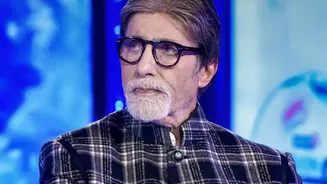
The project was a monumental risk. 'Kaun Banega Crorepati' was reportedly ten times more expensive than any other show on Indian television at the time. However, when it premiered in July 2000, the result was immediate and explosive. The nation was captivated. Streets would empty out at 9 PM as families gathered to watch. Bachchan, with his perfect blend of English and Hindi, his empathetic connection with contestants, and his iconic 'Computer-ji', was not just a host; he was a phenomenon reborn. The show shattered viewership records, catapulted Star Plus to the number one channel, and single-handedly resurrected Amitabh Bachchan's career.
A Legacy Cemented
The success of KBC marked Bachchan's 'second coming'. It transformed his image from an aging film hero into a beloved patriarch and a figure of wisdom and aspiration in every Indian household. He reconnected with the public on a personal level, which fueled his return to film with renewed vigour in movies like 'Mohabbatein'. The show proved that television was not a step down but a powerful medium capable of reshaping legacies. When Shah Rukh Khan took over for a single season, the show's ratings dipped, underscoring that the magic was not just in the format, but in the irreplaceable bond Bachchan had forged with his audience.