





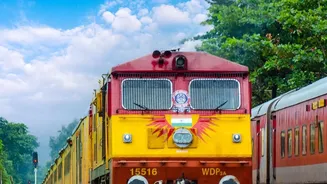


The Vision: A High-Speed Northern Network
The project in question is a proposed high-speed rail network intended to connect Delhi with key cities across northern and eastern India, including Agra, Lucknow, Varanasi, and potentially extending to Guwahati. The vision, announced by the Railway Minister,
promises to drastically cut travel times — for example, reducing the Delhi-Varanasi journey to under four hours. This initiative is part of a larger national plan to build several high-speed corridors, managed by the National High Speed Rail Corporation Limited (NHSRCL), the government body responsible for these projects. The goal is to boost economic activity, tourism, and passenger mobility across some of the country's most populous regions.
Stage 1: The Detailed Project Report (DPR)
Before any soil is turned, every major infrastructure project begins with a Detailed Project Report, or DPR. This is not just a simple plan; it's a comprehensive document that forms the entire foundation of the project. Consultants and engineers conduct extensive surveys to determine the technical feasibility, finalise the route alignment, identify station locations, and assess environmental and social impacts. The DPR also includes a meticulous cost estimate and a financial analysis to prove the project's viability. For the Delhi-Varanasi section, the DPR has already been submitted to the Ministry of Railways, marking the completion of this crucial first phase.
Stage 2: The Labyrinth of Approvals
This is where the distinction in the headline becomes critical. An 'approval' for a project like this is not a single event but a multi-step process. After the DPR is submitted to the Ministry of Railways, it undergoes intense scrutiny. If the ministry is satisfied, it doesn't mean construction starts tomorrow. The proposal must then secure financial sanction from various government bodies, including the Ministry of Finance and, for a project of this magnitude, the Union Cabinet. Recent news indicates that the Prime Minister has given approval for the northern corridor, which is a significant political green light, but it represents the start of the formal sanctioning process, not the end. This stage also requires securing consent and cooperation from every state government the corridor passes through.
Stage 3: The Land Acquisition Hurdle
Once all governmental approvals are in place, the project faces what is often its biggest and most time-consuming challenge: land acquisition. The proposed 459-km Delhi-Amritsar corridor, for example, will pass through numerous cities and villages across multiple states. The NHSRCL must acquire thousands of acres of land, which can be a complex process involving negotiations with landowners, legal procedures, and providing compensation and rehabilitation. The experience with the Mumbai-Ahmedabad corridor, India's first bullet train project, shows that land acquisition can face significant delays due to legal challenges and local opposition, affecting the overall project timeline.
Stage 4: Tenders, Construction, and Testing
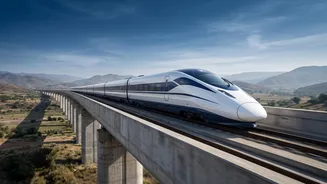
With land in hand, the physical construction can finally begin. This phase starts with floating tenders for various components, like building the elevated viaducts, bridges, tunnels, and stations. This is followed by the highly technical work of laying the standard gauge tracks and installing the advanced signalling and electrical systems required for trains running at 320 km/h. As seen with the Mumbai-Ahmedabad project, construction is a monumental effort that takes several years. After the civil work is complete, the train sets themselves must undergo rigorous testing on the corridor for months to ensure safety and performance before they can be cleared for public service.