






The All-Natural Appeal
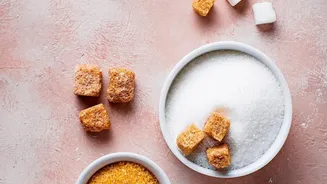
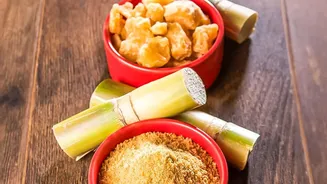
Jaggery’s reputation stems from its simple production. It's made by boiling raw sugarcane juice or palm sap until it solidifies, a process that avoids the intense chemical refining used for white sugar. This minimal processing means jaggery retains molasses,
a syrupy byproduct that is stripped away from regular sugar. The presence of molasses gives jaggery its characteristic golden-to-dark-brown colour and a host of micronutrients that are absent in its refined counterpart. This 'natural' image leads many to believe it is a fundamentally healthier choice, especially for managing blood sugar.
The Uncomfortable Truth: Sugar is Sugar
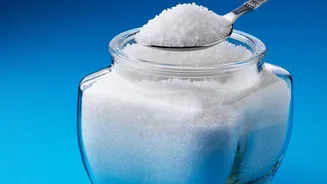
Despite its wholesome image, the core component of jaggery is sucrose—the very same molecule that makes up table sugar. Jaggery is composed of 65-85% sucrose, with the remainder being water, minerals, and invert sugars (glucose and fructose). When you consume it, your body breaks down this sucrose into glucose, which then enters your bloodstream. The metabolic effect is, therefore, very similar to consuming white sugar. For people with diabetes or those monitoring their sugar intake, this is a critical point. Your body doesn't really distinguish between the sucrose from a 'natural' source and that from a refined one; the impact on blood glucose levels is largely the same.
The Glycemic Index Surprise
The Glycemic Index (GI) is a scale that ranks carbohydrates on how quickly they raise blood glucose levels. Foods with a high GI cause a rapid spike. Herein lies the biggest myth about jaggery. While white sugar has a GI of around 65, sugarcane jaggery has a GI that is often reported to be even higher, around 84. This means it can raise your blood sugar faster than refined sugar. The reason for this surprising fact lies in jaggery’s composition, which includes free glucose and fructose (invert sugars) released during boiling. These are absorbed more rapidly than the bonded sucrose in white sugar, leading to a quicker glucose spike. So, for anyone needing to maintain stable blood sugar, jaggery is not a safer bet.
What About the Minerals?
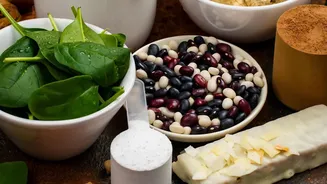
Proponents of jaggery correctly point out its mineral content. It contains small amounts of iron, magnesium, potassium, and calcium, which are completely absent in white sugar. For instance, 100 grams of jaggery can contain up to 11 mg of iron, a significant portion of the daily requirement. However, the catch is the quantity. You would need to consume a very large and unhealthy amount of jaggery—around 100 grams, which packs nearly 400 calories—to get these mineral benefits. In the small amounts typically used to sweeten tea or a dessert (a teaspoon or two), the nutritional contribution is minimal. Relying on jaggery for minerals is impractical and would mean consuming excessive sugar.
The Verdict: Moderation Over Substitution
So, is jaggery 'healthier' than sugar? It is, but only marginally. It contains more nutrients, but it is still a high-calorie sweetener that spikes blood sugar. For individuals with diabetes, pre-diabetes, or insulin resistance, substituting sugar with jaggery is not a solution and can be just as problematic. The consensus among health experts is that jaggery should be treated just like any other sugar: a treat to be consumed in strict moderation. It can add a unique flavour and a few extra nutrients to your diet that white sugar cannot, but it is not a 'free food' or a license to indulge your sweet tooth without consequences. The focus should be on reducing overall added sugar intake, regardless of the source.