






An Aging Powerhouse in Need of an Upgrade
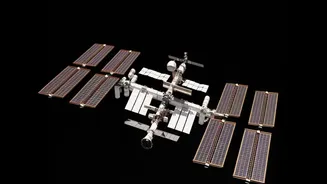
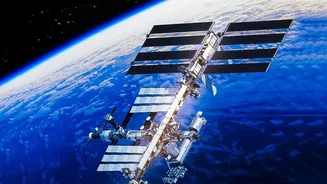
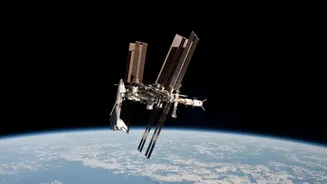
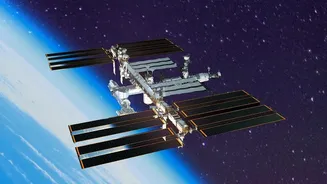
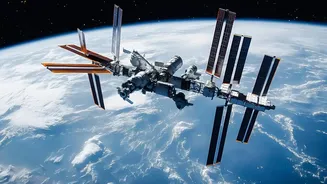
For over two decades, the International Space Station (ISS) has been a beacon of scientific research and international cooperation, orbiting Earth at 17,500 miles per hour. Its original power system, a marvel of engineering for its time, consisted of eight
massive solar arrays, each with its own set of nickel-hydrogen batteries. These arrays provided the electricity needed to run life support, conduct experiments, and keep the lights on. However, after years of service in the harsh environment of space, these original components began to show their age. Flight controllers noticed a degradation in power output, a natural decline for hardware that had exceeded its 15-year design life. To ensure the station could continue its vital mission through its planned retirement in 2030, a comprehensive upgrade was necessary.
A Modern Solution Takes Flight
The solution involved two key technological advancements: new lithium-ion batteries and ISS Roll-Out Solar Arrays (iROSAs). The battery replacement effort, which began as early as 2017, saw astronauts swap out 48 old nickel-hydrogen batteries for 24 more efficient and powerful lithium-ion units. Then came the iROSAs, a newer, more flexible solar array technology. Unlike the station's original rigid panels, the iROSAs were designed to be rolled into a compact cylinder for launch and then unfurled like a measuring tape once in position. These new arrays are smaller than the old ones but are significantly more efficient, providing a substantial power increase. They were designed to be installed over six of the station's eight existing power channels, augmenting the legacy arrays rather than replacing them entirely.
An Epic Series of Spacewalks
Installing this new hardware 250 miles above Earth was no simple task. It required a meticulously choreographed series of spacewalks that began in June 2021. Over the course of five years, multiple teams of astronauts ventured outside the station to complete the job. The entire augmentation project required a total of 18 spacewalks to prepare the power channels and install the eight new arrays. The final phase of this monumental effort took place in late 2026, with NASA astronaut Anil Menon and Canadian Space Agency astronaut Joshua Kutryk performing the last two installations. Their final spacewalk on November 5, 2026, saw the eighth and final iROSA successfully unfurled, marking the completion of the entire power upgrade program. The seven-hour spacewalk was the 286th in support of station assembly and maintenance.
Powering the Future of Science in Orbit
With the upgrades complete, the station's total available power has been boosted by about 30 percent, rising from approximately 160 kilowatts to 215 kilowatts. This significant increase in electricity is crucial for several reasons. It ensures the station's core life support and operational systems have a steady power supply. More importantly, it provides more power for the wide array of scientific experiments conducted on board. Researchers can now run more complex, power-intensive studies in fields like materials science, biotechnology, and Earth observation. This ensures the ISS can continue to serve as a world-class microgravity laboratory, producing discoveries that benefit humanity for the remainder of its time in orbit. As astronaut Anil Menon noted, the new arrays are 'empowering all this research that we do and everything that we do to transform space'.