




The South Indian Blueprint
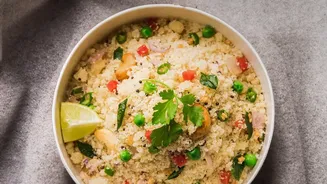
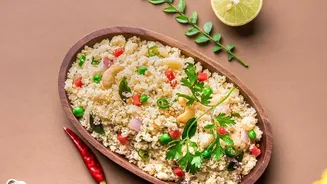
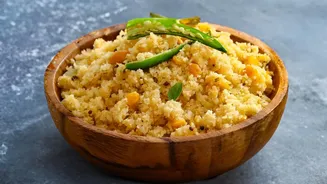
The most widely recognized version of upma originates in Southern India. At its heart, it's a simple, quick-to-cook porridge made from dry-roasted semolina, or rava. The cooking process is what defines it: a tempering of mustard seeds, lentils (urad dal
and chana dal), curry leaves, and perhaps some ginger and green chillies sizzles in hot oil or ghee. Boiling water is then added, followed by the roasted rava, which is stirred until it absorbs the liquid and becomes fluffy. This basic recipe is delicious on its own but also serves as the foundation upon which countless regional variations are built. It is a dish born from home kitchens, designed for speed and comfort.
Karnataka's Fiery Khara Bath
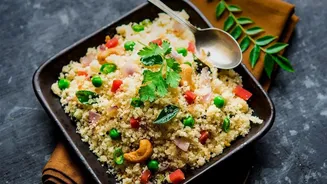
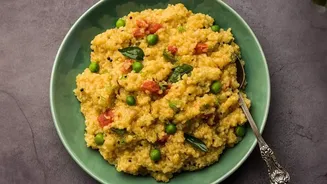
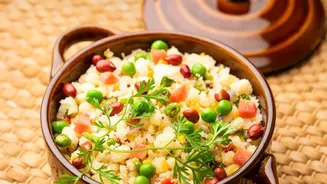
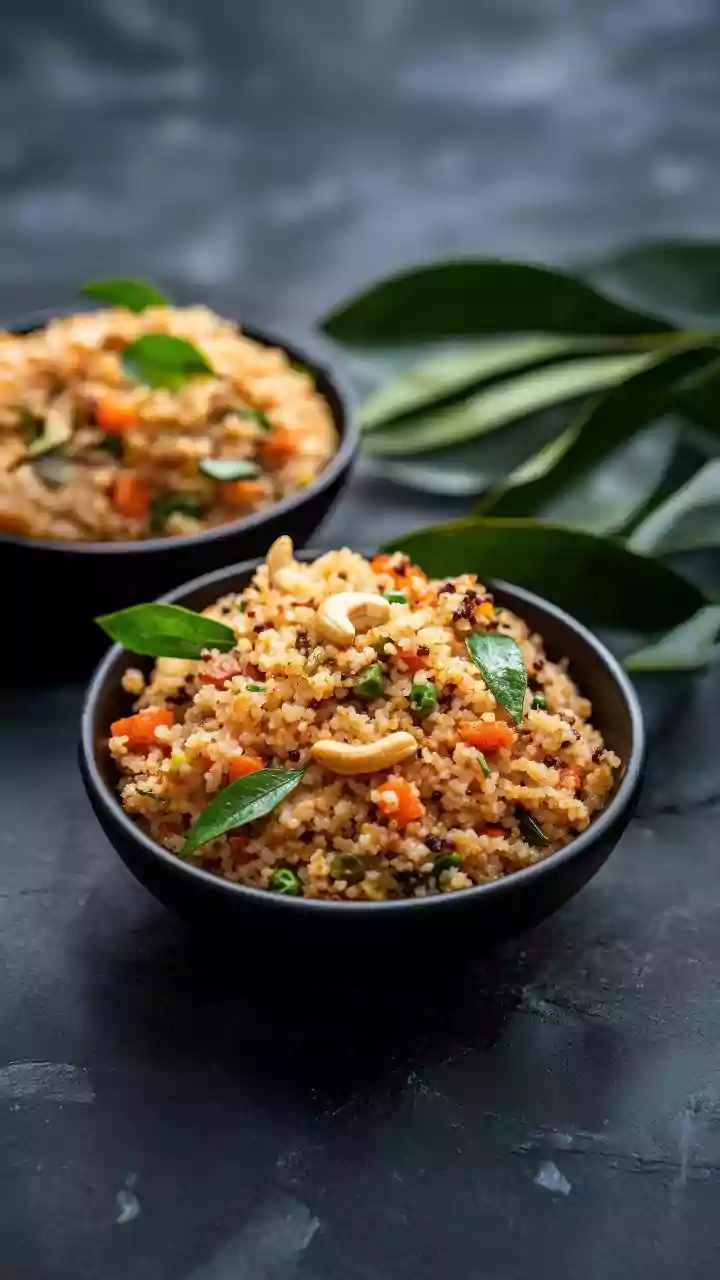
Travel to Karnataka, and the familiar upma transforms into 'Khara Bath'. While it looks similar, the taste is distinctly more complex and spicier. The secret lies in a special masala powder, often a version of 'vangi bath' powder or a unique house blend that includes roasted dals for aroma. This powder, rich with spices, gives the dish its signature flavour and a slightly darker hue. Khara Bath is often loaded with finely chopped vegetables like carrots, beans, and peas, making it a more substantial, one-pot meal. In many Bengaluru-Mysuru darshinis, it is famously served as part of a 'Chow Chow Bath' — a plate featuring a scoop of savoury Khara Bath alongside a scoop of its sweet counterpart, Kesari Bath (a sweet semolina pudding).
Maharashtra's Tangy Sanja
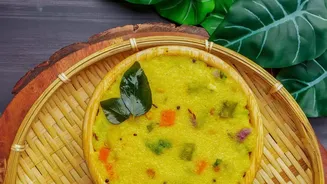
In Maharashtra, upma often goes by the name 'Sanja'. The core difference here is the use of buttermilk ('taak') or curd, either in part or as a full replacement for water. This imparts a subtle, pleasant tanginess that cuts through the richness of the semolina. Sanja is also distinctly yellow, thanks to the addition of turmeric powder, an ingredient not always prominent in its southern cousins. Often studded with peanuts for crunch and garnished with fresh coconut, Sanja offers a flavour profile that is uniquely comforting and representative of Maharashtrian home cooking. It’s a perfect example of how one key ingredient change—in this case, the cooking liquid—can completely redefine a dish.
Andhra's Robust Tomato Upma
The Andhra and Telangana versions of upma often place the humble tomato at the centre of the flavour profile. Known as Tomato Upma or Tomato Bath, this variation is vibrant in both colour and taste. A generous quantity of ripe tomatoes are sautéed with the onions and spices until they break down into a rich, tangy base before the water and rava are added. This not only gives the upma a reddish-orange tint but also infuses it with a deep umami and tangy flavour, reducing the need for an accompanying chutney. Loaded with vegetables and sometimes spiced more assertively, this version is a hearty, flavour-packed meal in itself.
Kerala and Tamil Nadu's Coconut Touch
In the coastal states of Tamil Nadu and Kerala, coconut often finds its way into the upma. In Kerala, it's common to find grated coconut mixed into the upma itself or used as a generous garnish, adding a subtle sweetness and a richer texture. Some preparations even use thin coconut milk ('thengai paal') along with water for cooking, which imparts a delicate, creamy flavour throughout the dish. In Tamil Nadu, while the base remains similar, a squeeze of lemon juice is a common finishing touch, adding a bright, zesty note that lifts the entire dish. These additions reflect the agricultural bounty of the regions, seamlessly integrating local staples into a pan-Indian classic.