


The Language of the Road
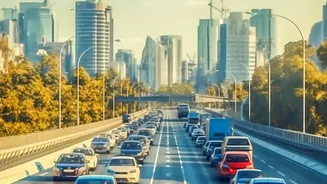
At the heart of this new safety plan is a technology called Vehicle-to-Everything, or V2X. Think of it as a social network for vehicles. Cars, trucks, and even two-wheelers will be able to wirelessly broadcast and receive small packets of data about their
speed, direction, and braking status up to ten times per second. This isn't about streaming movies; it's about sharing critical safety information in milliseconds to prevent accidents before they happen. The Ministry of Road Transport and Highways (MoRTH) has recently proposed a phased rollout for these systems, aiming to make roads safer by creating a web of communication between all road users.
A Clearer Path Forward: C-V2X
For years, two competing technologies vied to become the standard: DSRC, which is based on Wi-Fi, and Cellular-V2X (C-V2X), which uses cellular technology. The new Indian plan provides clarity by choosing C-V2X. This decision aligns India with a growing global consensus, including in the US and China. The advantage of C-V2X is its clear evolution path with 5G technology, offering longer range and better performance even when obstacles block the line of sight—a common scenario on crowded city streets. By choosing a single standard, the government ensures that a Maruti can talk to a Mahindra, a Tata truck, and an Ather scooter, creating a unified safety ecosystem.
How This Plan Makes a Difference
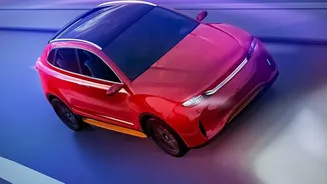
The government's proposal, centered on the new Automotive Industry Standard (AIS) 230, sets a clear timeline. From October 2028, it will be mandatory for all new vehicles—including two-wheelers, cars, and trucks—to be equipped with Vehicle-to-Vehicle (V2V) communication systems. This is a significant step. While many modern cars have Advanced Driver-Assistance Systems (ADAS) that use cameras and radar, V2X acts as a new kind of sensor that can see around corners and through other vehicles, providing warnings about unseen dangers. It can alert a driver to a fast-approaching emergency vehicle, a pedestrian stepping out from behind a bus, or a potential collision at a blind intersection.
Real-World Safety for Indian Roads
The potential impact in India, which has one of the highest rates of road fatalities in the world, is enormous. V2X technology is uniquely suited to address common accident scenarios. For example, it can warn a driver of sudden braking several cars ahead on a highway, a major cause of pile-ups. On a two-wheeler, a rider could get an alert about a car making a sudden lane change. The system also includes Vehicle-to-Infrastructure (V2I) communication, where traffic lights can communicate with cars to optimize flow and prevent red-light violations. Pilot programs have already shown benefits in emergency vehicle routing and pedestrian safety.
The Roadblocks Ahead
Despite the clear benefits, the journey to fully connected roads has challenges. A key hurdle is the transition period. For the system to be most effective, a large number of vehicles need to be equipped. In the initial years, new V2X-enabled cars will share the road with millions of older, non-connected vehicles. This means traditional sensors like cameras and radar will remain essential. Furthermore, ensuring the security of this data network is paramount to prevent hacking and protect driver privacy. The government and industry must work together to build a robust and secure framework to earn public trust.