





The Old Way: Disposable Dreams
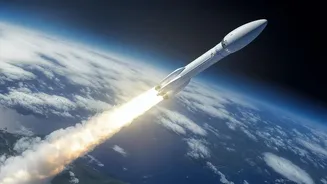
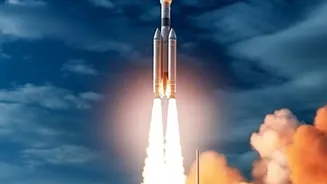
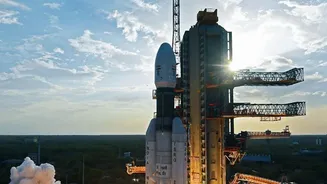
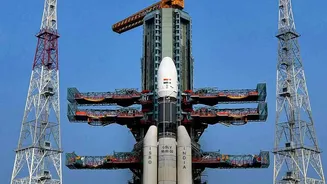
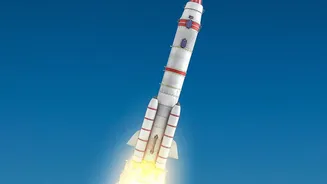
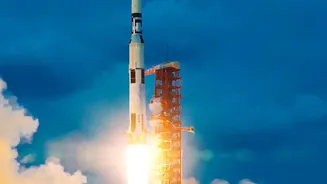
Traditionally, launching anything into orbit was an exercise in colossal waste. Rockets were designed as multi-stage vehicles, and after each stage finished its job of pushing the payload higher and faster, it would detach and fall back to Earth, burning
up on reentry or crashing into the ocean. The most powerful and expensive part, the first-stage booster with its array of complex engines, was discarded after just a few minutes of use. Imagine buying a brand-new aeroplane for a single flight from Delhi to Mumbai and then scrapping it on the tarmac. That was the reality of spaceflight, a model that kept access to orbit exclusively for governments and a handful of large corporations with astronomical budgets.
The New Paradigm: What is Rocket Reusability?
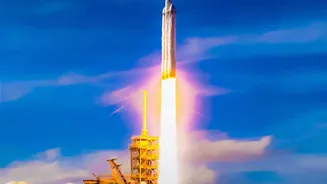
Rocket reusability turns this model on its head. The core concept is simple: design the most expensive parts of the rocket to be recovered, refurbished, and flown again. The primary focus has been on the first-stage booster, which accounts for a huge portion of the vehicle's total cost. Instead of letting it become debris, companies like SpaceX have pioneered methods to safely land this massive component after it completes its mission. Since the first successful landing of an orbital-class booster in 2015, the technology has matured from a wild experiment into a routine part of space operations.
How Booster Recovery Actually Works
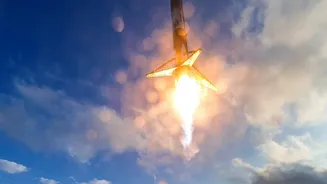
Landing a 15-storey structure travelling at hypersonic speeds is a monumental engineering feat. After separating from the second stage, the booster performs a series of precise manoeuvres. First, it flips around and fires some of its engines in a 'boostback burn' to reverse its course. As it descends back through the atmosphere, four large titanium 'grid fins' deploy to steer the booster, much like a skydiver uses their arms. Another engine burn slows it down to survive the intense heat of re-entry. Finally, as it approaches its landing target—either a concrete pad on land or an autonomous drone ship at sea—a final landing burn brings it to a gentle touchdown on its deployable landing legs. Once secure, it's taken to a hangar for inspection, refurbishment, and preparation for its next flight.
The Economic Revolution
The impact on cost has been nothing short of revolutionary. A traditional expendable launch could cost well over $100 million. With reusability, companies like SpaceX offer launches for around $67 million, cutting costs dramatically. The cost to launch a kilogram of payload to orbit, which was once over $10,000, has fallen to below $2,000 in some cases. Projections suggest it could eventually drop below $100 per kilogram. This isn't just about saving money on one launch; it's about changing the entire economic model. By spreading the manufacturing cost of a booster over 15 or more flights, the per-launch hardware cost plummets. This has enabled the creation of massive satellite 'mega-constellations' like Starlink, which would be financially unfeasible with single-use rockets.
India’s Leap: ISRO's Ambitious Plans
India’s own space agency, ISRO, is also a key player in this new race, though it is taking a different approach. ISRO is developing a Reusable Launch Vehicle-Technology Demonstrator (RLV-TD). Unlike the vertical-landing boosters of SpaceX, ISRO's concept is a winged vehicle—somewhat like a small space shuttle—that launches vertically but is designed to land horizontally on a runway like an aeroplane. ISRO has already conducted successful experiments, including a critical autonomous landing test in 2023. The goal is to eventually create a Two-Stage-to-Orbit (TSTO) vehicle where both stages are reusable, potentially slashing launch costs by an order of magnitude and positioning India as a highly competitive force in the global launch market.