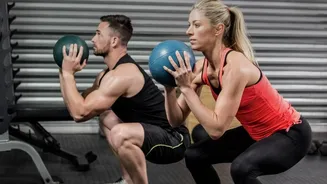








Why Warming Up Is Non-Negotiable
Before we get into the steps, let's talk about why a warm-up is so crucial. Think of your body like a car on a cold morning; you need to let the engine run for a bit before you can speed down the highway. A proper warm-up does exactly that for your muscles
and cardiovascular system. Its main purpose is to gradually increase your heart rate and circulation. This boosts blood flow to your muscles, delivering the oxygen and nutrients they need to perform efficiently and safely. It also raises your body's core temperature, making muscles more pliable and less susceptible to pulls or tears. This pre-workout preparation, sometimes called the anticipatory heart rate response, ensures your body is ready for the demands of more strenuous activity, reducing the risk of injury and improving overall performance.
The Power of Dynamic Movement
For years, the standard advice was to hold long, static stretches before a workout. However, modern exercise science now champions dynamic warm-ups—active movements that take your body through a full range of motion. Unlike static stretching, which is best saved for your cool-down, dynamic movements actively prepare your muscles for work. Dance is, at its core, a series of dynamic movements. It involves continuous motion that loosens up joints and muscles simultaneously. Movements like hip circles, torso twists, and leg swings are staples in both dance and dynamic warm-up routines, designed to improve mobility and activate key muscle groups before you start your main workout.
More Than Just a Physical Boost
The benefits of a dance warm-up extend beyond the purely physical. One of the biggest advantages is the 'fun factor'. When a warm-up feels less like a requirement and more like a joyful activity, you're more likely to do it consistently. Studies have shown that dance can improve psychological well-being, reduce stress, and boost self-confidence. Engaging with music and movement can serve as a form of moving meditation, helping you let go of daily stressors and focus on the present moment. This mental shift can make your entire workout feel more engaging and less like a task. The release of endorphins—often called "feel-good" chemicals—during dance can elevate your mood, helping to reduce feelings of anxiety and making exercise a more positive experience overall.
A Simple 5-Minute Dance Warm-Up
Ready to try it? You don't need to be a professional dancer. The goal is simply to move your body to a rhythm. Put on a song with a good beat and try this simple sequence for 30-60 seconds per move: 1. Marching in Place with Arm Circles: Start by marching to the beat. As you lift your knees, circle your arms forward for 30 seconds, then backward for 30 seconds. This warms up the shoulders and gets your heart rate climbing. 2. Hip Circles and Torso Twists: Stand with your feet shoulder-width apart and place your hands on your hips. Gently rotate your hips in a circle, first clockwise, then counter-clockwise. Follow this with standing torso twists, rotating your upper body from side to side to mobilize your spine. 3. Step-Taps with Shoulder Rolls: Step out to one side and tap your other foot next to it, then repeat on the other side. As you do this, roll your shoulders backward and then forward to release tension in your neck and upper back. 4. Leg Swings: Holding onto a wall or chair for support, swing one leg forward and backward like a pendulum. After 30 seconds, switch to the other leg. This is excellent for opening up the hips and warming up the hamstrings.