






The Familiar World of Indian Taxation
For most salaried and professional individuals in India, the financial year is a cycle of earning, saving, and tax planning. The Indian system is a progressive one, meaning tax rates increase as income rises. It's a complex web of income slabs, deductions
under various sections of the Income Tax Act, and obligations like Tax Deducted at Source (TDS). The annual ITR filing process is a significant event, requiring meticulous documentation of income from salaries, property, capital gains, and other sources to ensure compliance and claim refunds. This system, governed by the Central Board of Direct Taxes, is designed to fund the nation's infrastructure, social schemes, and governance. It's a detailed, often cumbersome, but essential part of the country's economic framework.
Welcome to Monaco: The Zero-Income-Tax State
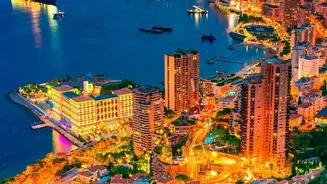
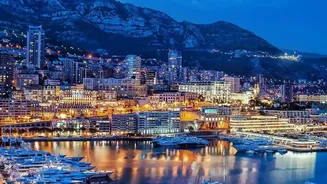
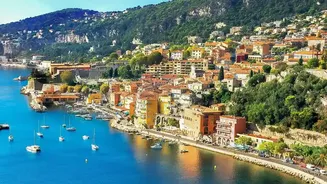
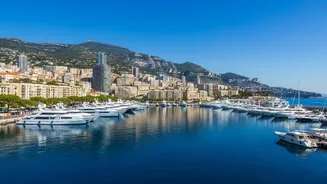
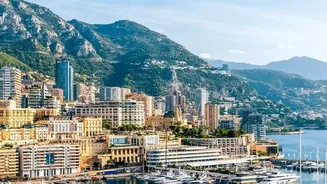
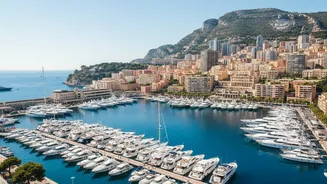
Now, imagine a country where residents pay zero personal income tax. This isn't a fantasy; it's the reality in Monaco, a tiny, sovereign city-state on the French Riviera. Since 1869, the principality has upheld a policy of not levying any tax on the income of its residents. This rule applies to salaries, investment income, and capital gains. The only major exception is for French nationals, who, due to a 1963 treaty, are still subject to French income tax. For every other nationality, living in Monaco means freedom from the annual headache of income tax returns, a concept that seems worlds away from the Indian system.
How Does Monaco Survive Without Income Tax?
If citizens don't pay income tax, how does the government keep the lights on, run one of the world's largest police forces per capita, and maintain its pristine infrastructure? The answer lies in a diversified revenue strategy. A significant portion of the state's budget comes from a 20% Value Added Tax (VAT) on goods and services, which is aligned with the French system. Another major source is corporate tax. A tax of around 25% is levied on the profits of companies that generate more than 25% of their turnover outside of Monaco. Revenue also flows from state-owned enterprises, including a large stake in the company that runs the famous Monte Carlo Casino, and from real estate transactions, which are among the most expensive in the world.
The Catch: Paradise Comes at a Price
Before you pack your bags, it's crucial to understand that moving to Monaco isn't simple or cheap. Gaining residency is a rigorous process that requires proving you have a place to live (either by renting or buying), and demonstrating sufficient financial means. This often involves depositing a substantial sum, typically at least €500,000 to €1 million, in a Monegasque bank. Furthermore, the cost of living is exceptionally high. Monaco consistently ranks as one of the most expensive real estate markets globally. While you save on income tax, the entry barrier is immense, ensuring the principality remains an exclusive enclave for the ultra-wealthy. Residents must also spend significant time there—often at least 183 days a year—to maintain their tax residency status.
A Tale of Two Systems
The contrast between India and Monaco highlights two fundamentally different philosophies of governance and economic structure. India, a large developing nation with a population of over a billion, relies on a broad-based, progressive income tax system to fund extensive public services and development goals. It's a social contract where citizens contribute directly to the nation's running based on their earnings. Monaco, a microstate with a population of under 40,000, has engineered a different model. It has strategically positioned itself as a safe, luxurious haven for the world's wealthiest individuals, funding itself through consumption taxes and corporate activity rather than personal income. One system is built for the needs of a massive, diverse population; the other is tailored for a small, hyper-affluent one.