






First Off, What Are the Artemis Accords?
The Artemis Accords are a set of non-binding principles designed to guide civil space exploration in the 21st century. Established in 2020 by NASA and the U.S. Department of State along with seven other founding nations, the Accords provide a political
commitment to a common set of norms for peaceful and transparent cooperation on the Moon, Mars, and beyond. Key principles include peaceful exploration, transparency, assisting astronauts in distress, sharing scientific data, preserving space heritage, and deconflicting activities to avoid interference. They also reinforce existing international space law, such as the 1967 Outer Space Treaty, while providing more specific guidelines for modern challenges like space resource utilization and mitigating orbital debris.
Who Is Part of This Space Club?
The coalition of signatories has grown rapidly since its inception. What started with eight countries—Australia, Canada, Italy, Japan, Luxembourg, the UAE, the UK, and the US—has now expanded to 71 nations as of late August 2026. The diverse list includes major space powers like France and Germany, emerging space nations like Nigeria and Rwanda, and India, which signed in 2023. Turkey is the seventh Middle Eastern nation to join, following countries like the UAE, Saudi Arabia, and Israel. However, two major spacefaring nations, Russia and China, are notably absent. They are instead pursuing a joint initiative called the International Lunar Research Station (ILRS), creating a separate bloc for lunar exploration and setting the stage for competing visions of space governance.
Why Did Turkey Sign Now?
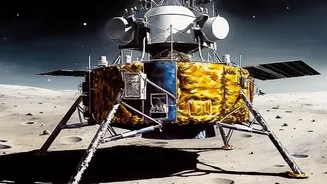
Turkey's decision to join is a strategic move that aligns with its ambitious National Space Program, which was announced in 2021. The country has been steadily building its space capabilities, establishing the Turkish Space Agency in 2018 and successfully sending its first astronaut, Alper Gezeravcı, to the International Space Station in 2024. Ankara is also planning its first lunar mission, AYAP-1, which aims for a hard landing on the Moon's surface. By signing the Accords, Turkey gains access to a broader network of international partners and solidifies its relationship with the U.S. in space activities. The move also enhances its diplomatic standing ahead of hosting the prestigious International Astronautical Congress in October 2026, an event where many Artemis signatories will be present.
What Does This Mean for the Future of Space?
Turkey's inclusion underscores a growing global consensus around the U.S.-led framework for space exploration. As more nations and private companies venture into space, having a shared set of rules becomes crucial to prevent conflict and ensure sustainability. The Accords aim to establish norms for everything from mining lunar resources to managing space traffic. By creating a large coalition of like-minded nations, the Accords are effectively shaping the future of space law and governance. Proponents argue this fosters a safe, predictable, and cooperative environment. Critics, however, have raised concerns that the Accords could favor U.S. interests and sidestep the United Nations' role in developing universal space law. The expansion of the Artemis coalition versus the China-Russia ILRS project highlights a deepening multipolar dynamic, where alliances on Earth are extending into the cosmos.