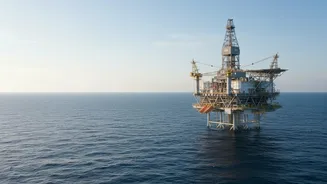









What is 'Samudra Manthan'?
The name itself is a powerful statement. In Hindu mythology, 'Samudra Manthan' was the epic churning of the ocean by gods and demons to obtain the nectar of immortality. The government has aptly named its national offshore exploration scheme after this
legend, framing it as a monumental effort to secure India's energy future. Approved on July 31, 2026, the program is India's largest-ever offshore exploration initiative, backed by a massive Phase-I budget of over ₹84,000 crore. The mission's goal is straightforward but ambitious: to aggressively explore the country's deep and ultra-deepwater seabeds for hydrocarbon reserves, significantly boosting domestic oil and gas production. This push comes as India, the world's third-largest crude oil consumer, aims to slash its heavy reliance on foreign imports and move towards greater self-reliance or 'Aatmanirbhar Bharat'.
The First Drill in the Mahanadi Basin
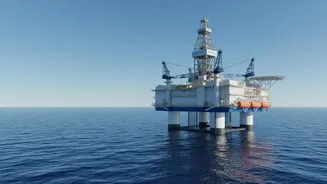
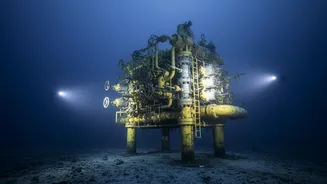
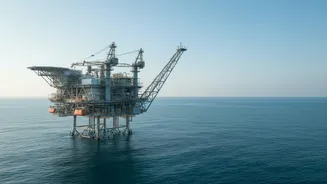
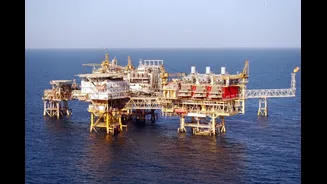
The campaign's first concrete step was taken on July 25, 2026, when the state-owned Oil and Natural Gas Corporation (ONGC) began drilling a deepwater exploratory well in the Mahanadi Basin. The well, officially designated MN-DW18-1-H-D, was 'spudded' (the start of drilling) in a virtual ceremony led by the Union Minister of Petroleum and Natural Gas, Hardeep Singh Puri. Located off the coast of Odisha, approximately 23 nautical miles from Konark, this site was chosen based on promising signs from recent nearby discoveries named Utkal and Konark, which have bolstered confidence in the Mahanadi Basin's potential. This operation is just the first of four deepwater wells planned for the basin, each one designed to systematically map out what could be a treasure trove of energy.
A High-Stakes Quest for Energy Security
The stakes for the Samudra Manthan mission could not be higher. India's rapidly growing economy has a voracious appetite for energy, and currently, a large portion of that demand is met by costly imports. This dependence not only affects the nation's finances but also its strategic autonomy. By unlocking domestic resources, the government hopes to create a more resilient and secure energy landscape. The potential prize is enormous. India's offshore basins are estimated to hold more than 5,600 million metric tons of oil equivalent (MMTOE). To tap into this, the government has opened up nearly one million square kilometers of previously restricted offshore areas for exploration. This isn't just about finding oil; it's about building an entire ecosystem of supporting industries, from seismic data analysis to domestic manufacturing for offshore equipment.
Navigating the Challenges Ahead
While the promise is great, the path is fraught with challenges. ONGC has described this as one of India's "most challenging deepwater exploration campaigns." Deepwater drilling is a technologically complex and enormously expensive endeavor. A single well can cost hundreds of millions of dollars, with no guarantee of success. To support this difficult mission, ONGC established a dedicated Deepwater Exploration Mission Centre, called 'DeepX', in Mumbai earlier in 2026. This center consolidates expertise, advanced technology, and global partnerships to give the campaign the best possible chance of success. The government is also de-risking investment by offering financial support for exploration, hoping to attract private and global players to join the national effort. Every discovery made will be a crucial step toward reducing India's import bill and fortifying its energy independence.