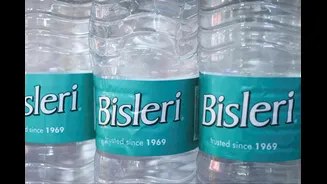






India’s food regulator, FSSAI, is investigating Bisleri, a brand synonymous with bottled water, after a lab assessment raised safety concerns. This has prompted a 'root cause investigation', sparking questions for millions of consumers.
What Prompted the FSSAI's Action?
The Food Safety
and Standards Authority of India (FSSAI) has sanctioned prosecution against Bisleri International after a sample of its packaged drinking water was declared 'unsafe'. The issue originated from a sample taken from the company’s Goa facility in September 2025. An initial test found that the level of bromate, a chemical compound that can form during water ozonation, was slightly above the prescribed limit. Following an appeal by Bisleri, the sample was sent to a higher-level referral laboratory for re-examination. This second analysis found bromate levels to be within the limit but detected the presence of another contaminant group, polynuclear aromatic hydrocarbons (PAHs). Based on these referral lab findings, the FSSAI declared the sample unsafe and initiated further action.
Understanding the 'Root Cause Investigation'
FSSAI has now asked Bisleri to conduct a 'root cause analysis' or RCA. This is more than just a product test; it's a systematic investigation to find out why a failure occurred. Instead of just identifying a contaminated batch, an RCA aims to uncover the fundamental breakdown in the system—whether in the water source, the purification process, bottling, or storage—that allowed the problem to happen in the first place. The goal is to implement corrective actions that prevent the issue from ever recurring, moving from simply reacting to a problem to proactively improving the entire safety system.
What Is Bisleri's Response?
Bisleri has stated that its water remains safe for consumption and has assured full cooperation with the authorities. The company has emphasised that the issue pertains to a single batch manufactured over a year ago, in September 2025, and that no stock from this batch is currently in the market. Bisleri also highlighted what it describes as discrepancies in the lab findings, where the referral lab cleared the sample for bromate but found PAHs, which were not flagged initially. The company states it conducted its own independent tests in February 2026, which found bromate levels to be within limits, and had understood the matter to be closed after submitting these results to FSSAI.
What Does This Mean for Consumers?
For now, the FSSAI's action is specific to the single batch in question (Batch GO 270), which Bisleri confirms is no longer in circulation. There has been no nationwide recall of Bisleri products, and the company's 143 plants remain operational. The Goa Food and Drugs Administration has confirmed that a prosecution case has been filed in court regarding the specific sample and that it has increased surveillance of all packaged water brands in the state. Consumers should rely on official updates from FSSAI for any further guidance. The current action involves legal proceedings and a deeper investigation, not an immediate, widespread product withdrawal.
The Bigger Picture of Water Safety
This incident puts a spotlight on the rigorous standards governing India's massive packaged water industry. FSSAI classifies packaged water as a 'high-risk' food product, subjecting it to stringent oversight. All manufacturers must hold an FSSAI license and are subject to regular inspections and testing. The rules distinguish between 'Packaged Drinking Water' (from sources like municipal supply) and 'Natural Mineral Water' (from protected underground sources), each with its own quality standards. The FSSAI's action against a market leader like Bisleri underscores the regulator's intensifying enforcement to ensure these standards are met across the board.