



Plan Like a Pro
A great stargazing night begins long before it gets dark. Start by researching your destination. Look for designated dark-sky parks or reserves, which are areas specifically managed to reduce light pollution. India is home to a few such places, including
the Hanle Dark Sky Reserve in Ladakh and a dark sky park in Pench Tiger Reserve. Check the weather forecast for clear skies and consult a lunar calendar. The best time for stargazing is during a new moon, as a bright full moon can wash out fainter stars. Pack layers of warm clothing, as even summer nights can get chilly. Finally, familiarise yourself with any local rules or regulations to ensure you're welcome and safe.
The Right Light, The Right Way
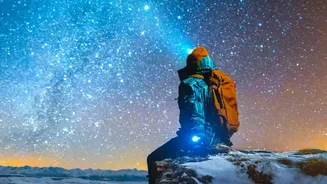
The single most important rule of stargazing etiquette is managing your light. It takes our eyes 20 to 40 minutes to fully adapt to the darkness, and a single flash of white light from a phone screen or a normal torch can ruin your night vision and that of everyone around you. The solution is to use a red light. Red light has a longer wavelength that doesn't trigger the same response in our eyes, preserving our ability to see faint starlight. Many headlamps come with a red light setting, or you can simply cover a standard torch with red cellophane. Use light only when necessary and always point it downwards. When you arrive at a stargazing spot by car, park with your headlights pointing away from the viewing area and avoid unlocking your car, which can flash the lights.
Travel on Durable Surfaces
The 'Leave No Trace' principle of sticking to durable surfaces is just as important at night. When you arrive, set up your blanket, chairs, or telescope on established trails, rock, or dry grass. Avoid walking on fragile vegetation or in areas marked for restoration. This protects delicate ecosystems that can be easily damaged. In the dark, it's easy to wander off a path, so it’s a good idea to arrive before sunset to get a sense of your surroundings. Using reflective markers on your gear can also help you navigate your small area without needing to constantly use a light.
Respect the Nocturnal World
You are a visitor in an environment that is home to countless nocturnal animals. Artificial light and loud noises can disorient and disturb wildlife like owls, bats, and migratory birds that rely on natural darkness for navigation, hunting, and survival. Keep conversations at a low volume to preserve the peace and quiet of the night, which also enhances the stargazing experience for others. Observe any animals from a distance and never use your lights to track them. The goal is to be a silent observer of the sky, not a disruptive presence on the ground.
Pack It In, Pack It Out
This is a simple but critical rule of outdoor ethics. Whatever you bring with you must also leave with you. This includes all food wrappers, drink bottles, and any other waste. Before you leave, do a final sweep of your area with a red light to make sure you haven't forgotten anything. Leaving no trace also extends to what you find. Resist the temptation to take rocks, plants, or other 'souvenirs' from the natural environment. The only things you should leave behind are your footprints, and the only thing you should take are memories and photographs.
Be a Good Cosmic Neighbour
If you're at a popular stargazing spot or a 'star party', being considerate of others is key. Besides controlling your light and noise, give other observers plenty of space. Avoid setting up your equipment in a way that blocks someone else's view. If you're new, don't be afraid to ask questions, but be mindful not to interrupt someone who is deep in observation or astrophotography. A shared passion for the cosmos can create a wonderful sense of community, and a little courtesy goes a long way in ensuring everyone has an awe-inspiring night.