




A New Kind of Lunar Gold Rush
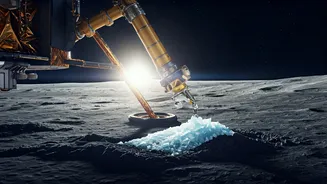
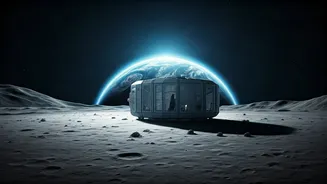
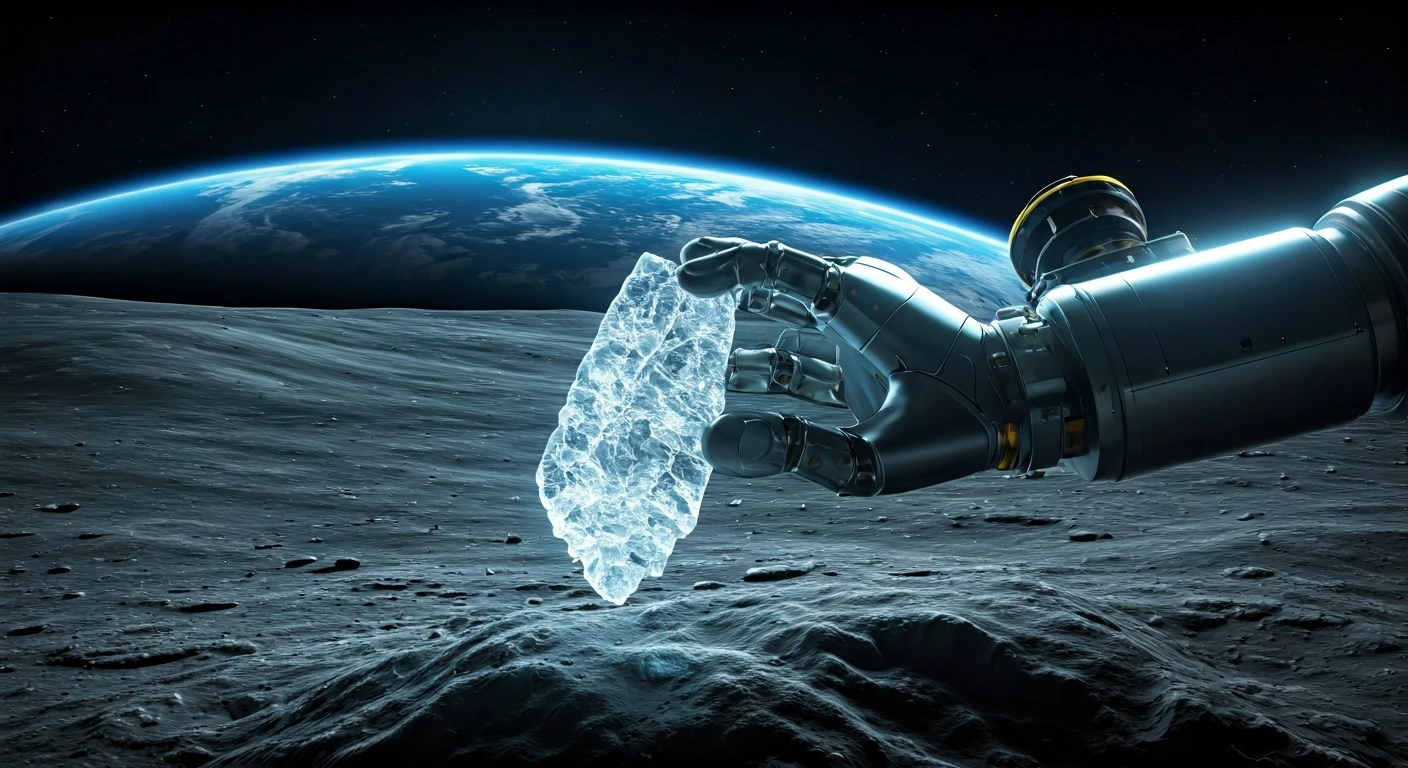
The 21st-century return to the Moon is less about footprints and more about prospecting. The primary target is water ice, confirmed to exist in the permanently shadowed craters of the lunar south pole. This resource is the cornerstone of future ambitions.
It could provide drinking water and breathable air for astronauts, but more importantly, it can be split into hydrogen and oxygen to create rocket propellant. Being able to refuel on the Moon would dramatically lower the cost and complexity of deep space exploration, effectively turning our nearest celestial neighbour into a strategic-economic asset. This has kicked off a new kind of space race, one driven not just by national prestige but by the tangible goal of building a sustainable, off-world economy. The robotic missions launching now are the essential surveyors, mapping these resources with a new generation of sophisticated tools.
The Robotic Vanguards
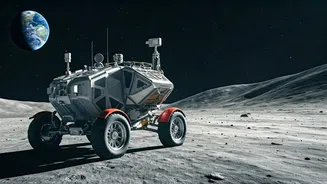
A fleet of robotic explorers is leading this charge. NASA's Commercial Lunar Payload Services (CLPS) program is aggressively funding private American companies like Astrobotic and Intuitive Machines to deliver scientific payloads. These smaller, more frequent missions are designed to increase the pace of exploration and build a reliable logistics chain to the lunar surface. On a larger scale, missions are becoming more ambitious. China’s Chang'e-7, planned for late 2026, is a complex mission involving an orbiter, lander, rover, and even a smaller hopping probe designed to directly search for water inside a dark crater. These rovers are not just simple buggies; they are mobile laboratories. They carry ground-penetrating radar to see beneath the surface, drills to collect subsurface samples, and spectrometers to analyse the chemical composition of the lunar regolith in real-time.
India’s Frugal and Focused Approach
Following the historic success of Chandrayaan-3, which made India the first nation to land near the south pole, ISRO is planning its next bold steps. The upcoming Chandrayaan-4 mission is designed to be India's first lunar sample-return effort. This highly complex mission will involve landing, collecting soil and rock samples with a robotic arm and drill, ascending from the Moon, and returning the precious cargo to Earth for detailed study in advanced labs. In parallel, ISRO is collaborating with Japan's JAXA on the Lunar Polar Exploration Mission (LUPEX). In this joint mission, JAXA will provide the rover while ISRO develops the lander. LUPEX is specifically designed to investigate the abundance and quality of water ice in the polar region, a crucial step in assessing the viability of using lunar resources. This showcases India's strategy: developing key domestic capabilities while engaging in strategic international partnerships.
Building a Commercial Highway to the Moon
The biggest shift in this new lunar era is the business model. Through its CLPS initiative, NASA acts as a customer, buying rides for its instruments on landers built and operated by commercial companies. This approach is designed to foster a competitive marketplace, drive down costs, and accelerate innovation. On June 30, 2026, NASA announced nearly $600 million in new contracts for Astrobotic, Firefly Aerospace, and Intuitive Machines to deliver more science and technology to the Moon in 2028. This isn't just about science; it's about building the infrastructure for a future lunar base. The payloads on these missions include instruments to study how rocket plumes interact with lunar dust and laser reflectors that will help create a permanent navigation network on the Moon. Each successful landing by a private company proves the business case and builds confidence for more complex and expensive missions, including those involving humans.