








A Dress Rehearsal for Deep Space
Before humanity takes its next giant leap to Mars, astronauts are taking a small step into a habitat in Texas. The headline’s “eight-month flight” refers to a type of mission known as a space exploration analog. These are not flights into space, but highly
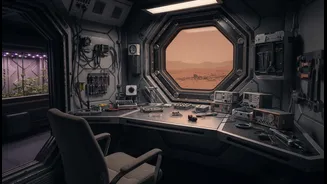
realistic simulations on Earth designed to mimic the intense conditions of a long-duration mission. NASA's CHAPEA (Crew Health and Performance Exploration Analog) is a prime example, where crews of four volunteers live and work inside a 1,700-square-foot, 3D-printed habitat for over a year. Similar missions, some lasting eight months, have been conducted in isolated locations like Hawaii and Moscow. The goal is to study how humans cope with extreme isolation, confinement, and the psychological and physiological stressors of being millions of kilometres from home, all without leaving the planet.
The Ultimate Test of Mind and Body
A round trip to Mars could take two to three years. Such a lengthy period in a confined space poses significant risks to astronaut health. These analog missions are designed to meticulously study these effects. Physiologically, scientists monitor everything from bone density loss and muscle atrophy in a simulated low-gravity environment to cardiovascular changes and the impact of a restricted diet of freeze-dried foods. Psychologically, the stakes are just as high. Researchers track mood, cognitive performance, and team dynamics to understand how to prevent issues like depression, irritability, and interpersonal conflict. A 22-minute communication delay is often simulated, mirroring the time it takes for a signal to travel from Mars to Earth, forcing the crew to become autonomous in problem-solving.
A Day in the Life on 'Mars'
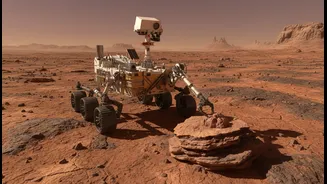
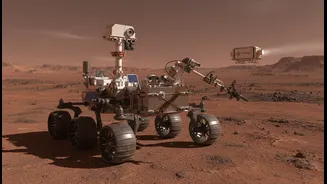
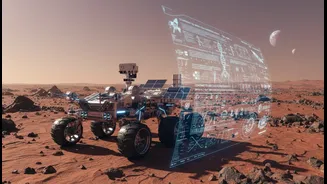
Life inside the habitat is a structured routine of tasks that a real Mars crew would perform. This includes conducting scientific experiments, growing crops to supplement their food supply, and maintaining the habitat and its systems. A key part of the simulation involves 'Marswalks'. Crew members don mock spacesuits and venture into an adjacent sandbox area designed to look like the Martian surface to perform geological fieldwork and collect samples. They also operate robotic rovers and drones, testing technologies and procedures that will be vital for exploring the Red Planet. The crew must manage unexpected challenges like simulated equipment failures and resource limitations, testing their resilience and problem-solving skills under pressure.
Why This Research Is Critical
The data gathered from these missions is invaluable for NASA's Human Research Program. It helps scientists develop and test countermeasures to protect astronaut health, from optimised exercise routines and nutritional strategies to psychological support protocols. Understanding how a team functions—or fractures—under stress helps NASA refine its crew selection process, ensuring they pick individuals who are not only skilled but also resilient and compatible. Ultimately, this research informs the design of spacecraft, habitats, and mission plans to mitigate the known risks of deep space travel. By tackling these problems on Earth, space agencies can increase the safety and success rate of the first human missions to Mars.