


An Evening With Venus And Saturn
Your celestial viewing begins just after sunset. Look to the western horizon to spot Venus, which is exceptionally bright this month. Though it gets lower in the sky with each passing day, it reaches its peak brilliance in mid-September, making it an unmissable
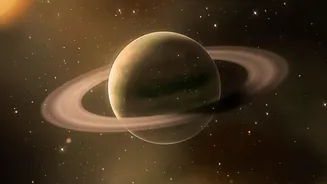
beacon in the twilight. On September 14, a beautiful crescent Moon will pass very close to Venus, creating a stunning pair in the fading light. As darkness settles, turn your attention to the east, where yellowish Saturn will be rising. The ringed planet is visible for most of the night and is approaching its annual opposition in early October. This means it's one of the best times of the year to observe it, as it is near its biggest and brightest in our sky. Even a small telescope can reveal its famous rings, which have recently tilted back into view after being edge-on in 2025.
The Pre-Dawn Parade Begins
For those willing to wake up early, the sky before dawn holds even more treasures. The show is led by the red planet, Mars. You can find it rising in the east after 1 a.m. Throughout September, Mars will be slowly brightening as Earth catches up to it in our respective orbits. On the mornings of September 6 and 7, the waning crescent Moon will be a close companion to Mars in the sky. This offers a great opportunity to identify the planet, which shines with a distinct amber or reddish hue. Mars is currently journeying through the constellation Gemini, passing near the bright star Pollux around the middle of the month.
Jupiter, The King, Takes The Stage
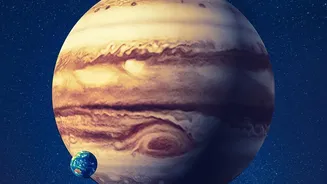
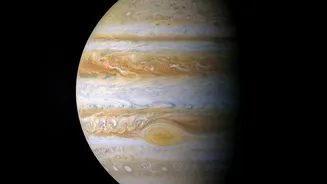
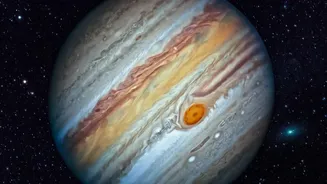
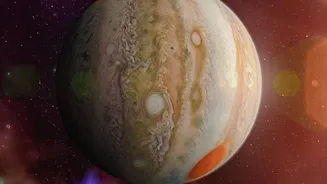
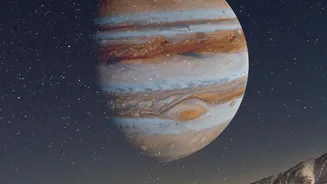
Following Mars is the undisputed king of the planets, Jupiter. The giant planet rises in the east-northeast a few hours before the sun, dominating the morning sky with its brilliant white light. Jupiter is steadily improving as a target for observation as it rises earlier each night. An exciting event occurs on the morning of September 8, when a very thin crescent Moon will be positioned incredibly close to Jupiter, creating a spectacular sight for early risers. For some parts of the world, the Moon will actually pass in front of Jupiter in an event called an occultation, though this will happen during daylight hours and be very challenging to see. Even without this rare event, the pre-dawn pairing of the Moon and Jupiter is a must-see highlight of the month.
A Fleeting Glimpse of Mercury
The most elusive of the naked-eye planets, Mercury, also makes a brief appearance this month. During the final week of September, you may be able to spot it very low on the western horizon just after sunset. Finding Mercury is always a challenge due to its proximity to the Sun's glare. You will need a completely unobstructed view to the west-southwest. Its appearance this month is considered poor for northern hemisphere observers, but it's always a rewarding sight for dedicated sky-watchers. Binoculars will be a great aid in trying to pick its faint glimmer out of the twilight glow.
Tips for Better Viewing
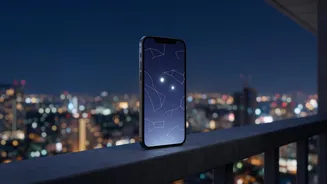
You don't need expensive equipment to enjoy this celestial show. The five bright planets—Mercury, Venus, Mars, Jupiter, and Saturn—are all visible to the naked eye. Even from light-polluted cities, the brightness of Venus and Jupiter can easily punch through the skyglow. To get the best view, find a location away from direct streetlights or building lights. Give your eyes about 15-20 minutes to fully adapt to the darkness; this will help you spot fainter objects. Using a pair of binoculars can dramatically enhance your view, potentially revealing Jupiter's largest moons or giving you a clearer look at Saturn's shape. There are also many smartphone apps that can help you identify planets and constellations in real-time, acting as a handy map of the night sky.