






Who is Firefly Aerospace?
Firefly Aerospace might not be as well-known as SpaceX, but it's a major player in the new space race. Based in Texas, the company was founded in 2017 and has quickly established itself as a key partner for the U.S. government and commercial clients.
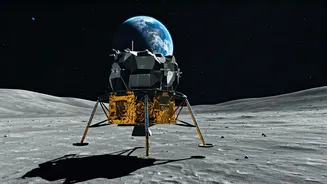
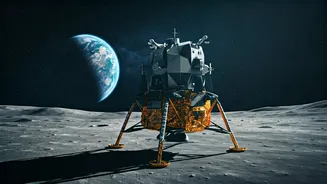
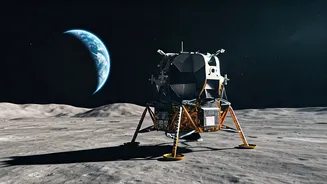
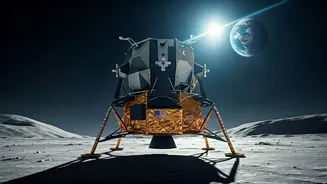
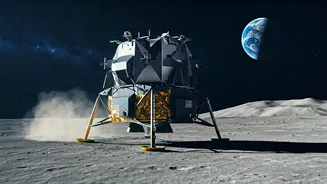
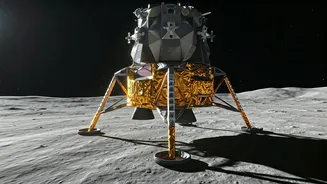
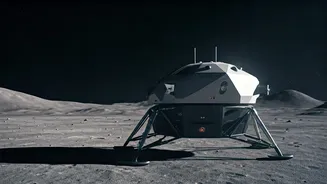
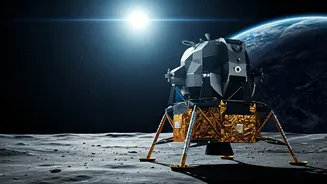
Specializing in launch vehicles, lunar landers, and orbital vehicles, Firefly aims to provide end-to-end space transportation. They made history with the first fully successful commercial soft landing on the Moon with their Blue Ghost lander, proving that private companies have the right stuff for complex interplanetary missions. This latest contract reinforces their position as a reliable and increasingly essential player in the growing space economy.
The $144.2 Million Delivery Job
On June 30, 2026, NASA announced the $144.2 million award to Firefly for a rapid mission to the Moon, targeted for launch in 2028. This isn't Firefly's first rodeo; it's their sixth contracted lunar mission. The goal is to prove that commercial lunar delivery can be fast, repeatable, and dependable. This mission will be designed and built in about two years, which is half the time it took for their historic first Blue Ghost mission. By using a proven lander design, Firefly can accelerate the timeline, a crucial factor as NASA plans for a long-term presence on the Moon.
What's in the Cargo?
So, what does $144.2 million get you on the Moon? For this trip, Firefly's Blue Ghost lander will carry three key NASA science instruments to the Moon's near side. These include the Laser Retroreflector Array (LRA), which allows for incredibly precise distance measurements from Earth. Another instrument, the Linear Energy Transfer Spectrometer (LETS), will measure the lunar radiation environment, which is vital data for ensuring astronaut safety. The third, a set of Stereo Cameras for Lunar Plume Surface Studies (SCALPSS), will study how the lander's exhaust interacts with the lunar surface during touchdown. Each payload is designed to gather critical information that paves the way for future human and robotic exploration.
NASA's New 'Uber to the Moon' Strategy
This mission is part of NASA's broader Commercial Lunar Payload Services (CLPS) initiative. Think of it like this: instead of building and flying its own delivery trucks, NASA is hiring commercial courier services to take its packages to the Moon. This approach was established to help NASA quickly and affordably send science and technology payloads to the lunar surface. By working with a pool of American companies, NASA fosters a competitive commercial market, drives down costs, and can focus its own resources on bigger goals, like the Artemis program, which aims to return humans to the Moon and establish a sustainable presence there.
Building the Lunar Economy
This contract is more than just a single business deal; it's a building block for an entire lunar economy. With its first successful landing, Firefly proved commercial viability. Now, with this accelerated repeat mission, the company is demonstrating reliability and scalability. The payloads on this and other missions are not just one-off experiments. Instruments on other Firefly missions will test lunar communications, enhance mobility with rovers, and even demonstrate technology for a future lunar power grid. This mission is part of a larger international effort, with payloads from the UK, UAE, Australia, and Canada also flying on Firefly landers, highlighting the global nature of this new era of lunar exploration. As Firefly and other CLPS partners increase the frequency of their landings, they are laying the groundwork for the infrastructure needed for a permanent human base on the Moon.