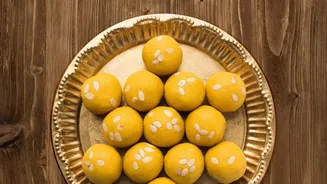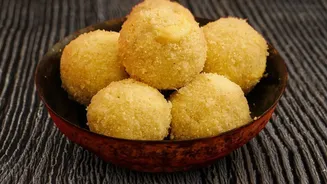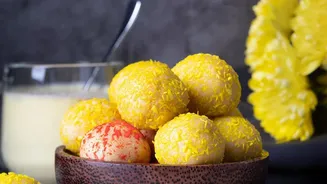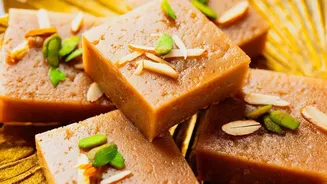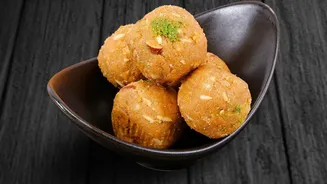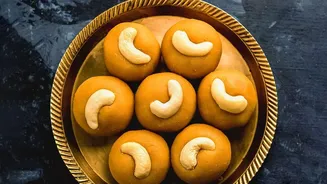




The Roasting Rush Job
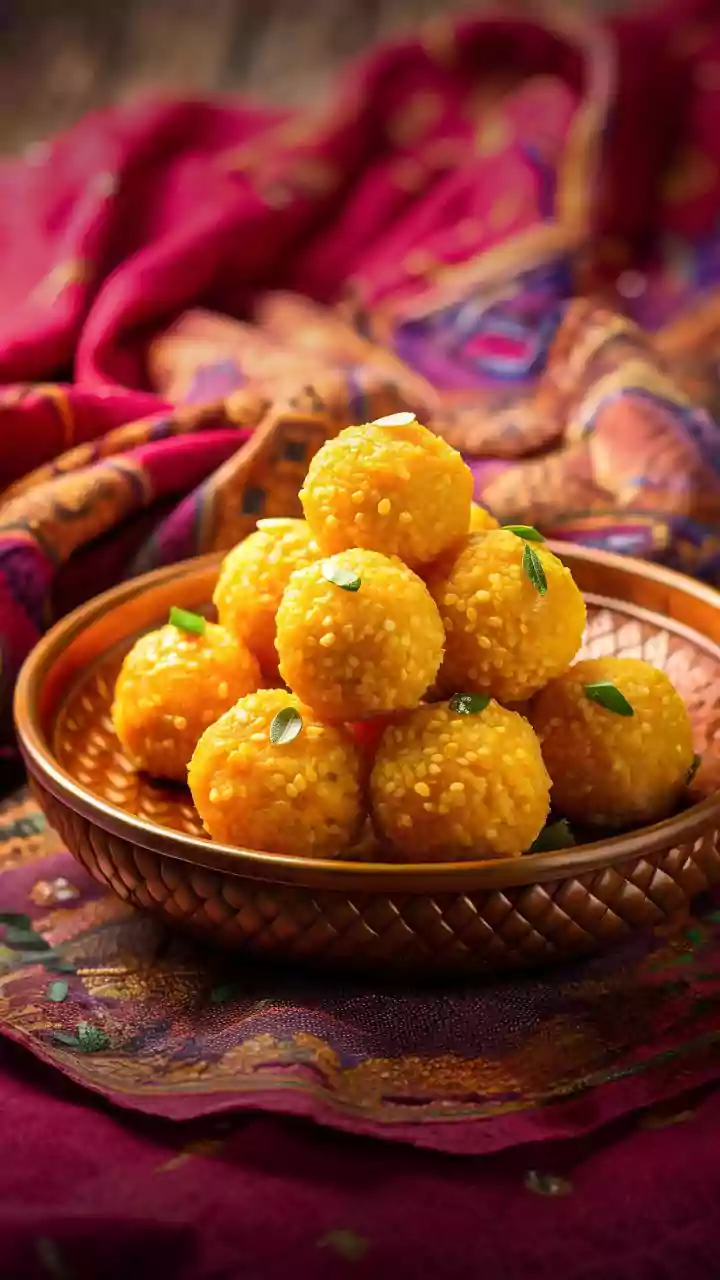
Patience is the most crucial ingredient in besan ladoo. The number one mistake is roasting the besan (gram flour) on high heat. While this browns the flour quickly, the inside remains raw, leaving a pasty, uncooked flavour that sticks to the roof of your
mouth. To achieve that signature nutty aroma and deep flavour, you must roast the besan in ghee on a consistently low flame. This slow process, which can take anywhere from 20 to 45 minutes depending on the quantity, ensures each grain cooks through evenly. You'll know it's ready when the mixture smells wonderfully nutty, deepens to a golden-brown colour, and the ghee starts to separate at the edges.
Incorrect Ghee-to-Flour Ratio
Ghee does more than just add flavour; it's the binding agent that holds the ladoo together. Using too little ghee is a direct path to a dry, crumbly, and firm ladoo that refuses to hold its shape. On the other hand, adding too much can make the mixture greasy and too loose to form into balls. A good rule of thumb is to start with a ratio of about 1 part ghee to 2 parts besan by weight. It's better to add ghee gradually. If your mixture feels too dry and crumbly after roasting, you can stir in a tablespoon of warm, melted ghee at a time until it comes together.
Mishandling the Sugar
When and how you add sugar is critical to the final texture. A frequent error is adding sugar to the besan mixture while it's still very hot. This instantly melts the sugar, creating a sticky, syrupy consistency that makes the ladoos flat and hard once they cool. The roasted besan must be allowed to cool until it is just warm to the touch. Furthermore, the type of sugar matters. Granulated sugar will result in a gritty texture. For that smooth, halwai-style mouthfeel, always use finely powdered sugar or a traditional option like 'bura' or 'tagar'.
Rushing the Cooling and Shaping
After perfecting the roasting and sugar addition, the final steps require a bit more patience. The mixture needs to be at the right temperature for shaping—warm enough for the ghee to be pliable, but not so hot that it's unmanageable or melts the sugar. If you let the mixture get completely cold, the ghee will solidify, and the ladoos will be impossible to bind. If this happens, don't panic. Gently warming the mixture for a few seconds can help. If the mix is too loose, sometimes refrigerating it for a short while can help it firm up enough to shape.
Ignoring the Flour's Texture
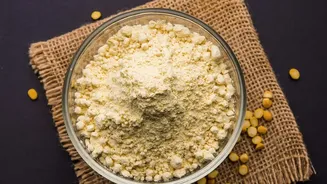
The type of besan used can also influence the final texture of the ladoo. Many sweet shops use a coarse variety known as 'ladoo besan' or 'mota besan', which naturally yields a grainier, danedar texture. If you're using the more common fine besan and find your ladoos are too dense or stick to your teeth, there's a simple trick. Adding a tablespoon or two of fine semolina (rava/suji) to the besan before roasting can introduce that desirable, slightly grainy bite and prevent the ladoos from feeling pasty. Some cooks also swear by a quick splash of water or milk into the hot roasted besan at the end, which creates steam and helps achieve a granular texture.