

The Gateway to the Roof of the World
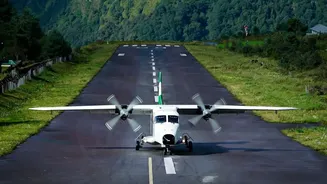
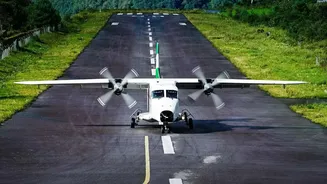
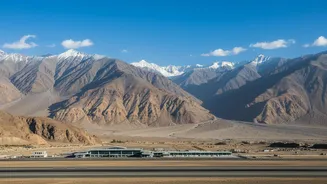
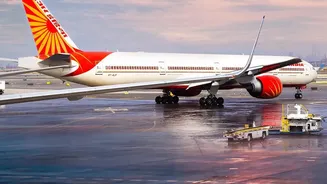
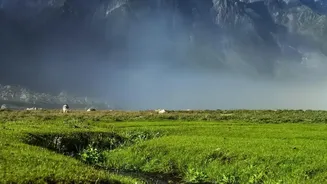
Perched at an altitude of over 10,682 feet, Kushok Bakula Rinpoche Airport is one of the highest commercial airports in the world. For travellers, it’s the primary gateway to the stark, stunning landscapes of Ladakh. For the region's inhabitants, it's
a vital, year-round lifeline to the rest of India, especially when winter snows close the high mountain passes. The airport itself is a joint-use facility, serving both civilian and military purposes due to the region's strategic importance. While the approach through the Himalayan peaks is breathtaking, the name of the airport itself points to a figure whose life was just as monumental.
Who Was the 19th Kushok Bakula Rinpoche?
The airport is named after the 19th Kushok Bakula Rinpoche (1918-2003), a man often called the "Architect of Modern Ladakh". Born into a royal family in Matho village, he was recognized at a young age by the 13th Dalai Lama as the reincarnation of Arhat Bakula, one of the original 16 disciples of Gautama Buddha. This recognition set him on a path of deep spiritual learning in Tibet, where he earned the highest degree in Buddhist philosophy. However, his life was destined to bridge the spiritual and the secular. He was a rare individual who seamlessly inhabited the roles of a revered monk, a sharp scholar, and a dedicated statesman, guiding Ladakh through a period of immense change.
A Statesman and a Diplomat
At the behest of Prime Minister Jawaharlal Nehru, Kushok Bakula Rinpoche joined politics in 1949. He served multiple terms as a Member of Parliament in the Lok Sabha, where he was a tireless advocate for the welfare and rights of the people of Ladakh and other scheduled tribes across India. His political career, however, extended far beyond domestic affairs. In a move that highlighted his unique standing, he was appointed India's ambassador to Mongolia in 1990, serving for a decade. In Mongolia, a nation struggling to reclaim its identity after decades of Communist rule, Rinpoche played an instrumental role in the revival of Buddhism. He helped reopen ancient monasteries and fostered a renewed spiritual connection, earning him Mongolia's highest civilian honor, the 'Polar Star' award.
An Architect of Modern Ladakh
The title 'Architect of Modern Ladakh' was not given lightly; it was a recognition of his profound impact on the region's development. When he returned from his studies in Tibet, Ladakh was grappling with poverty and social challenges. Rinpoche championed education, social reforms, and the preservation of Ladakhi culture. He understood that for Ladakh to thrive, it needed to be connected to the rest of India while retaining its unique identity. He played a crucial role in rallying the people of Ladakh to defend their land during conflicts and was a steadying force during turbulent times. His vision was for a Ladakh that was both modern and deeply rooted in its heritage.
A Legacy That Soars
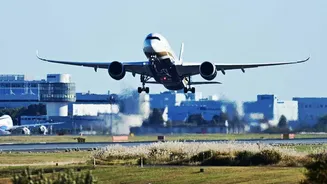
Naming Leh's airport after Kushok Bakula Rinpoche in 2005 was more than just a gesture; it was a profound acknowledgement of his life's work. He was the figure who connected Ladakh to the world, both politically and spiritually, making the airport a fitting symbol of his legacy. Every flight that lands and takes off from this high-altitude runway carries with it the spirit of a monk who moved mountains, not just with faith, but with unwavering service to his people. His name is a constant reminder of the bridge he built between Ladakh and the wider world, a bridge that millions of travellers now cross every year.