



The Trillion-Dollar Vision
Elon Musk’s ambitions for SpaceX have always been bold, but recent statements have pushed the boundaries of speculation. He has suggested that SpaceX could one day be worth more than the entire terrestrial economy, a claim predicated on building a self-sustaining
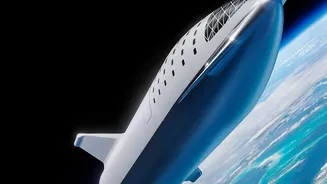
civilization on Mars and creating vast new industries in space. More immediate, yet still monumental, goals include launching hundreds of Starship rockets annually. One forecast suggests 180 flights in 2030 and 500 by 2035. This unprecedented launch cadence is central to deploying tens of thousands more Starlink satellites, building lunar factories, and even establishing orbital data centers powered by AI. Some analysts predict SpaceX revenues could soar from around $45 billion in 2026 to over $200 billion by 2028, driven heavily by these new ventures, particularly AI. This vision paints a picture of a single company dominating not just launch services, but communications, manufacturing, and computing on a planetary and interplanetary scale.
From Ambition to Execution
The gap between this grand vision and current reality is where skepticism takes root. While SpaceX has achieved remarkable feats, including the first orbital flight of its Starship vehicle, the path to mass manufacturing and routine flights is fraught with challenges. Analysts point out that scaling in the space industry is profoundly difficult. It’s not just about building innovative hardware, but also about managing global supply chains, navigating complex international regulations, and ensuring flawless operational reliability. The financial hurdles are just as significant. Developing Starship has already cost billions, with SpaceX spending over $3 billion in 2025 and nearly another billion in the first quarter of 2026 alone. These massive development costs are currently eating into the profits generated by the company's successful Falcon 9 launch business. This raises a critical question: can the vision become commercially proven before the immense capital expenditure becomes unsustainable?
The Engineering and Manufacturing Bottleneck
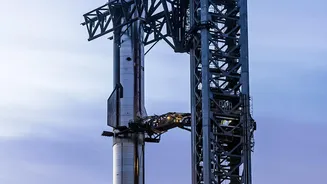
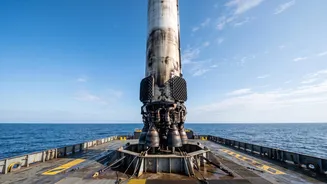
Musk’s goal of making Starship fully and rapidly reusable—akin to an airliner—is the key to unlocking his economic vision. If it works, it could radically lower launch costs. However, achieving this is a 'multidimensional problem' that remains unsolved. Catching the massive Starship vehicle and its booster with launch tower arms—a crucial step for rapid reuse—is a milestone the company is still working toward. Beyond the rocket itself, the entire industrial base must scale. This includes everything from producing Raptor engines at an unheard-of rate to building the ground infrastructure to support frequent launches. Furthermore, the orbital environment itself is becoming a constraint. With thousands of satellites already in orbit, issues like debris, collision avoidance, and the lack of a global space traffic management system pose real threats to large-scale constellation plans.
Will the Market Keep Up?
Even if SpaceX solves the technical challenges, the demand side of the equation is uncertain. The company's own Starlink constellation is by far the biggest driver of launch demand today. This creates a concentrated market, where much of the industry's growth depends heavily on the success of a single provider and its internal projects. While new markets like in-space manufacturing and orbital data centers are emerging, they are not yet commercially proven at a scale that would require hundreds of Starship flights per year. Government demand for launch, lunar transport, and defense remains a foundational part of the space economy, but Musk has indicated that NASA's contribution to SpaceX's revenue is becoming minimal as commercial ventures like Starlink take precedence. The ultimate success of Musk’s vision depends on whether enough non-government customers will pay for these ambitious services repeatedly and at scale.
The Ripple Effect on the Industry
SpaceX's aggressive push has undeniably energized the entire space sector, forcing competitors to innovate and driving down costs. However, its sheer dominance also creates structural challenges. Much of the Western world's access to orbit now depends on a very small number of launch providers, with SpaceX leading by a massive margin. As the company vertically integrates—controlling the launch, the satellites, the communications network, and potentially orbital computing—it could create a near-monopoly on space infrastructure. While this could accelerate progress, it also raises questions about competition, resilience, and strategic dependence on a single commercial entity for critical infrastructure. The future scale of the space industry may not be a broad, diverse ecosystem but one largely defined by the trajectory and success of one company's speculative, high-stakes gamble.