





The Monsoon's Quiet Departure
The Southwest Monsoon has officially withdrawn from Delhi, marking an end to the season of cleansing rains. The monsoon, which provides a natural mechanism for washing pollutants out of the atmosphere, retreated from the capital around September 23, slightly
ahead of its normal date. This departure ushers in a period of largely dry weather. The India Meteorological Department (IMD) has forecast clear skies with little to no chance of significant rainfall that could disperse accumulating pollutants. While September's air quality was comparatively better, this post-monsoon dry spell is a critical factor in the recent deterioration of the region's Air Quality Index (AQI).
Calm Winds, Trapped Pollutants
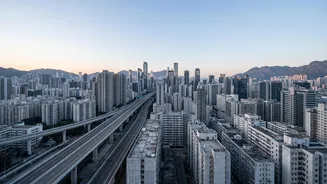
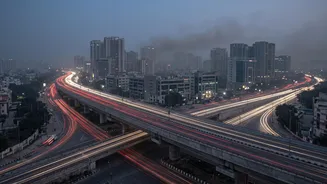
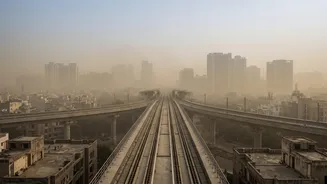
A more significant factor contributing to worsening air quality is the change in wind patterns. During the monsoon, strong easterly winds help to disperse pollutants. As October sets in, these winds weaken considerably. Current forecasts show average wind speeds of less than 10 kmph, a condition considered unfavourable for the dispersion of pollutants. This reduction in wind speed means that local pollutants from traffic, industry, and construction dust are no longer effectively blown away. Instead, they hang in the air, leading to a steady increase in concentration. This atmospheric shift is why the first week of October 2026 has been the most polluted in three years, with the average AQI settling at 171.
The Specter of Stubble Burning
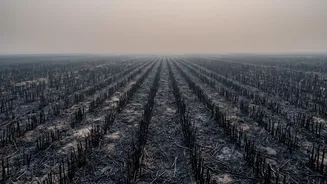
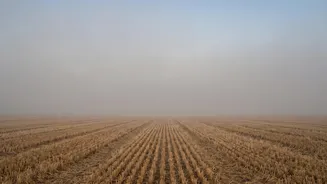
The change is not just about speed, but also direction. The post-monsoon period sees a shift to north-westerly winds, which blow from Punjab and Haryana towards Delhi. This coincides with the paddy harvesting season, when farmers in these states often burn crop residue, or stubble, to quickly clear their fields. Smoke from these farm fires is a massive contributor to Delhi's winter pollution. Incidents of stubble burning have already been reported in Punjab and Haryana. The Commission for Air Quality Management (CAQM) has deployed flying squads to monitor and prevent these fires, but the threat remains significant. As these north-westerly winds pick up, they will transport large plumes of smoke directly into the capital region, drastically worsening air quality.
Winter's Cold Embrace
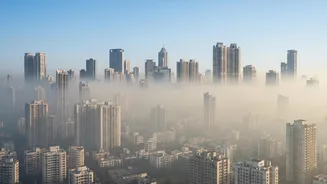
Another meteorological phenomenon that exacerbates the problem is temperature inversion. During winter, the ground cools faster at night, creating a layer of cool air near the surface with a layer of warmer air above it. This acts like a lid, trapping pollutants close to the ground and preventing them from rising and dispersing. As morning temperatures begin to drop in Delhi, this effect becomes more pronounced. The combination of low wind speeds, smoke from stubble burning, and this temperature inversion creates a perfect storm for hazardous pollution levels, turning the air into a thick, toxic smog that can linger for days.
What The Authorities Are Doing
In response to the predictable decline in air quality, authorities have put the Graded Response Action Plan (GRAP) into effect. This is a set of emergency measures that escalate based on AQI levels. Stage 1 is triggered when the AQI is in the 'Poor' category (201-300). Recent revisions to GRAP have tightened restrictions, with some measures now kicking in at Stage 1 instead of Stage 2. These include restrictions on certain inter-state buses that are not electric, CNG, or BS-VI compliant, and curbs on the use of diesel generator sets. The 'No PUCC, No Fuel' rule is also being enforced more strictly to target polluting vehicles. Additionally, the CAQM is using flying squads and real-time camera monitoring to crack down on industrial pollution and illegal fuel use.