







Kerala is aiming for the skies with a bold new venture: an airline founded on the principles of cooperation. With government approval secured, this initiative could reshape regional travel and offer a new model for the aviation industry.
An Airline for the People?
The Kerala government
has officially given the green light to a proposal for what is being called India's first airline in the cooperative sector. Tentatively named 'Co-Keralam', the project is being spearheaded by the Kerala Civil Aviation Development Cooperative Society, with prominent businessman C.N. Vijayakrishnan at the helm. The airline's primary objective is to enhance regional air connectivity, provide more affordable travel options, and generate employment. Unlike traditional carriers, this venture aims to be funded and owned by a collective of cooperative societies and potentially Non-Resident Indians (NRIs), reflecting a community-centric approach to business that has deep roots in the state.
The Cooperative Funding Model
The financial strategy for Co-Keralam is as unique as its ownership structure. The plan involves raising an initial capital of around ₹400 crore by inviting approximately 200 cooperative societies to invest ₹2 crore each. This model is designed to ensure the airline can get off the ground without direct financial dependency on the state government. The promoters are explicitly modelling the venture on the success of Cochin International Airport Ltd (CIAL), which was itself a pioneering public-private partnership funded by thousands of individual investors, including many from the diaspora. By distributing ownership widely, the airline hopes to foster a sense of collective purpose and keep its focus on service rather than purely on profit maximisation.
Why Kochi is the Strategic Hub
The decision to base the new airline in Kochi is a strategic one, building on the city's established aviation prowess. Cochin International Airport (CIAL) is not only the third busiest in India for international traffic but also a globally recognised success story. It was the country's first airport built using a public-private partnership and is the world's first to be fully powered by solar energy. CIAL already handles over 60% of Kerala's total air passenger traffic, has three terminals including one for business jets, and boasts robust infrastructure for both domestic and international operations. By leveraging Kochi as its hub, Co-Keralam can tap into a mature ecosystem, a large passenger base, and a legacy of innovative, community-driven infrastructure projects.
Initial Routes and Operations
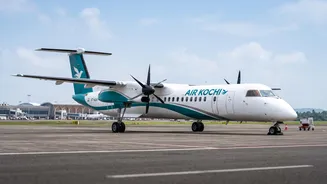
Co-Keralam's initial phase of operations is focused on boosting regional connectivity. The airline plans to start with two leased 72stater aircraft stationed in Kochi. From there, it will connect to other key destinations within Kerala, such as Kozhikode and Kannur, and major cities in neighbouring states, including Bengaluru, Chennai, Coimbatore, and Madurai. Proposed fares are expected to range between ₹3,500 and ₹7,000, positioning the airline as a competitive option for domestic travellers. As operations stabilise and grow, the fleet is expected to expand, first to four and then to six aircraft, allowing for a wider network.
Navigating a Turbulent Market
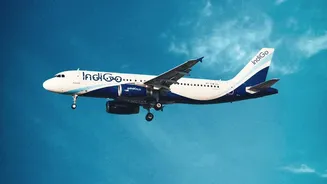
Despite the ambitious vision and government backing, the path ahead for Co-Keralam is fraught with challenges. The Indian aviation market is notoriously difficult, characterised by intense competition, high operational costs, and thin profit margins. The industry is dominated by a duopoly of IndiGo and the Tata Group (owning Air India), which together control a vast majority of the market. Any new entrant must contend with their established networks, pricing power, and economies of scale. Furthermore, running an airline requires navigating complex regulations set by the Directorate General of Civil Aviation (DGCA), managing volatile fuel prices, and securing a reliable fleet and skilled manpower—all significant hurdles for a startup.