


A Flood From a Clear Sky
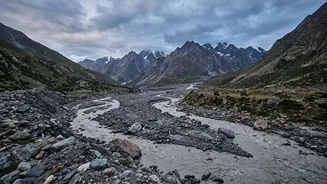
In June 2021, a terrifying wall of water, mud, and debris surged down the Melamchi River valley in Nepal. It obliterated homes, bridges, and parts of a major drinking water project, causing widespread devastation. For locals and authorities, the immediate
cause was a mystery. There was no extreme downpour in the valley that could explain such a catastrophic flood. The usual culprits, like a monsoon cloudburst or a simple Glacial Lake Outburst Flood (GLOF), didn't seem to fit the evidence, leaving scientists searching for a different, more complex explanation hidden high in the mountains.
Beyond a Simple Lake Burst
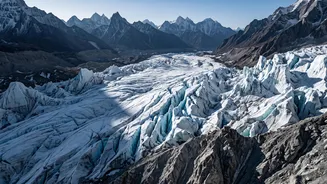
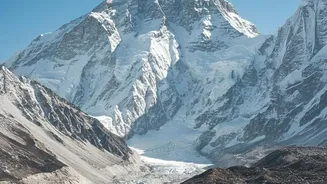
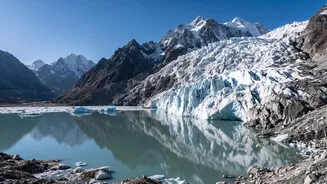
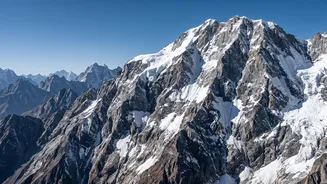
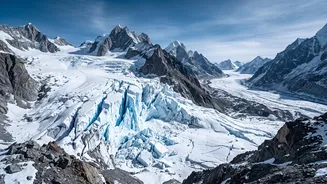
A GLOF occurs when a natural dam containing a glacial lake fails. While dangerous, they are a known hazard. The Melamchi event, however, was different. Investigations using satellite imagery revealed something far more complex had occurred. The disaster wasn't initiated by an overflowing lake but by a massive collapse of rock and ice from a glacier high on a mountain slope, an event known as a rock-ice avalanche. This enormous volume of material, weighing millions of tonnes, didn't just melt; it created a chain reaction of destruction that was far more powerful than a typical GLOF.
The Cascade of Destruction
Scientists now refer to this as a "hazard cascade." It begins when a massive chunk of a mountain, often including part of a glacier, breaks off. This rock-ice avalanche crashes down into the valley below with incredible force. The friction and energy from the fall can instantly melt much of the ice, creating a huge volume of water. This torrent picks up sediment, boulders, and any other debris in its path, transforming into a thick, fast-moving slurry, almost like wet concrete. In some cases, this debris can temporarily block the river, creating a short-lived dam. When this dam inevitably bursts under the pressure of the backed-up river, it releases a secondary, even more destructive, flood wave downstream.
The Climate Change Connection
These terrifying events are not entirely natural. They are a direct consequence of a warming planet. As global temperatures rise, the Himalayas are warming at an accelerated rate. This has two critical effects. First, it causes glaciers to melt and retreat, which can physically destabilise the steep rock faces they once supported. Second, it thaws permafrost—the frozen ground that acts like a cement holding mountainsides together. As this natural glue weakens, massive slope failures become much more likely, increasing the risk of the very rock-ice avalanches that trigger these devastating flood events.
A Shared Himalayan Danger
The threat posed by glacial collapses is not confined to Nepal. The entire Himalayan range, including the Indian states of Uttarakhand, Himachal Pradesh, and Sikkim, faces similar vulnerabilities. Major river systems like the Ganges and Brahmaputra, which are lifelines for hundreds of millions in India, originate in these mountains. Events like the 2021 disaster in Chamoli, Uttarakhand, showed striking similarities to the Melamchi flood, confirming that this is a shared, trans-boundary risk. Understanding these complex hazard cascades is therefore crucial for protecting the millions of people living in the shadow of the world's highest mountains.