






The Ground Control Bottleneck
Traditionally, space missions have been a constant, high-stakes conversation between a satellite and its ground crew. Teams of engineers work around the clock to plan trajectories, monitor systems, and download data. This model, while reliable, is incredibly
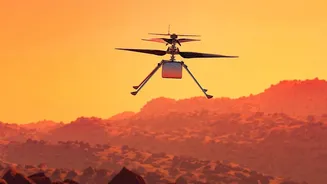
resource-intensive, requiring constant human oversight and expensive ground infrastructure. For deep space missions, the problem is compounded by communication delays; it can take minutes or even hours for a signal to travel from Mars to Earth, making real-time control impossible. This latency means a spacecraft can't swerve to avoid sudden debris or react instantly to a scientific opportunity. Furthermore, as companies launch vast constellations of hundreds or thousands of satellites, the idea of managing each one manually becomes economically and logistically unsustainable.
The Rise of Onboard Intelligence
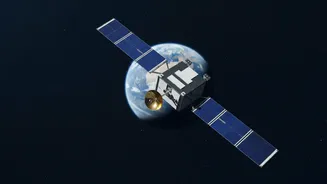
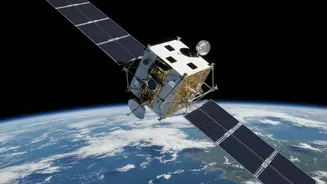
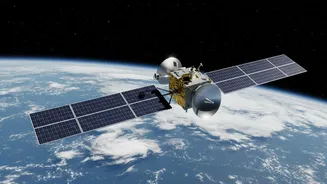
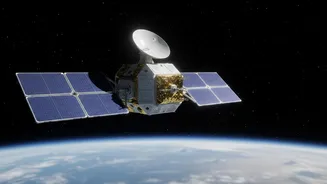
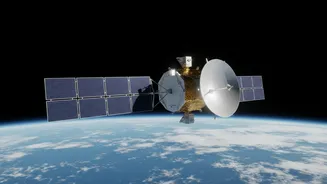
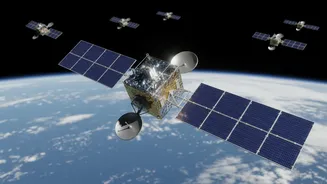
The solution, and a central theme at industry gatherings like the International Conference on Spacecraft Mission Operations (SMOPS), is automation. This isn't just about pre-programmed instructions; it's about giving spacecraft the ability to think for themselves. Using artificial intelligence and machine learning, a new generation of spacecraft can perform complex tasks without human intervention. This includes onboard data processing to decide which information is valuable enough to send back to Earth, self-diagnosing and fixing software glitches, and autonomously adjusting orbits to avoid collisions. NASA's experiments with Distributed Spacecraft Autonomy (DSA) have already demonstrated how a swarm of satellites can coordinate observations without direct commands, a crucial step towards more efficient and resilient space systems.
Why This Matters Now
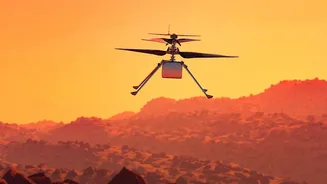
The push for autonomy is driven by three major trends shaping the modern space industry. First, the explosion of mega-constellations from companies like SpaceX requires a level of operational efficiency that only AI can provide. Second, ambitions for deep space exploration—to the Moon, Mars, and beyond—depend on spacecraft that can operate independently for long periods far from home. AI-powered rovers can analyze terrain and collect samples without waiting for instructions, drastically speeding up scientific discovery. Finally, in an increasingly crowded and contested orbital environment, the ability for a satellite to detect and respond to threats like jamming or debris in real-time is a significant strategic advantage.
Unlocking New Frontiers
Reducing dependence on ground control does more than just save money; it fundamentally changes what's possible in space. Autonomous systems will enable missions that are currently too risky or complex, like servicing and refueling satellites in orbit, assembling large structures in space, or even mining asteroids. It allows for more dynamic science, where a spacecraft can identify an interesting phenomenon—like a volcanic plume on a distant moon—and decide to investigate it on its own. This shift allows human operators to move from being micromanagers to supervisors, overseeing a fleet of intelligent assets rather than flying each one by hand.
The Challenges Ahead
The path to full autonomy is not without obstacles. A major hurdle is the difficulty of testing and validating complex AI systems for the harsh environment of space, where radiation can affect electronics and software updates are difficult. There are also significant security concerns; an autonomous spacecraft could become a target for hacking, and ensuring that AI decision-making is robust and predictable is critical for safety. Finally, there is a cultural shift required within the industry, as engineers must learn to trust the decisions made by their AI-powered spacecraft millions of kilometers away. Building this trust requires rigorous testing in simulated environments before launching expensive hardware into orbit.