







A Landmark Investment in Connectivity
The Cabinet Committee on Economic Affairs (CCEA), led by Prime Minister Narendra Modi, has given the green light to three major multi-tracking projects for the Indian Railways. This ambitious undertaking, valued at ₹10,783 crore, will add approximately
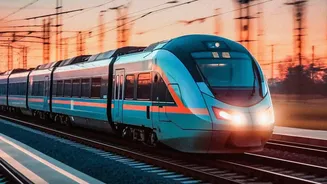
656 kilometres of new railway lines across West Bengal, Jharkhand, Odisha, Madhya Pradesh, and Chhattisgarh. The core objective is to de-congest some of the busiest sections of the railway network, increasing capacity for both passenger and freight trains. The projects are strategically planned under the PM Gati Shakti National Master Plan, which emphasizes integrated and efficient infrastructure development. Officials have stated that this expansion will significantly enhance mobility and improve the overall reliability of train services.
The Projects in Focus
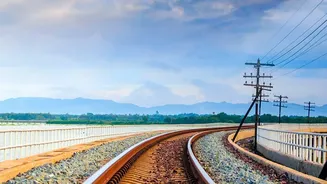
The investment is concentrated on three specific high-density corridors. These include the addition of a fourth line along the Kharagpur-Jharsuguda and Katni-Pendra Road sections, as well as a third line between Bilaspur and Pendra Road. These routes are critical arteries for the movement of goods and people through central and eastern India. By adding more tracks, the railways can run more trains simultaneously, reducing waiting times for signals and easing bottlenecks that currently slow down the entire system. The expansion is expected to be completed by the 2029-30 financial year, setting a clear timeline for this transformative work.
Boosting Economic Activity and Freight
A primary driver for this expansion is to strengthen the nation's supply chains. The selected corridors are essential for transporting key commodities like coal, cement, iron, and steel. The government estimates that these new lines will enable the railways to handle an additional 27 million tonnes of freight traffic annually. By making freight movement faster and more reliable, this initiative aims to lower logistics costs for businesses, making Indian industries more competitive. This has a ripple effect on the broader economy, potentially stabilizing prices for consumers and supporting industrial growth in the 14 districts directly served by these new lines.
Transforming Travel for Millions
Beyond the economic impact, the expansion promises tangible benefits for everyday passengers. The project is set to improve connectivity for nearly 4,800 villages, which are home to a combined population of around 5.6 million people. For residents in these areas, better rail links mean easier access to jobs, education, and healthcare facilities in larger urban centres. Furthermore, the decongestion of these routes will likely lead to improved punctuality and the potential to introduce new passenger train services. This will make travel more convenient and dependable for millions of commuters and long-distance travellers who rely on India's vast railway network.
Connecting Culture and Tourism
The benefits of this infrastructure push extend to the tourism sector as well. The enhanced railway lines will improve access to numerous religious, cultural, and ecological destinations. Travellers will find it easier to reach important sites such as the Taratarini and Shri Kshetra Jagannath Temples, the Bandhavgarh and Achanakmar Tiger Reserves, and the historical Malhar archaeological site. By making these attractions more accessible, the projects are expected to boost tourism-related economic activities, providing new opportunities for local communities and encouraging more people to explore the rich heritage of these regions.