







What is Crew Module Qualification?
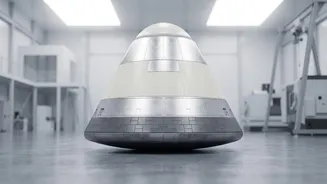
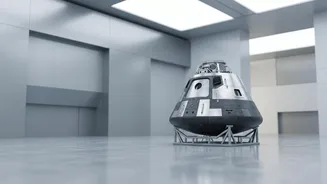
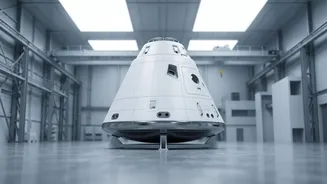
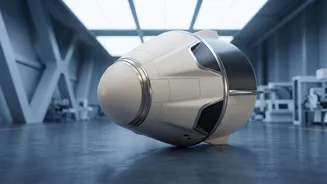
The Gaganyaan Crew Module is more than just a cockpit; it's a self-contained habitat designed to keep three astronauts safe in the unforgiving environment of space. It provides breathable air, manages temperatures, and most importantly, serves as a shield
during the fiery re-entry through Earth's atmosphere. Before it's trusted with human lives, this module must undergo a series of punishing 'qualification' tests. This process is designed to prove that every system will function flawlessly under the most extreme conditions imaginable, from the violent forces of launch to the final splashdown in the ocean. These tests are not just about checking boxes; they are about building confidence in the engineering that will bring the crew home safely.
Test 1: A Safe Splashdown
One of the first major hurdles validated is what happens after the mission ends. The Crew Module Up-righting System (CMUS) test focuses on the capsule's splashdown. It's crucial that after landing in the sea, the module orients itself upright, allowing for a swift and safe recovery of the astronauts. ISRO has developed a system using stored cold gas to inflate floats that automatically position the capsule correctly. Recent successful tests of this inflation system confirmed it works as designed, a critical step in ensuring crew safety at the very end of their journey.
Test 2: A Clean Break
Another critical moment occurs high above Earth, just before re-entry. The Crew Module must cleanly separate from its Service Module, which provides power and propulsion in orbit. An umbilical connection houses all the vital electrical and fluid lines between the two. The Crew Module Service Module Connect Disconnect System (CSCDS) test was designed to verify that this separation happens cleanly without damaging the crew capsule. A successful test demonstrated not only a clean break but also the structural stability of the capsule's panels at the interface, ensuring the module remains intact for its descent.
Test 3: Surviving Separation Forces
The final of the three recent qualification tests directly connects crew and structural safety. Before the main parachutes can deploy to slow the capsule, a protective 'apex cover' must be jettisoned. This separation is a pyrotechnic event, creating a powerful force on the Crew Module's structure. ISRO conducted a structural qualification test where they applied loads approximately 1.75 times greater than those expected during flight. By measuring the strain and deformation, engineers confirmed that the module's structure can withstand this violent event without compromising its integrity. This proves that the systems designed to ensure a safe landing (the parachutes) won't inadvertently damage the very capsule they are trying to save.
The Bigger Picture of Safety
These ground-based qualifications are part of a much larger, multi-stage testing campaign. This includes Integrated Air Drop Tests (IADT) to validate the entire sequence of ten different parachutes used for deceleration. It also involves a series of Test Vehicle (TV) missions, like the TV-D1 abort test, designed to prove the Crew Escape System can pull the astronauts to safety in the event of a launch anomaly. Each test, from separating a small cover to firing powerful escape rockets, builds upon the last. Together, they form a web of redundant safety checks, ensuring that the structural design of the capsule and the safety systems protecting the crew are deeply interconnected and validated together.