







The AI-Fueled Rebound
After a volatile period, Mark Zuckerberg’s net worth has climbed significantly, recently reaching an estimated $237 billion. This places him firmly among the world's top five wealthiest people. This impressive financial comeback is tied almost entirely
to the performance of Meta Platforms stock, which has seen a dramatic recovery. Just last week, a surge in Meta's stock price added over $13 billion to his personal fortune. The engine behind this growth is a palpable shift in investor sentiment, which has moved from skepticism about the company's costly metaverse ambitions to heady optimism about its new, aggressive focus on artificial intelligence. This trend demonstrates how fortunes at the highest level are increasingly tied not just to profits, but to having a convincing story about the future of AI.
Pivoting from the Metaverse
For years, Meta's narrative was dominated by its multi-billion-dollar bet on the metaverse. However, as investor patience wore thin, the company executed a strategic pivot towards a more immediate and tangible technology: AI. This shift involves a massive capital expenditure plan, with the company boosting its AI spending to nearly $145 billion to build out the necessary infrastructure. Recent announcements have further fueled investor excitement. Reports indicate Meta is preparing to manufacture its own custom AI chip, codenamed "Iris," to reduce reliance on external suppliers like Nvidia. Furthermore, the company released new AI models like Muse Spark 1.1 and is reportedly considering a new cloud business to lease its excess computing power, opening up new revenue streams. This has helped change the perception of Meta from an AI laggard to a serious contender.
The New AI Billionaire Class
Zuckerberg is not alone in riding the AI wave. Artificial intelligence has become the single most powerful engine of wealth creation in the global economy. The most prominent example is Nvidia CEO Jensen Huang, whose net worth has soared to over $175 billion as his company's chips became the essential hardware for the AI revolution. The AI boom has reshaped the entire top tier of the world's wealthiest, with tech leaders now dominating the top ten spots. Eight of the ten richest people in the world derive their fortunes from technology, with their collective wealth rivaling the GDP of entire countries. The list now serves as a real-time leaderboard for the AI race, rewarding founders of companies with strong AI strategies, from Google's Larry Page and Sergey Brin to Oracle's Larry Ellison. In 2026 alone, AI has been linked to the creation of dozens of new billionaires.
A Volatile Barometer of Power
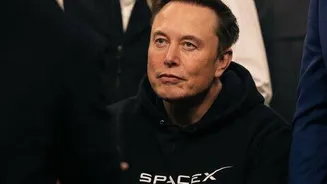
While the gains are staggering, they also highlight the volatility of fortunes built on market sentiment. Just as optimism can create immense wealth, pessimism can erase it. Earlier in 2026, concerns over Meta's spending and legal challenges caused Zuckerberg's wealth to dip significantly. The rankings themselves are in constant flux; Elon Musk became the world's first trillionaire in June 2026 after the SpaceX IPO, only to see his net worth fluctuate by hundreds of billions in the following weeks. Similarly, Oracle's Larry Ellison briefly became the second-richest person before a stock slide pushed him back down. This underscores that these paper fortunes, tied so closely to stock prices, are a fragile measure. They are dependent on maintaining investor confidence in a rapidly evolving and highly competitive AI landscape.