







Infrastructure in Waiting
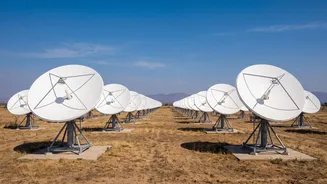
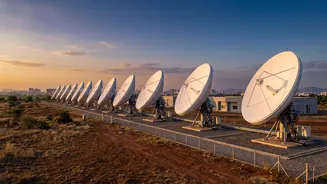
In a significant show of commitment to the Indian market, Starlink has established a substantial ground presence before getting the final go-ahead. The company has constructed 20 gateway sites, which include hundreds of antennas, across the country. These
gateways are critical ground stations that connect the low-Earth orbit (LEO) satellite constellation to the terrestrial internet, acting as a bridge to ensure data from space reaches users on the ground. According to Lauren Dreyer, Starlink's Vice President of Business Operations, this infrastructure has been specifically designed to meet Indian regulations. The move signals that Starlink is operationally ready to launch and is simply waiting for the regulatory process to conclude.
The Regulatory Labyrinth
Starlink's journey in India has been a multi-year process of navigating a complex regulatory environment. The company secured a crucial Global Mobile Personal Communication by Satellite (GMPCS) licence from the Department of Telecommunications (DoT) in June 2025. However, this licence is not the final step. Starlink still requires security clearance from the Home Ministry, foreign direct investment (FDI) approval, and the final assignment of spectrum to begin commercial operations. National security has been a primary concern for Indian authorities, who require stringent controls over data routing and lawful interception. The government has raised questions about Starlink's use of inter-satellite laser links, a technology that could potentially allow data to bypass domestic gateways, and has sought assurances that all Indian user data will remain within the country.
High Stakes for Digital India
The potential entry of Starlink carries significant implications for India's digital ambitions. The service promises to deliver high-speed, low-latency internet to remote and rural areas where terrestrial broadband infrastructure, like fibre optics and mobile towers, is difficult and expensive to build. This could be a game-changer for digital inclusion, connecting millions of underserved citizens. However, its launch also introduces competition for established domestic telecom players. Starlink has already signed Memorandums of Understanding with both Reliance Jio and Bharti Airtel, suggesting a future that may involve both competition and collaboration. The government has also been navigating the debate between auctioning spectrum versus administrative allocation, a key policy decision that affects all players in the satellite communications space.
A Complicated Waiting Game
Despite having its infrastructure and key licences in place, Starlink remains in a holding pattern. The company's proactive build-out is a calculated risk, demonstrating its readiness and putting pressure on the final decision-making process. The situation has become tense, with Elon Musk recently alleging on social media that 'certain oligarchs' were blocking the company's entry, a claim the Indian government has called 'baseless'. Meanwhile, Starlink executives have publicly stated their readiness, emphasising at the India Mobile Congress that their systems were built to comply with Indian security rules. For now, the 20 gateways stand as silent monuments to a service that is ready to go, pending a final green light that will unlock a new chapter in India's connectivity story.