
A New Kind of Cosmic Engine
In the vast expanse of the universe, stars are the engines of creation, immense celestial bodies that generate light and heat through nuclear fusion in their cores. It's the fundamental process that powers our own Sun. However, astronomers using the James
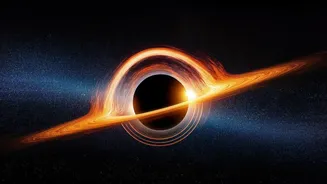
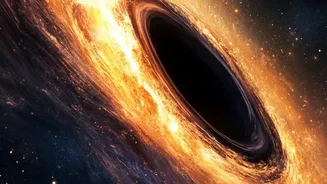
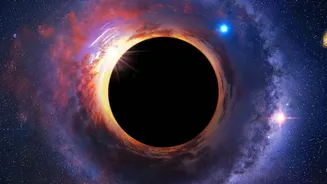
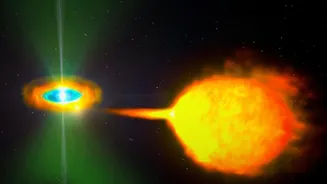
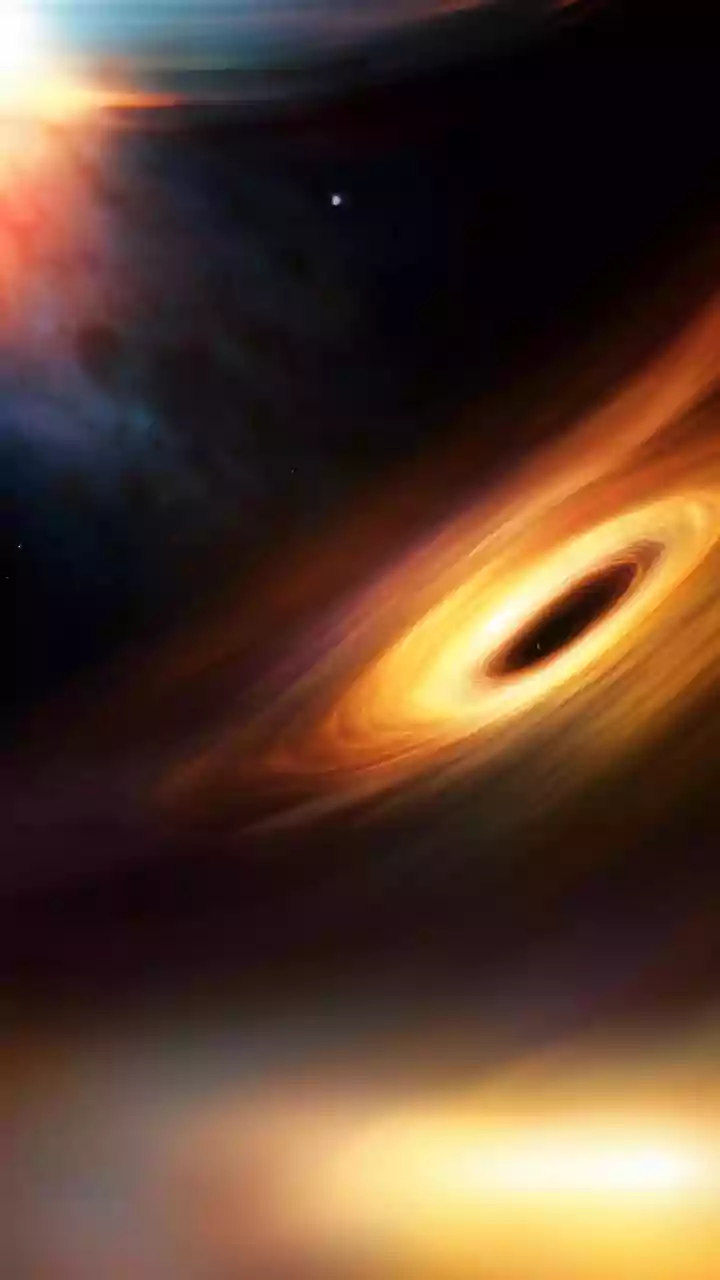
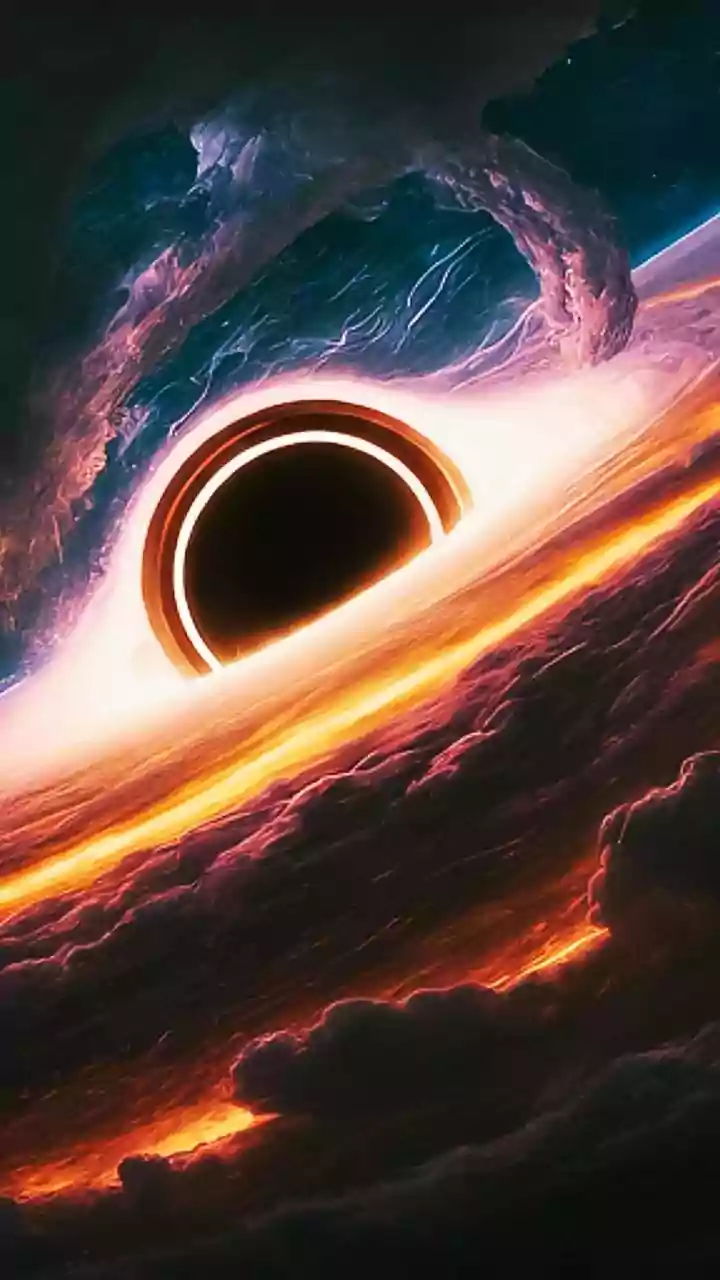
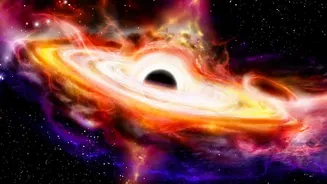
Webb Space Telescope (JWST) have identified a bizarre object that challenges this core concept. Spotted as a bright red dot in the very early universe, this object, named MoM-BH-1, shines with the light of 100 billion suns but shows no signs of the fusion that defines a star. Instead, scientists believe it's powered by a completely different mechanism: accretion. This is the process where material falls into a massive object, releasing tremendous energy. In this case, the object at the center is thought to be a black hole.
What is a 'Black Hole Star'?
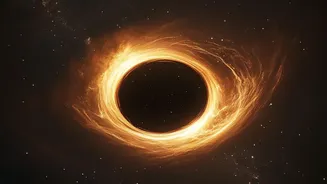
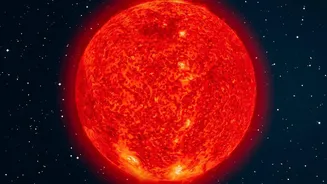
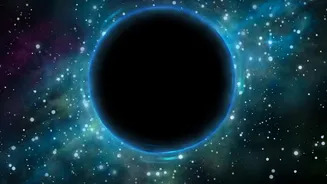
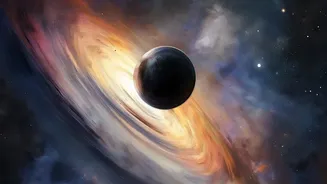
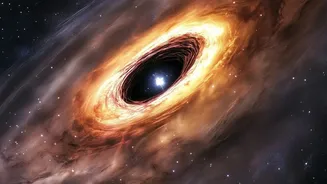
This newly proposed object has been dubbed a 'black hole star' or 'quasi-star'. It’s a theoretical object first hypothesized to have existed in the early universe. Unlike a true star, a quasi-star consists of a massive, dense cloud of gas with a black hole at its core. Instead of fusion creating outward pressure to prevent gravitational collapse, the energy comes from the black hole itself. As surrounding gas gets pulled violently toward the black hole, it heats up immensely, creating a radiant glow that makes the entire gaseous cocoon shine like a star. The outer layers of gas are so thick they trap and re-radiate the intense energy from the black hole, making the whole object resemble a giant, super-luminous star spanning the size of our solar system. These objects are believed to have had short lifespans of only a few million years.
Solving a Cosmic Riddle
The discovery of objects like MoM-BH-1 could solve a long-standing puzzle in astrophysics: how did supermassive black holes get so big, so fast? The supermassive black holes we see at the center of galaxies today are millions or even billions of times the mass of our Sun. Standard theories of black hole growth struggle to explain how they could reach such sizes in the first billion years after the Big Bang. Quasi-stars offer a potential solution. By being embedded in a massive gas envelope, the black hole at the center could feed at a much faster rate than it normally would, growing to 1,000 to 10,000 solar masses in a relatively short time. These 'black hole stars' could be the missing link—the seeds from which the later supermassive black holes grew.
Hiding in Plain Sight
This groundbreaking find is part of a wider investigation into a series of mysterious 'little red dots' spotted by the JWST in images of the early universe. Initially, some of these were thought to be unusually mature galaxies for such an early cosmic era. However, the unique spectral signature of MoM-BH*-1, which shows an extreme drop-off in light at certain wavelengths, suggested it wasn't a galaxy filled with old stars. The model of a black hole shrouded in a thick hydrogen cocoon perfectly matched the observations. While still a developing theory, the discovery suggests a brand-new class of astronomical object has been hiding in plain sight, masquerading as something else entirely. It's a reminder of how much we still have to learn about the universe's chaotic and creative infancy.