






What Caused the Meltdown?
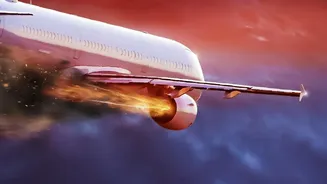
On Tuesday, September 8, 2026, the UK's national air traffic control system, run by National Air Traffic Services (NATS), experienced a major technical failure. The problem was located in its flight processing system—the complex software that turns flight plans
into manageable data for air traffic controllers. The system went down for several hours in the afternoon. While NATS has ruled out a cyberattack, the government has launched an independent review to determine the precise cause, with the Transport Secretary stating she did not believe the issue was unavoidable. This is the third major stoppage to affect NATS in just over three years, raising serious questions about the resilience of the UK's aviation infrastructure.
How Widespread Is the Disruption?
The initial system failure was fixed within hours, but the knock-on effects have been immense and long-lasting. Over two days, more than 2,000 flights were cancelled, affecting hundreds of thousands of passengers. Major hubs like London Heathrow, Gatwick, Manchester, and Stansted were severely impacted. The chaos rippled across Europe as planes and flight crews were left stranded and out of position. Airlines such as British Airways, Ryanair, and easyJet were forced to cancel hundreds of services. By Thursday, schedules were beginning to return to normal, but the backlog meant some level of disruption was expected to continue.
Why Does One Glitch Cause Such Chaos?
Modern aviation is a tightly choreographed global network. When a critical hub like the UK has to ground flights, the impact is immediate and exponential. Aircraft and crew end up in the wrong cities, creating a massive logistical puzzle for airlines. Even after the technical issue is fixed, it can take days to get every plane and crew member back to their scheduled locations. While the system was down, controllers had to revert to manual processing, which is safe but far slower, meaning the number of aircraft in the sky had to be drastically reduced to maintain safety. This reduction created a huge backlog of flights that could not be cleared instantly once the system was restored.
What if You're Flying To or From India?
The disruption had a direct impact on flights between India and the UK. Several flights operated by Air India and IndiGo from cities like Delhi, Mumbai, and Bengaluru were diverted to other European airports like Paris, Vienna, and Zurich on Tuesday. As a consequence, the return legs of these flights scheduled for Wednesday were cancelled. Passengers have faced significant delays and rebooking challenges. Both Air India and British Airways have urged travellers to check their flight status regularly before heading to the airport as the recovery process continues.
What Are Your Rights as a Passenger?
This is a crucial point for affected travellers. Under UK law, if your flight is cancelled, the airline must offer you the choice of a full refund or an alternative flight to your destination at the earliest opportunity—even if that means booking you with a rival carrier. Additionally, airlines have a "duty of care" to passengers delayed for significant periods. This means providing food and drink vouchers, access to communication, and, if necessary, overnight hotel accommodation and transport. However, when it comes to cash compensation for the inconvenience, it is unlikely to be paid. The air traffic control failure is considered an "extraordinary circumstance" outside of the airlines' control, which exempts them from this specific payment.