

A Tale of Two Missions
In a significant leap for solar physics, scientists are now combining data from two distinct and powerful space missions: India's Aditya-L1 and the European Space Agency's (ESA) Proba-3. This partnership isn't just about sharing information; it's about creating
a more complete picture of the Sun than either mission could achieve alone. Aditya-L1, launched by the Indian Space Research Organisation (ISRO) in September 2023, keeps a constant, wide-angle watch on the Sun. Proba-3, an ESA mission launched by an ISRO rocket in December 2024, employs a revolutionary technique to get a closer look at the Sun's mysterious inner corona. By analysing the same solar events from their unique perspectives, this joint team is unlocking new insights into how solar eruptions are born and evolve.
India's Unblinking Eye: Aditya-L1
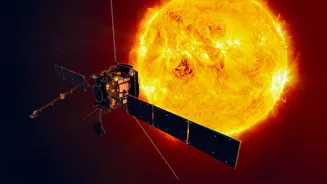
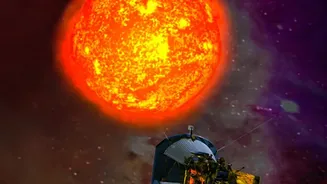
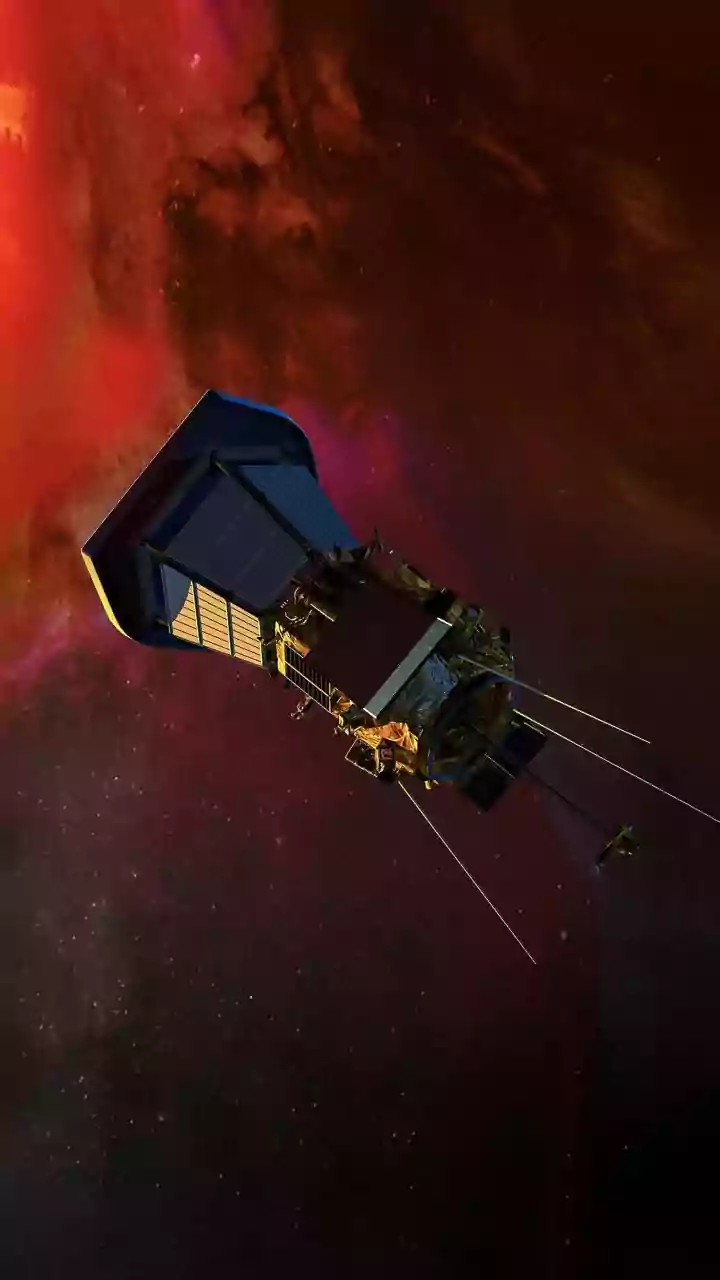
Aditya-L1 is India's first dedicated observatory for studying the Sun. It is strategically positioned at Lagrange point 1 (L1), a gravitationally stable spot about 1.5 million kilometres from Earth, which allows it to view the Sun continuously without being blocked by our planet. Among its seven sophisticated instruments, the Visible Emission Line Coronagraph (VELC) is key to this collaboration. Developed by the Indian Institute of Astrophysics, VELC studies the solar corona — the Sun's superheated outer atmosphere — very close to the solar disk. It does this through spectroscopy, analysing light to determine the temperature, density, and velocity of the coronal plasma, providing crucial data on the 'what' and 'how' of solar material.
Europe's Artificial Eclipse: Proba-3
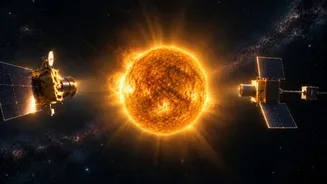
Proba-3 is a mission of breathtaking technical precision. It consists of two separate spacecraft flying in perfect formation, about 150 metres apart, to create a prolonged artificial solar eclipse. One satellite, the 'Occulter', blocks the blinding glare of the Sun's main body, allowing the other satellite's 'Coronagraph' to capture crystal-clear images of the incredibly faint inner corona. This region is where solar eruptions, like Coronal Mass Ejections (CMEs), originate, but it's extremely difficult to observe. Natural eclipses observed from Earth last only minutes, but Proba-3 can maintain its artificial eclipse for hours at a time, giving scientists an unprecedentedly long and stable view of this critical solar region.
Stronger Together: The Scientific Synergy
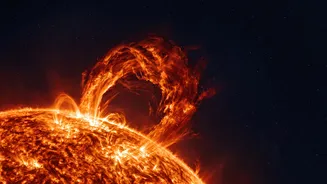
The true power of this partnership lies in combining two different but complementary observation methods. Proba-3's instrument, ASPIICS, provides sharp images, showing the shape, structure, and movement of a CME as it erupts. Simultaneously, Aditya-L1's VELC provides spectroscopic data, revealing the underlying physics — the temperature, speed, and density of the plasma within that eruption. A recent joint analysis of two CMEs in September 2025 demonstrated this perfectly. By combining the 'what it looks like' from Proba-3 with the 'what it's made of' from Aditya-L1, scientists can now measure the mass, density, and energy of CMEs much closer to their birthplace, filling a critical gap in our understanding.
Why It Matters for Earth
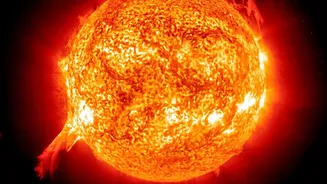
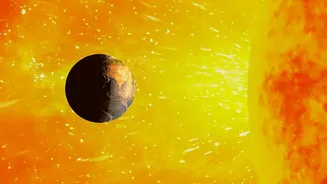
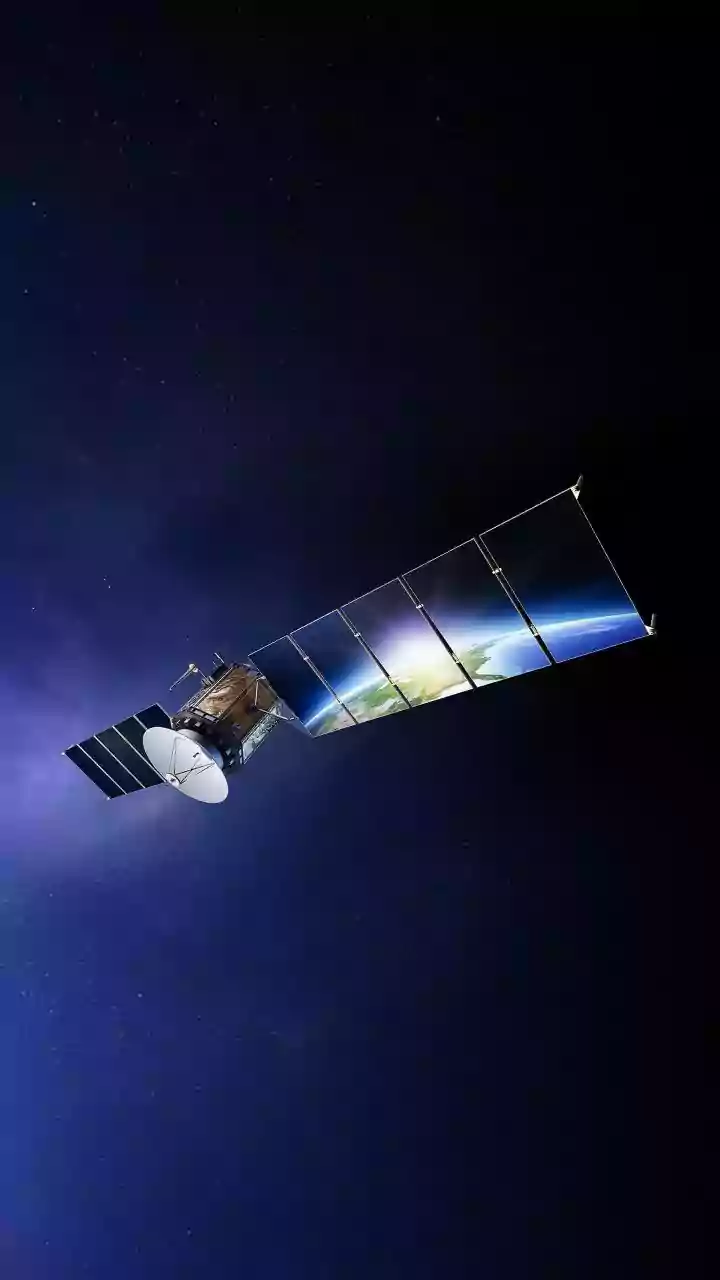
This research is not just academic; it has profound real-world implications. CMEs are massive explosions of plasma and magnetic fields from the Sun. When one of these eruptions is aimed at Earth, it can trigger severe space weather. These geomagnetic storms can disrupt and damage our vital infrastructure, including communication satellites, GPS navigation systems, and even electrical power grids on the ground. By understanding the fundamental physics of how these eruptions are initiated and gain energy near the Sun, scientists hope to improve our ability to forecast space weather. Better predictions give satellite operators and grid managers more time to take protective measures, safeguarding the technology we rely on every day.