



Why Balance Is Your Hidden Superpower
Balance is much more than just not falling over. It is a dynamic process that our bodies perform constantly. Every time you walk, you spend a significant portion of the time on one leg. This fundamental skill relies on a complex coordination between your
eyes, inner ear, brain, and muscles to keep you stable. Strong balance enhances your body's awareness of its position in space, a sense known as proprioception. This improved body control reduces strain on joints, helps prevent common injuries like ankle sprains and knee pain, and allows for better posture. For older adults, good balance is directly linked to maintaining independence and preventing falls, which are a leading cause of injury. But the benefits aren't just for later in life; better balance improves athletic performance, from running more efficiently to moving with more agility in any sport.
How to Perform a Perfect Single-Leg Stand
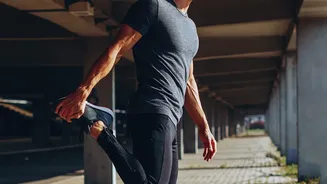
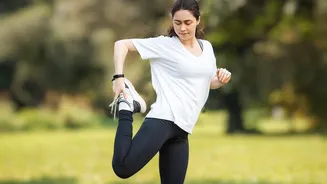
The beauty of the single-leg stand is its simplicity. You can do it anywhere, anytime, without any special gear. Here’s how to get it right: 1. Get Set: Stand tall with your feet hip-width apart, near a wall or sturdy piece of furniture for support if you feel unsteady. Keep your shoulders back and your core engaged. 2. Shift and Lift: Slowly shift your weight onto one foot. Once you feel stable, lift the other foot off the floor. You can keep the lifted leg slightly bent. 3. Find Your Focus: Keep your gaze fixed on a stationary point in front of you at eye level. Looking down at your feet can throw off your balance. 4. Hold Steady: Try to hold the position for 20 to 30 seconds. It’s normal to feel your ankle and foot muscles making tiny adjustments. Keep your standing knee soft and avoid locking it. Breathe normally; don’t hold your breath. 5. Switch and Repeat: Lower your foot back to the floor in a controlled manner, and then repeat on the other side. Aim for a few repetitions on each leg.
Common Mistakes to Avoid
To get the most out of this exercise and stay safe, be mindful of these common errors. A frequent mistake is locking the knee of the standing leg, which reduces stability and puts stress on the joint. Always keep a slight, soft bend in the knee. Another pitfall is looking down at your feet instead of forward, which disrupts the visual input your brain uses for balance. Many people also instinctively hold their breath, creating tension and rigidity that works against the natural, small adjustments your body needs to make. Finally, avoid leaning your upper body excessively to one side or letting your hip on the lifted-leg side drop. If you find yourself doing this, it could be a sign of weakness in your hip and core stabilizers, which this very exercise helps to strengthen over time.
Level Up: Simple Variations for a Greater Challenge
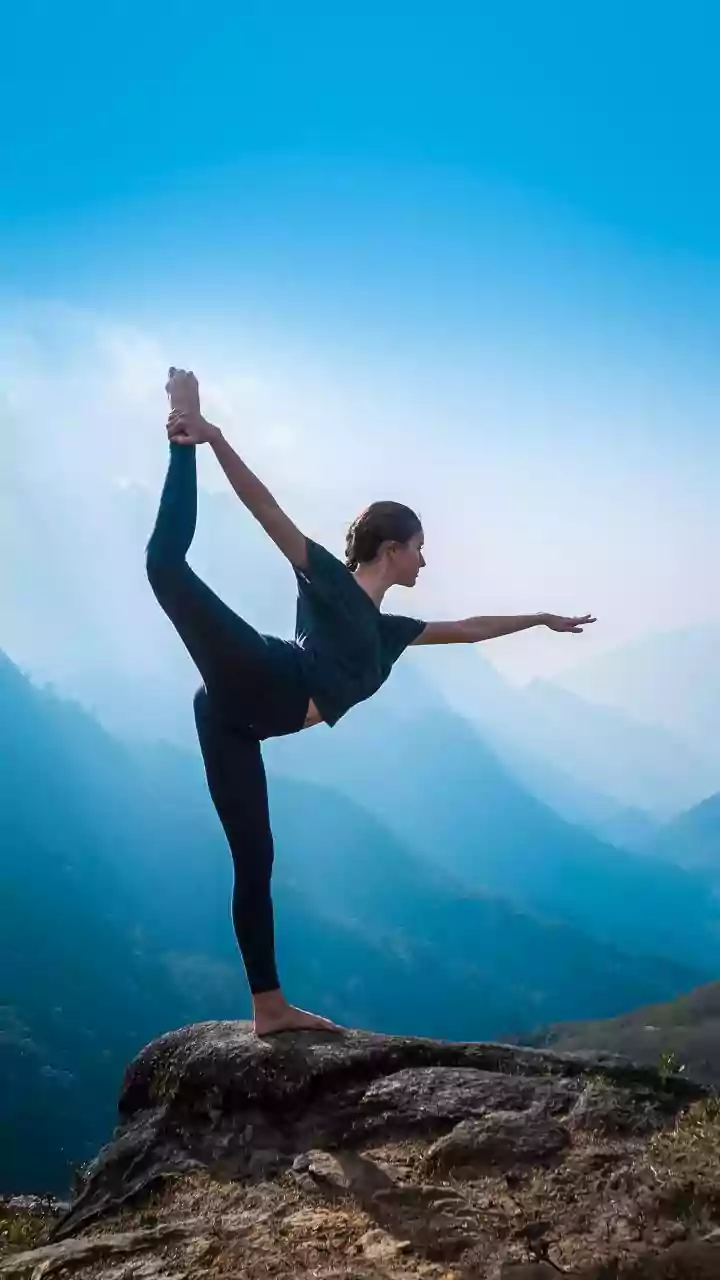
Once you can comfortably hold a basic single-leg stand for 30 seconds, you can introduce variations to continue progressing. The easiest way to increase the difficulty is to challenge your sensory inputs. Try performing the exercise with your eyes closed; you'll immediately notice how much you rely on your vision for stability. You can also make the surface less stable by standing on a pillow or a folded towel. For a more dynamic challenge, add small movements. While balancing, you can slowly move your raised leg forward, backward, and to the side. Another option is to gently toss a small, light ball from one hand to the other. These additions force your stabilizing muscles to work harder and adapt to changing conditions, further enhancing your balance and control.
Making Balance Part of Your Daily Routine
The key to improving balance is consistency, and the best way to be consistent is to integrate the exercise into activities you already do every day. You don’t need to set aside a formal workout time. Instead, try standing on one leg for 30 seconds while you brush your teeth. You can do it while waiting for your coffee to brew, talking on the phone, or standing in line at the grocery store. These small, frequent moments of practice add up, reinforcing the neural pathways and strengthening the muscles that keep you steady on your feet. By making the single-leg stand a simple habit, you are investing in your long-term mobility, health, and confidence with every passing minute.