








What Exactly Is the RBI Asking?
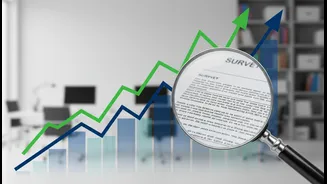
The RBI has just launched the July 2026 round of three critical household surveys, which together act as a nationwide sentiment tracker. These aren't about complex financial modelling; they ask straightforward questions about how ordinary people feel.
The surveys include the Inflation Expectations Survey of Households (IESH), the Urban Consumer Confidence Survey (UCCS), and the Rural Consumer Confidence Survey (RCCS). They seek to understand public perception on the general economic situation, the employment scenario, price levels, and personal income and spending. The urban surveys cover 19 major cities, while the rural survey extends across 31 states and Union Territories, ensuring a wide-ranging snapshot of the national mood.
From Feelings to Formal Data
For decades, central banking has been the realm of hard numbers: GDP growth, inflation rates, and credit growth. So why is the RBI now so interested in something as subjective as feelings? The answer lies in the power of expectations. What people believe will happen to the economy significantly influences their behaviour. If households expect high inflation, they may push for higher wages or rush to buy goods now before prices climb further. This behaviour can create a self-fulfilling prophecy, driving up the very inflation they feared. By directly measuring these expectations—asking people what they think will happen to prices in three months and one year—the RBI gets a forward-looking indicator that traditional data can't provide. This qualitative information has become a vital input for monetary policy decisions.
A Glimpse into the Nation's Mood
The timing of this latest survey round is crucial, as the results from the previous round in May 2026 painted a concerning picture. The RBI's Urban Consumer Confidence Survey revealed that the Current Situation Index, a measure of how people feel about the economy right now, had fallen for the third time in a row. A reading below 100 indicates that more people feel things are getting worse than getting better, and the index was in pessimistic territory. Rural India echoed this sentiment, with confidence also slipping and net perception of the economy turning negative for the first time in a year. Perhaps more worrying was the dip in the Future Expectations Index. Traditionally, Indian households have remained optimistic about the future even when the present seemed bleak. The May survey showed this optimism was beginning to fade, threatening consumption demand, which is the single largest driver of India's economic growth.
Why Your Opinion Now Matters for Policy
The findings from these surveys are not an academic exercise. They are scheduled to provide crucial inputs for the RBI's Monetary Policy Committee (MPC) ahead of its next meeting in early August 2026. This is where decisions on key policy rates, like the repo rate, are made. These rates directly influence the interest you pay on home, auto, and personal loans, as well as the returns you get on fixed deposits. When the MPC assesses whether to raise, lower, or hold interest rates, it will now consider not just the official Consumer Price Index, but also the inflation expectations and economic anxieties captured in these household surveys. If public anxiety about rising prices is high, the RBI might feel more pressure to maintain a tight monetary policy to anchor those expectations, even if other indicators are stable.
A New Era of Economic Management
By formalizing the collection of public sentiment, the RBI is acknowledging a modern economic reality: perception matters. In an interconnected world, collective psychology can move markets and shape economic outcomes as much as fiscal balance sheets can. These surveys bridge the gap between the high-level world of monetary policy and the ground-level reality faced by millions of Indian households. They transform the diffuse, often unspoken, anxiety about one's financial future into concrete data points that guide the nation's economic stewards. It means the central bank is not just looking at charts; it is also listening to the people.