







The Challenge of Too Much Success
Strong economic prospects and attractive returns often lead to significant foreign investment pouring into India. While this is a vote of confidence, a massive, uncontrolled inflow of dollars has a powerful and immediate side effect. As investors rush
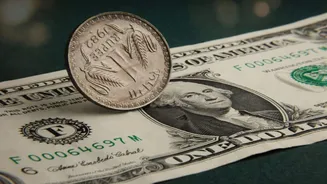
to swap their foreign currency for rupees, the demand for the rupee skyrockets. Without any intervention, this would cause the rupee to appreciate rapidly. A stronger rupee might sound good, but it makes Indian exports more expensive and less competitive on the global stage. It also makes imports cheaper, which can hurt domestic industries. This rapid currency appreciation, driven by capital flows rather than trade fundamentals, can create volatility and uncertainty for businesses.
The First Line of Defense: Buying Dollars
To counter this, the RBI intervenes directly in the foreign exchange market. Its primary move is to buy the excess dollars flowing in. By purchasing US dollars, the RBI effectively increases the supply of rupees in the system, counteracting the upward pressure on the currency's value. This action prevents the rupee from appreciating too quickly and helps maintain stability for exporters and importers. These purchased dollars are added to India's foreign exchange reserves, which act as a crucial buffer against future economic shocks, such as a sudden outflow of capital or a spike in import costs like oil. A robust level of forex reserves signals macroeconomic resilience to global investors and helps finance the country's import needs.
The Second Problem: Sterilization
However, buying billions of dollars creates a new problem. For every dollar it buys, the RBI releases an equivalent amount of rupees into the banking system. This floods the system with excess liquidity. If left unchecked, this surge in money supply could lead to higher inflation, as more money chases the same amount of goods and services. To neutralize this inflationary risk, the RBI employs a process called 'sterilization'. The most common tool for this is conducting Open Market Operations (OMOs). In this process, the RBI sells government bonds and securities from its holdings to the banks. Banks use their excess rupees to buy these bonds, effectively transferring the surplus cash back to the central bank. This mops up the extra liquidity from the system, completing the balancing act.
The Changed Impact: Stability over Volatility
Through this two-step process of intervention and sterilization, the RBI fundamentally changes the impact of foreign inflows. Instead of causing a volatile currency and potential asset bubbles, the inflows are channeled into building up national forex reserves while domestic monetary conditions are kept relatively stable. The direct impact is a more predictable exchange rate, which is critical for businesses engaged in international trade. The intervention smooths out sharp swings rather than targeting a specific rupee level. The trade-off is that this process isn't cost-free. Sterilization involves the RBI selling interest-bearing government bonds, which has its own costs and can influence domestic interest rates.
A Continuous Balancing Act
Managing foreign inflows is not a one-time fix but a continuous process of calibration. The RBI must constantly weigh the benefits of a stable currency and high reserves against the potential costs and risks of its interventions, including inflationary pressures and the impact on government bond markets. The central bank uses various tools, including forex swaps, to manage liquidity over different time horizons. For example, it might use a buy/sell swap to inject liquidity for a specific period with an agreement to reverse the transaction later. This strategy allows the RBI to manage short-term needs without permanent changes to the money supply. Recent policy shifts show the RBI is becoming more proactive, using its war chest of reserves to support the rupee whenever it weakens significantly, ensuring stability remains a top priority.