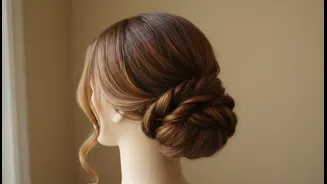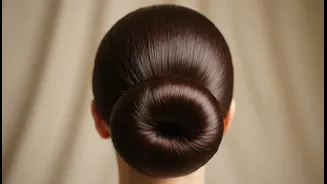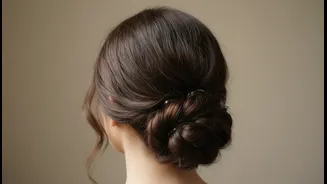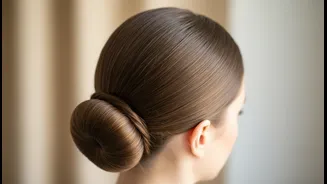




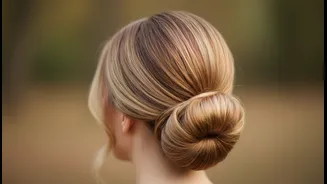
Why the Ponytail Is a Bun’s Blueprint
Think of any bun as a house built upon a foundation. If the foundation is crooked, the house will be too. In the world of updos, the initial ponytail is that foundation. Its placement dictates the final resting place of the bun, and its tension provides
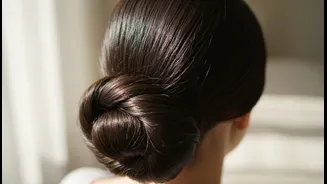
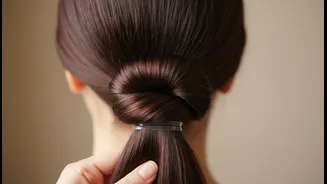
the stability needed for the style to last. A ponytail secured precisely at the center of your nape creates a low, stable anchor. This ensures that when you wrap or twist your hair into a bun, it remains balanced and symmetrical, sitting elegantly at the base of your neck instead of drifting to one side. This principle is the secret behind the clean, polished look that stylists consistently achieve.
Mastering the Perfect Nape Ponytail
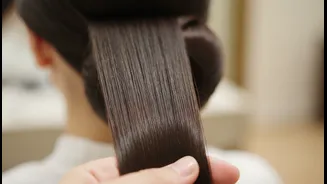
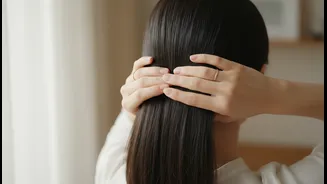
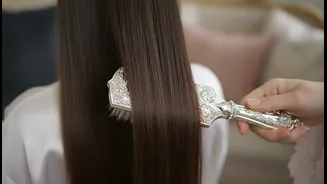
Achieving the perfect base is a simple process that pays dividends. Start with well-brushed hair to eliminate knots and create a smooth surface. Tilt your head back slightly and use a boar bristle brush or a fine-tooth comb to gather your hair at the nape of your neck. To find the exact center, use your neck's natural curve as a guide. The goal is to create a ponytail that is low and directly in the middle. Before securing, smooth down any bumps or flyaways for a sleek finish. Use a strong hair elastic to fasten the ponytail tightly against your head. A tight base is crucial, as a loose ponytail will cause the bun to sag and lose its shape throughout the day.
From Ponytail to Polished Bun
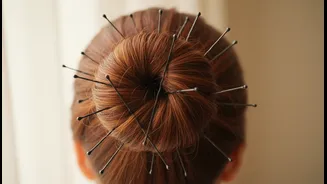
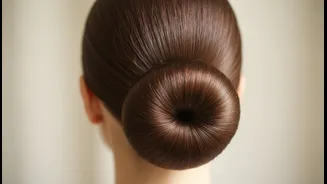
With your perfect nape ponytail secured, the hard work is done. Now, you can easily create a variety of bun styles. For a classic coiled bun, twist the entire ponytail into a single rope, then wrap it around the elastic base. Tuck the ends underneath and secure them with bobby pins or French pins. For a fuller look, you can use a sock bun tool or a bun maker, pulling the ponytail through the center and rolling it down toward the base. The centered, secure ponytail ensures the bun maker sits flat and evenly. Even a 'messy' bun benefits from this solid starting point; the intentional looseness comes from pulling out strands after the bun is formed, not from a weak foundation.
Troubleshooting Common Bun Problems
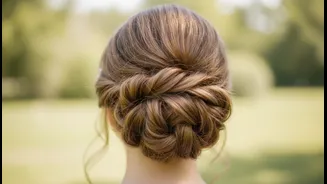
Many common bun frustrations can be traced back to a flawed ponytail. If your bun constantly feels like it’s falling to one side, it’s likely your ponytail wasn't centered. A bun that sags or feels heavy is often the result of a ponytail that was too loose or placed too high for a low style. Lumps and bumps in the final style are usually present before the bun is even formed; they come from not smoothing the hair adequately when creating the initial ponytail. By focusing on creating a smooth, tight, and perfectly centered nape ponytail first, you preemptively solve the majority of issues that can plague an otherwise simple updo.
Adapting the Principle for Different Styles
While this rule is key for a low bun, the underlying principle—that ponytail placement determines bun placement—applies to all updos. For a high bun, the ponytail should be secured at the crown of your head. For a mid-level chignon, you would place the ponytail between the crown and the nape. The symmetry rule also applies universally. A ponytail that is off-center will always result in an asymmetrical bun, which might be a deliberate style choice but is a disaster if you were aiming for a classic, balanced look. By understanding this core concept, you gain control over your updos, allowing you to place your bun exactly where you want it, every single time.