

A New Era of Speed: The 2027 Timeline
The long-awaited Mumbai-Ahmedabad bullet train is now on a clear path towards its initial service. Union Railway Minister Ashwini Vaishnaw has indicated that trial runs for the high-speed service are expected to begin by May or June of 2027. Following
a testing period of two to four months, the first section of the corridor is set to be inaugurated. This crucial first phase will launch on the Surat-Bilimora section in Gujarat, a stretch where construction is advancing rapidly. The plan involves a phased rollout, with the line progressively extending to connect Vapi, Surat, and Ahmedabad before the final leg linking Thane and Mumbai is completed for full corridor service. This phased approach ensures that systems can be thoroughly tested and integrated, prioritizing safety and operational readiness as India enters the high-speed rail era.
From Groundbreaking to Girders: A Construction Update
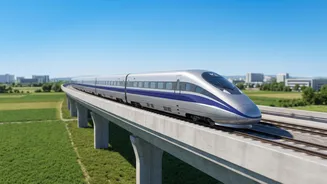
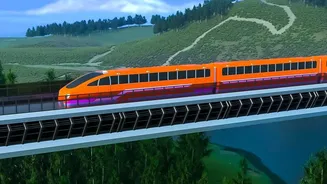
The 'progress' isn't just on paper; it's visible across the 508-kilometre route. The National High Speed Rail Corporation Limited (NHSRCL), the agency implementing the project, has reported significant construction milestones. As of late 2026, work on over 450 kilometres of piers and more than 350 kilometres of viaducts—the elevated structures that will carry the tracks—has been completed. Major engineering feats, such as the completion of 17 river bridges and 15 steel bridges, underscore the project's complexity and scale. In Maharashtra, where progress was initially slower, work is now in full swing. Construction includes India's first undersea rail tunnel beneath Thane Creek and several mountain tunnels, overcoming some of the corridor's most challenging geographical hurdles. Station construction is also advancing, with structures taking shape in cities like Surat and work on the underground terminus at Mumbai's BKC well underway.
Technology and a 'Make in India' Push
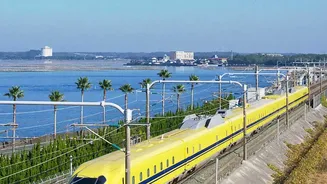
The project is being built with Japan's renowned Shinkansen technology, known for its exceptional safety and reliability. However, a significant part of the initiative aligns with the 'Atmanirbhar Bharat' vision. While the initial operational phase will rely on Japanese expertise, there is a strong push for indigenous manufacturing. The first body frame of an Indian-made bullet train has already been completed and sent for structural testing. These 'Made in India' high-speed trains are expected to be deployed on the corridor once they clear all trials. Furthermore, the NHSRCL is working to create a standardised template based on the MAHSR project for future high-speed corridors across the country, aiming to streamline design, manufacturing, and construction for a nationwide network.
More Than Just a Fast Train
When fully operational, the bullet train will slash travel time between Mumbai and Ahmedabad to just under two hours for the fastest services, a journey that currently takes seven to eight hours by conventional rail. With trains operating at a speed of 320 km/h, the corridor will offer a competitive alternative to air travel, especially when factoring in city-to-airport transit times. The project is a massive economic engine, expected to create jobs and boost industrial activity in the regions it connects. Stations are being designed as modern transport hubs with seamless connectivity to local bus and rail networks, like the planned foot over bridge with travelators at Vadodara station. By connecting India's financial capital with a major industrial and economic hub, the corridor is set to enhance business opportunities, aid mobility, and serve as a powerful symbol of India’s infrastructural capability.