







What Exactly Is OpenAI Building?
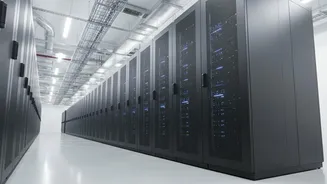
OpenAI has announced "Project Camellia," a sprawling data centre campus planned for Effingham County, Georgia. The scale is difficult to overstate. The company has a 25-year agreement with Georgia Power to supply up to 3.2 gigawatts (GW) of electricity
to the site, which will be built on a 1,400-acre plot. For context, a single large data centre today might use around 100 megawatts (0.1 GW). This project is on an entirely different level. The development, which represents a capital investment expected to exceed $20 billion, will be phased in between 2028 and 2032. This isn't just a case of renting space; OpenAI is taking the lead role as the designer and developer, a significant strategic change from its previous model of leasing capacity from cloud giants like Microsoft.
Why Build When You Can Rent?
The move from renter to owner signals a fundamental shift in the AI industry. For years, AI companies have relied on cloud providers for the immense computing power they need. But as AI models become more complex, their thirst for energy and specialised hardware is growing exponentially. By building its own facilities, OpenAI gains unprecedented control over its infrastructure. This strategy, known as vertical integration, allows the company to design the entire stack—from the physical building and cooling systems to the networking and servers—specifically for its AI workloads. This can lead to better performance and efficiency. More importantly, it provides supply chain security. In a world where access to cutting-edge chips and computing power is a key competitive advantage, owning the infrastructure means OpenAI is no longer as dependent on other companies for its most critical resource.
The Unprecedented Demand for Power
The 3.2 GW power contract for Project Camellia is a figure that redefines the scale of AI infrastructure. A single modern AI data centre can consume as much electricity as 100,000 homes. OpenAI's Georgia campus will demand power equivalent to millions of households. This enormous energy requirement highlights the central challenge facing the entire AI industry. In fact, site selection for these mega-projects is shifting from being “fiber-first” (close to internet backbones) to “power-first” (located where massive amounts of energy are available). Recognizing this, OpenAI is paying the full cost of the new electrical infrastructure required, ensuring that existing residential customers won't see their bills rise to subsidise the project. The company has also committed to flexible demand response, allowing it to reduce power consumption during peak times to help stabilise the local grid.
A New Blueprint for AI Giants
OpenAI's move is a clear sign that leading AI companies are evolving into a new type of entity—part software firm, part power utility, and part industrial developer. This vertical integration strategy may become the new blueprint for survival and dominance in the age of generative AI. While the upfront costs are astronomical, with some reports suggesting OpenAI's total infrastructure spending could reach $750 billion by 2030, the long-term strategic payoff is control and capability. By building its own facilities, the company can also pioneer new, more efficient designs. OpenAI has even suggested it may open-source the blueprints for its data centres, potentially influencing how the entire industry builds AI infrastructure in the future. This trend forces competitors to decide whether they can afford to remain dependent on cloud providers or if they too must start pouring their own concrete.
Challenges and Community Concerns
A project of this magnitude is not without significant challenges and controversy. The immense energy and water consumption of data centres is a growing environmental concern. A large facility can use millions of gallons of water per day for cooling. To address this, OpenAI says Project Camellia will use a closed-loop water system designed to recirculate and minimise water use. The company has also been proactive in its community engagement, promising $80 million in local benefits for schools and services, and assuring residents it will be a responsible neighbour. An independent firm will conduct an annual audit to hold OpenAI accountable to its commitments. Despite these promises, the sheer scale of the project, and its reliance on a power grid that will be expanding its natural gas capacity, has raised concerns among environmental groups.