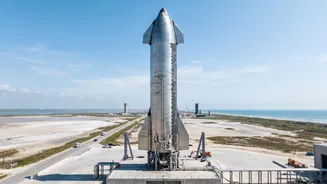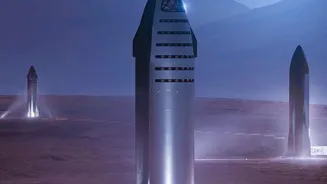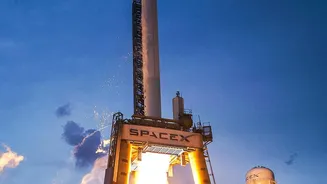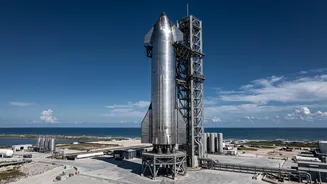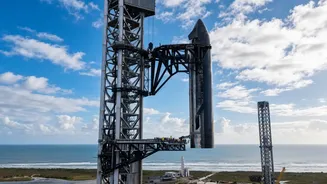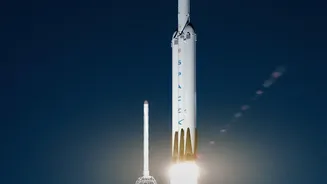






SpaceX just made history by catching its Starship upper stage with the launch tower's giant mechanical arms, a first in rocketry. This milestone is a huge leap toward the holy grail of spaceflight: a fully and rapidly reusable rocket system.
A Landmark Mission with a Twist
On November
13, the 15th test flight of SpaceX's Starship system lifted off from Texas. The mission's ambitious goal was to recover both parts of the massive rocket: the Super Heavy booster and the Starship upper stage. While the upper stage part of the mission was a stunning success, the booster recovery did not go as planned. Just minutes after launch, an issue forced SpaceX to abort the booster's return to the launch tower, diverting it for a splashdown in the Gulf of Mexico. The company is investigating the cause. Despite this setback, the main event was yet to come. The Starship spacecraft successfully entered orbit, deployed 26 Starlink satellites, and spent over 22 hours circling the Earth.
The 'Holy Grail': Catching a Spaceship
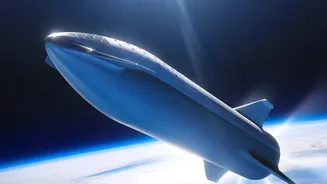
After completing 14 orbits, the Starship upper stage, known as Ship 42, began its fiery descent. It re-entered the atmosphere, performed a controlled 'belly-flop' maneuver to slow down, and then reignited its engines to flip vertical for a pinpoint landing. Waiting at the launch site was the 'Mechazilla' tower, equipped with two giant 'chopstick' arms. In a maneuver never before successfully attempted, these arms closed around the descending spacecraft, catching it securely. This marked the first time an orbital-class upper stage has ever been recovered at its launch site, a feat many consider the 'holy grail' of rocketry. Previously, all upper stages were disposable, burning up on re-entry or being ditched in the ocean.
Why Full Reusability Changes Everything
SpaceX's Falcon 9 rocket already transformed the launch industry by reusing its first-stage boosters. However, its second stage is still thrown away after each flight. Starship is designed to take this a giant step further, with both the Super Heavy booster and the Starship spacecraft intended to be caught, refurbished, and relaunched quickly. Eliminating the need for landing legs saves weight and simplifies the design. Achieving airplane-like turnaround times would drastically reduce the cost of accessing space, making it economically viable to launch thousands of missions a year. This high launch cadence is central to Elon Musk's plans, including building out a massive next-generation Starlink internet constellation and, eventually, enabling human settlement on Mars.
The Road Ahead: Refurbishment and Repetition
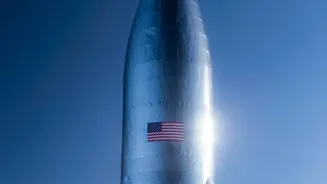
While the catch was a success, the journey to rapid reusability is not over. The historic Ship 42 survived re-entry in good condition, but Elon Musk noted it would still need a few weeks of refurbishment to fly again. The ultimate goal is to require virtually zero refurbishment between flights. Musk recently suggested that a new 'woven stainless steel matting' on the ship's exterior could be the key to protecting the vehicle from the intense heat of re-entry without needing significant repairs after each mission. For now, SpaceX has decided to retire the record-making Ship 42 for public display, given its historic accomplishment. The focus will now shift to repeating the catch with newer ships and solving the remaining challenges, like consistently recovering the Super Heavy booster, to make a 'double catch' a routine event.