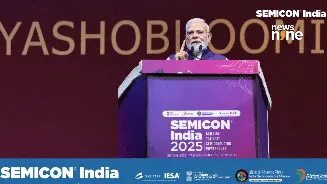








A Global Tech Summit in New Delhi
From September 17 to 19, the nation's capital will become the epicentre of the global semiconductor industry. The fifth edition of SEMICON India will take place at Yashobhoomi, New Delhi's state-of-the-art convention centre. Jointly organised by the India Semiconductor
Mission (ISM) and the global industry association SEMI, the event is set to be the largest yet. Over 500 exhibitors, including nearly 300 international firms from more than 40 countries, are expected to attend. The three-day summit will be inaugurated by Prime Minister Narendra Modi, who will also host a roundtable with global CEOs, signaling the high level of strategic importance the government places on this sector. This gathering isn't just for industry giants; it's a convergence of policymakers, researchers, investors, and startups, all focused on a singular goal.
From Silicon to Systems: Building the Full Chain
This year's theme, “Silicon to Systems: Building the Ecosystem,” points to a significant shift in India's strategy. The focus is no longer just on one part of the process but on creating a comprehensive, end-to-end value chain. This includes everything from the raw materials (sand to silicon) and chip design to complex manufacturing (fabs), packaging (OSAT), equipment, and finally, integration into electronic systems. A key feature of the 2026 event will be the 'Sand to Silicon to Systems' Value Chain Experience, designed to showcase India's growing capabilities at every stage. The agenda reflects this holistic approach, with discussions covering artificial intelligence, supply chain management, advanced materials, and talent development, highlighting the country's evolution from a participant to a potential leader in the global semiconductor landscape.
The Engine: India's Semiconductor Mission 2.0
SEMICON India is the public face of the ambitious India Semiconductor Mission (ISM), a government initiative designed to establish a robust domestic chip ecosystem. After a successful first phase that saw several projects break ground, the government has launched ISM 2.0. This next phase expands the mission's scope significantly, providing support for not just manufacturing but also chip design, materials, R&D, and critically, talent development. The momentum is tangible, with officials confirming that five to six semiconductor projects are expected to be in commercial production by the end of 2026. This on-ground progress lends immense credibility to India's ambitions and proves that the nation is moving from planning to execution. The program aims to cultivate a workforce of 85,000 skilled engineers to power this growing industry.
Why Chips Mean More Than Tech
The push for a self-reliant semiconductor industry is about much more than just technology. For India, it is a matter of economic sovereignty and national security. Semiconductors are the foundational components of the modern digital economy, powering everything from smartphones and data centres to electric vehicles and advanced defence systems. An excessive reliance on imports creates a strategic vulnerability. By building a domestic ecosystem, India aims to reduce this dependency, boost domestic value addition in electronics manufacturing, and create thousands of high-value engineering and manufacturing jobs. With India’s semiconductor market projected to reach $110 billion by 2030, establishing a strong local industry is crucial for securing the nation's economic future and its goal of becoming a global manufacturing hub.
Global Confidence and Local Action
The scale of international participation at SEMICON India 2026 is a clear indicator of growing global confidence in the country's semiconductor journey. As global companies look to diversify their supply chains, India is emerging as a credible and attractive destination. The presence of six dedicated country pavilions and delegations from over 40 nations underscores this trend. The event serves as a critical platform for fostering global partnerships, attracting foreign investment, and integrating Indian companies into the worldwide supply chain. This mix of global interest and concerted local action, driven by government policy and private sector execution, is creating a powerful synergy that could finally turn India's long-held chip-making dream into a reality.