



The Stroke of Midnight
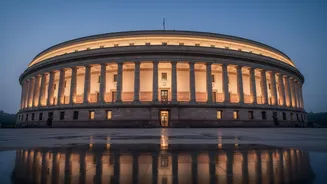
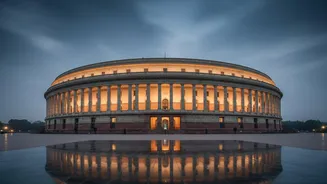
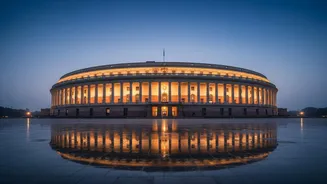
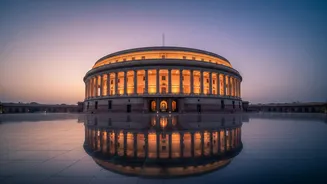
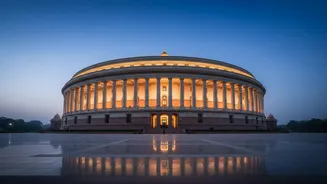
The first act of India's independence unfolded not in a public square, but inside the dome of the Constituent Assembly Hall in New Delhi, now the Parliament House. On the night of August 14, 1947, as the clock ticked towards midnight, leaders of a new
India gathered for the formal transfer of power. It was here that Jawaharlal Nehru delivered his poetic and momentous 'Tryst with Destiny' speech. He spoke of redeeming a pledge made long ago, as India would 'awake to life and freedom' when the world slept. This session, chaired by Dr. Rajendra Prasad, cemented Delhi's role as the political epicentre. The official ceremonies, where Nehru was sworn in as Prime Minister and Lord Mountbatten continued as Governor-General, took place in the city, marking the legal and administrative transition from British rule.
A New Flag for a New Nation
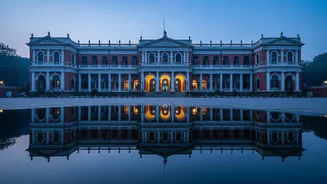
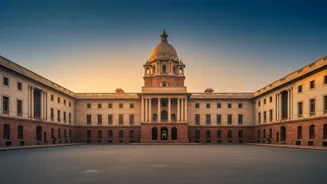
While the political transfer happened at midnight, the first major public gathering occurred on the morning of August 15, 1947. Contrary to popular belief that is shaped by decades of tradition, the first public flag hoisting by Nehru did not happen at the Red Fort. Instead, tens of thousands of jubilant citizens converged at Princess Park, near India Gate. It was here, in the afternoon, that Nehru raised the Indian tricolour for the first time before a massive public crowd. The atmosphere was one of chaotic joy. The formal ceremony at what was then the Viceroy's Lodge (now Rashtrapati Bhavan) saw the new Indian flag hoisted at 10:30 AM. The sheer, unmanageable size of the crowds that flocked to the heart of New Delhi demonstrated the city's spontaneous transformation into a space of national celebration.
The People's Unstoppable Joy
The official plans for the day were almost immediately overwhelmed by the scale of public emotion. Hundreds of thousands of people poured into the streets, ignoring security arrangements and designated enclosures. When Lord Mountbatten and Prime Minister Nehru travelled from the swearing-in ceremony, their carriage was swamped by euphoric crowds. People chanted 'Jai Hind' and clambered onto the vehicle, eager to be part of the historic moment. Lord Mountbatten later described the scene as a moment of incredible connection with the people of India. This outpouring was not just a planned event; it was a spontaneous takeover of the city's imperial heart by its new citizens, transforming the grand avenues of Lutyens' Delhi into a stage for a people's festival.
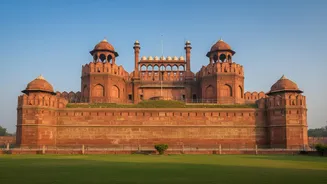
The Symbolic Rise of the Red Fort
The tradition we now associate with Independence Day—the Prime Minister's address from the Red Fort—was actually established a day later, on August 16, 1947. The choice was deeply symbolic. The Red Fort, the seat of Mughal power, had been captured by the British and was seen as a symbol of colonial domination. Nationalist leaders, including Subhas Chandra Bose, had called for a victory parade at the 'Lal Qila' to reclaim the nation's honour. By choosing to hoist the flag and address the nation from its ramparts, Nehru was making a powerful statement. He was symbolically reclaiming the fort for the people, turning a monument of past empires and colonial subjugation into the foremost symbol of India's sovereign future. This act established a tradition that continues to this day, forever linking the Red Fort with the idea of a free India.