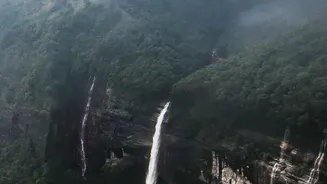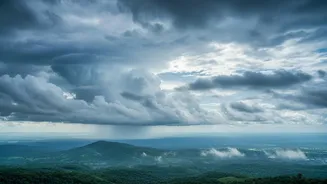









The Great Cloud Deception
It’s a widespread belief in India that if you can’t see the sun, you can’t get sun damage. Unfortunately, this is a dangerous misconception. Clouds are very effective at blocking visible light and heat, which is why overcast days feel cooler and darker.
This tricks our senses into a false sense of security. However, these clouds are far less effective at filtering out invisible UV radiation. In fact, studies show that up to 80-90% of UV rays can penetrate through light cloud cover, meaning your skin is still being exposed to significant damage even on the greyest monsoon day.
Not All Rays Are Created Equal
To understand the risk, it’s important to know about the two main types of UV rays that reach us: UVA and UVB. UVB rays are responsible for visible sunburns, while UVA rays penetrate deeper into the skin, causing long-term damage like premature ageing, wrinkles, and pigmentation. Clouds do a better job of blocking some UVB rays, which is why you might not get a red sunburn as quickly. However, UVA rays pass through clouds—and even glass windows—with very little resistance. This means that throughout the monsoon, you are consistently exposed to the very rays that accelerate skin ageing and contribute to cancer risk, often without any immediate warning signs like a burn.
Why Monsoon Is a Unique Challenge
The monsoon season in India presents its own set of challenges. High humidity can make traditional sunscreens feel heavy, sticky, and greasy, discouraging daily use. Furthermore, wet surfaces like roads, puddles, and buildings can reflect UV rays, increasing your total exposure from multiple angles. There's also a phenomenon known as the "broken-cloud effect," where scattered clouds can actually enhance UV levels by reflecting and scattering the rays, sometimes making exposure even higher than on a completely clear day. The UV Index in major Indian cities like Mumbai and Chennai often remains in the 'High' category even on cloudy monsoon days.
More Than Just a Tan
Consistent UV exposure, even at lower levels on cloudy days, is cumulative. This means the damage builds up over time. For Indian skin, this often manifests as stubborn tanning, hyperpigmentation, worsening of acne marks, and conditions like melasma. While higher melanin levels in Indian skin offer some natural protection and a lower risk of burning compared to fairer skin types, they do not make us immune to damage. The risk of premature photoaging and skin cancer remains a serious long-term concern.
Your Monsoon Protection Plan
Protecting your skin during the monsoon doesn't have to be complicated. The key is consistency. Look for a 'broad-spectrum' sunscreen, which protects against both UVA and UVB rays, with an SPF of at least 30, and ideally 50. Given the humidity and chance of getting caught in a drizzle, a water-resistant formula is an excellent choice. For those with oily or acne-prone skin, gel-based or lightweight fluid sunscreens are more comfortable for daily wear in humid weather. Remember to apply it as the last step of your morning skincare routine, about 20 minutes before you head out, and reapply every two to three hours if you are outdoors, sweating, or get wet.