



The Electric Elephant in the Room
For decades, the sports car formula has been simple: add lightness. A lightweight car brakes better, turns more eagerly, and feels more connected to the driver. But the shift to electric power has flipped this script. The massive battery packs required
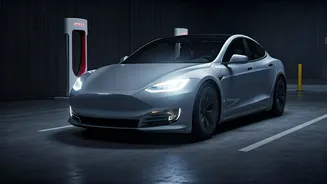
for decent range can add hundreds of kilograms, pushing even small EVs to the weight of a family SUV. This has created a new breed of performance car—unbelievably fast in a straight line, but often lacking the nimble, playful character that enthusiasts cherish. This fundamental conflict between electric necessity and dynamic purity is the biggest challenge facing the future of the sports car.
A Legacy of Lightness
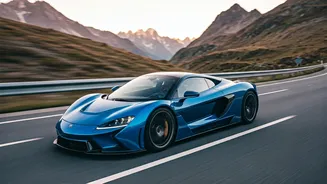
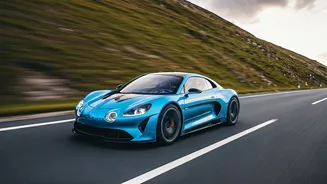
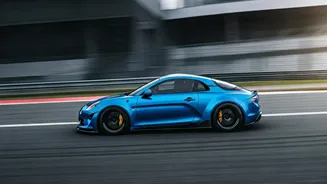
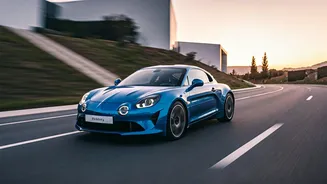
If any brand can solve this puzzle, it might be Alpine. The French manufacturer, revived by Renault, built its reputation on small, featherlight sports cars that could out-manoeuvre more powerful rivals. Its modern-day A110 is a masterclass in this philosophy, celebrated by critics for its agility and driver feedback. Rather than abandon this identity in the electric era, Alpine is doubling down. The brand is now previewing the 'A110 Future', a development prototype for its next-generation all-electric sports car, which aims to prove that an EV can remain true to the company’s lightweight DNA.
Engineering a Lighter Future
The A110 Future isn't just an existing car with an electric motor swapped in; it's a showcase of innovative thinking. It’s built on the all-new Alpine Performance Platform (APP), an advanced aluminium architecture designed specifically for a lightweight EV. The most radical innovation is how it carries its power. Instead of a flat 'skateboard' battery that adds weight and raises the car's centre of gravity, the battery modules are split. Some are placed at the front and others at the rear, helping to achieve an optimal weight distribution of around 40/60, mimicking a traditional mid-engine sports car. This clever packaging is central to preserving the car's balance and handling.
Shedding Kilos, Not Performance
The war on weight extends beyond the battery placement. An earlier prototype, the A110 E-ternité, showcased the use of advanced composite materials, including flax-based panels, which are as strong as carbon fibre but more sustainable. The A110 Future also employs an 800-volt electrical system and a compact rear e-axle that integrates two motors and a gearbox into one unit, all contributing to efficiency and weight savings. The goal is not to create the world's heaviest, most powerful EV, but one of the lightest. The E-ternité prototype, for instance, weighed just 1,378 kg, only 258 kg more than its petrol-powered sibling, a remarkable achievement in the EV space.
A Blueprint for Driving Pleasure
By focusing on lightness, Alpine is making a bold statement: the future of electric sports cars shouldn't just be about mind-bending 0-100 km/h times. It should be about the feeling behind the wheel. A lighter car is inherently more efficient, requiring a smaller battery for a given range, which in turn reduces weight further—a virtuous cycle. It allows for more responsive steering, superior braking, and a character that engages the driver on a winding road, not just at a drag strip. Alpine is billing its creation as the “world's first true EV sportscar,” a claim rooted in this philosophy of dynamic response over brute force.