




An Imprint of History
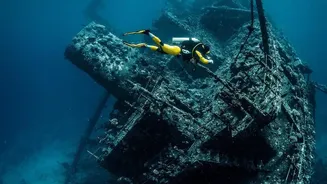
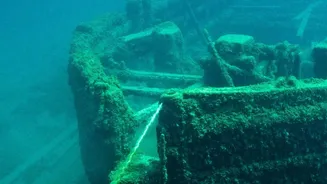
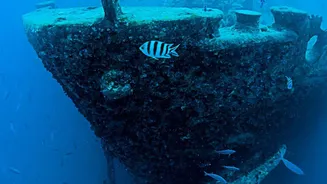
In the silent depths of the Mediterranean, marine archaeologists frequently encounter scenes that are both haunting and thrilling. One recurring phenomenon is the discovery of a 'ghost' shipwreck, where the organic structure of the vessel has completely
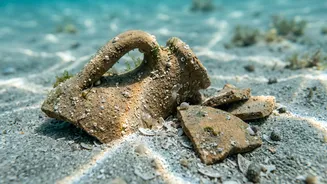
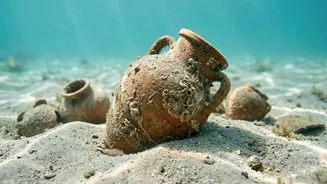
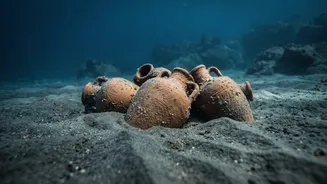
disappeared over centuries, but its inorganic cargo remains. Recently, several such discoveries have brought this fascinating process into focus. Off the coast of Sicily, a Roman-era ship from around the 1st or 2nd century BC was found with its cargo of amphorae—large ceramic jars—still arranged in the precise formation they were stowed in. The wood is gone, eaten away by marine organisms like shipworms, but the pottery provides a ghostly outline of the ship's hold, a negative impression of a vessel that no longer exists. These finds are like time capsules, offering a direct window into the bustling trade routes of the ancient world.
Pottery as Storytellers
The true treasure of these wrecks is not gold or jewels, but the humble pottery. Each amphora is a data point, a silent storyteller. Archaeologists can determine a surprising amount from these ceramic containers. The shape of an amphora, for instance, can reveal its contents and origin. Tall, cylindrical jars, known as Dressel 1A, were primarily used for transporting wine, a staple of Roman trade. By analyzing the clay, experts can trace the pottery back to specific workshops, perhaps in modern-day Spain or Tunisia. A recent discovery off the coast of Turkey, believed to be one of the oldest shipwrecks ever found at 4,400-4,700 years old, contained over 30 ceramic pots. Though its wooden structure vanished, the pots give clues about Early Bronze Age trade networks across the Mediterranean. Some even contain residue of their original contents, giving scientists a chance to analyze the very products, like wine or olive oil, that were being shipped thousands of years ago.
The Science of Disappearance and Preservation
The sea is a patient and powerful force of decomposition. For a wooden ship, the primary enemies are tiny, voracious mollusks known as shipworms, which bore through timber until nothing is left. In warmer waters like the Mediterranean, this process can be relentless. The survival of a wooden hull often depends on it being rapidly buried in sediment, cutting it off from the oxygen and organisms that cause decay. Pottery, however, is a different story. Fired clay is almost indestructible in a marine environment. It doesn't rust, rot, or get eaten. As a result, while the vessel that carried it disappears, the cargo can lie on the seabed for millennia, becoming a permanent feature of the underwater landscape. In some cases, as with a recent find near the Croatian island of Vis, parts of the wooden keel survive alongside the pottery, offering an even richer dataset for researchers to explore Hellenistic-era trade.
Reconstructing a Lost World
By studying these pottery fields, archaeologists can reconstruct the story of a lost voyage. The collection of different amphora types can suggest a complex trade route with multiple stops. For example, a wreck might contain wine jars from Italy and oil jars from North Africa, indicating it was a merchant vessel plying a well-established commercial circuit. These discoveries help map the economic engine of ancient empires, showing how goods, ideas, and cultures moved across the sea. A single shipwreck is a snapshot of this activity, frozen in time by disaster. While the cause of the wreck—a storm, a pirate attack, or a simple navigational error—is often impossible to know for sure, the cargo tells us about the life of the ship, its purpose, and its place in a vast, interconnected ancient world.