

A Violent and Rapid Birth
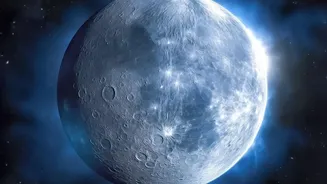
Imagine our planet’s most significant event unfolding faster than a night's sleep. This is the picture painted by a new theory of the Moon’s formation. Scientists using powerful supercomputers have run high-resolution simulations showing that our Moon could
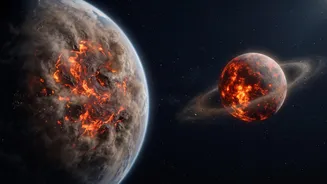
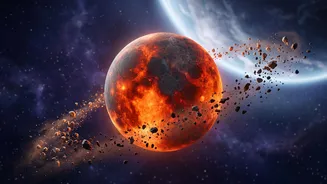
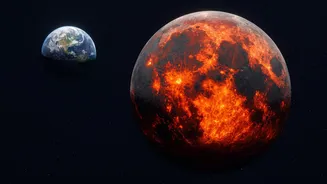
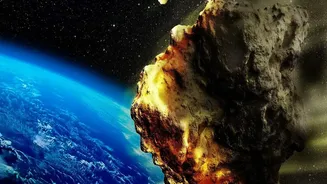
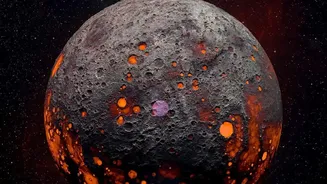
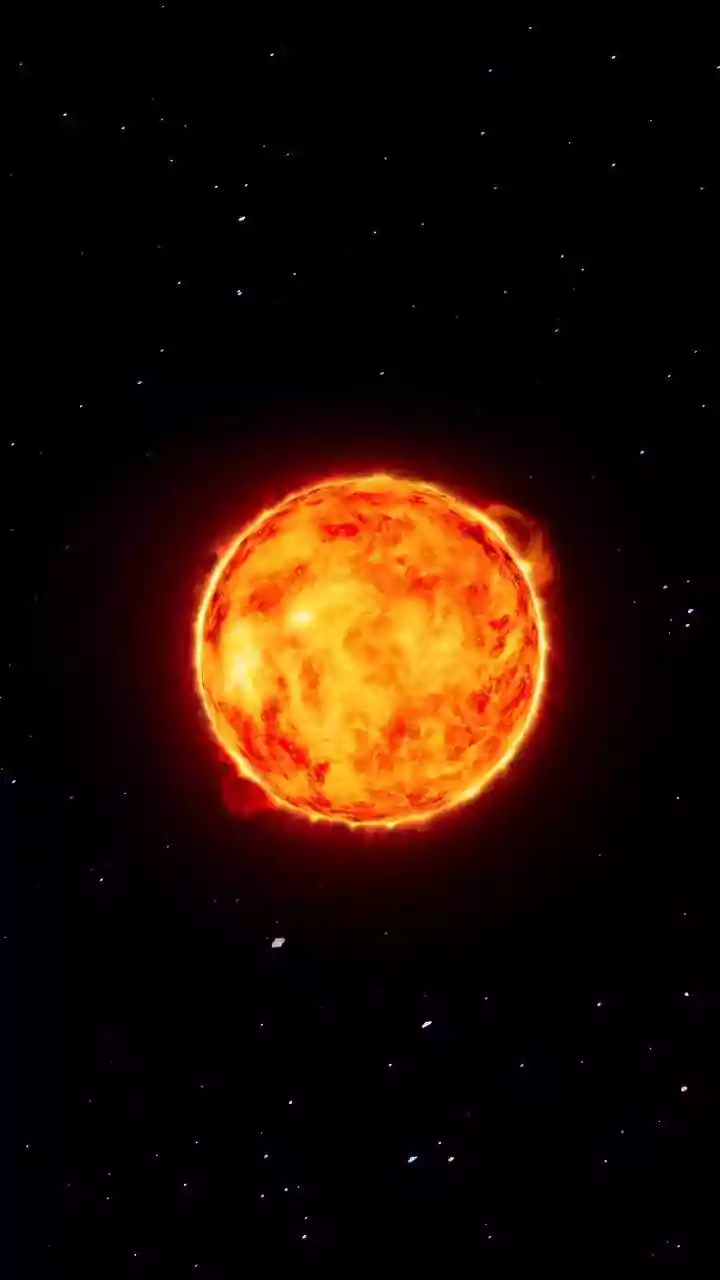
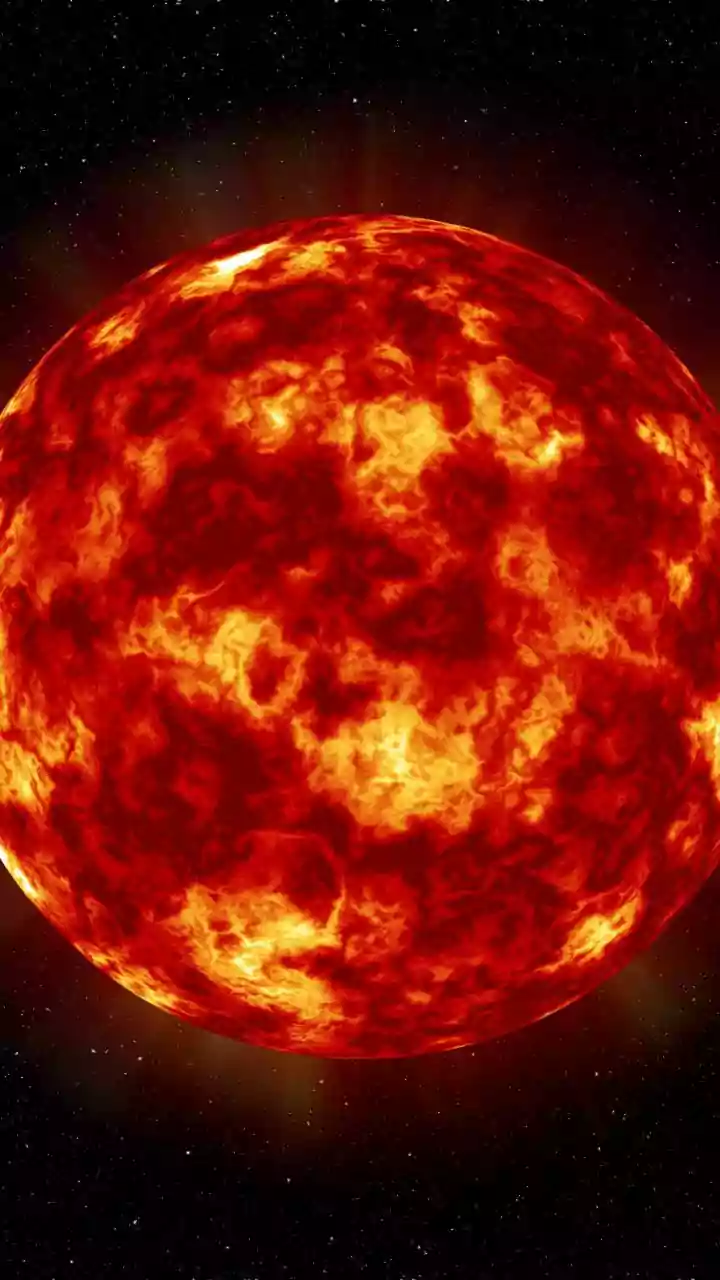
have formed in as little as five hours. According to this scenario, about 4.5 billion years ago, a Mars-sized protoplanet, nicknamed Theia, slammed into the young Earth. Instead of creating a disc of debris that slowly clumped together over months or years, the immense force of this impact could have launched a large, self-gravitating clump of material almost immediately into a stable orbit. This clump, a mix of vaporised rock from both Earth's mantle and Theia, would have rapidly coalesced into a proto-Moon. This immediate-satellite scenario opens up a radical new timeline for one of the most pivotal moments in our solar system's history.
Challenging a Long-Held Theory
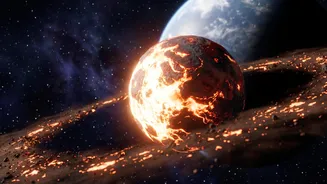
For decades, the leading explanation for the Moon's existence has been the "Giant-Impact Hypothesis.". In this model, the collision between Earth and Theia created a massive, hot ring of debris that circled our planet. Over a much longer period—potentially months or even years—this material gradually accreted, or clumped together, to form the Moon. This theory has successfully explained several key features, such as the Moon's small iron core and evidence that it was once covered by a magma ocean. However, it has struggled to fully account for one major finding from the Apollo missions: the remarkable isotopic similarity between lunar rocks and Earth rocks. If the Moon formed mostly from the debris of Theia, as earlier models suggested, it should have a more distinct chemical signature. The rapid-formation theory offers a potential solution, as a more violent and immediate mixing of material from both bodies could explain this family resemblance.
The Power of a Virtual Universe
The new five-hour theory wasn't born from a new telescope, but from the immense power of modern supercomputers. Researchers at institutions like Durham University and the Southwest Research Institute used advanced simulation software to model the ancient collision at a much higher resolution than ever before. These simulations, running on facilities like the DiRAC High-Performance Computing facility, can track the complex gravitational forces and material physics of hundreds of millions of particles. By varying parameters like the impact angle, speed, and the internal temperatures of the colliding planets, scientists could explore outcomes that were previously impossible to compute. They discovered that if the early Earth and Theia were hot and geologically weak, the impact could have been powerful enough to obliterate Theia and launch a nearly intact Moon directly into orbit. This is where the headline comes from: it's a possibility that exists inside the world's most powerful computers.
The Gap Between Simulation and Proof
While these simulations are compelling, they are not definitive proof. A five-hour formation is a possible outcome under specific initial conditions, but it's not the only one. Different simulations, using different assumptions about the temperature and composition of the primordial planets, can still produce the more traditional, slower-forming debris disk. The key challenge is that we cannot know the exact state of Earth and Theia 4.5 billion years ago. Therefore, while the rapid-birth model provides an elegant explanation for some lunar mysteries, it remains a hypothesis. The next step for scientists is to find physical evidence that can either support or contradict this new, faster timeline. Without that, it remains a fascinating possibility generated by code, waiting for confirmation from rock and dust.
The Quest for Lunar Truth
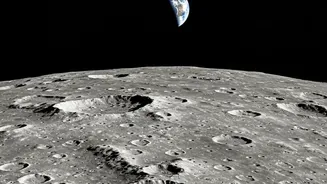
The ultimate test for any lunar formation theory lies on the Moon itself. The samples returned by the Apollo astronauts revolutionized our understanding and provided the foundation for the Giant-Impact Hypothesis. Now, a new generation of lunar missions promises to provide the crucial data needed to test this rapid-formation theory. NASA's Artemis program, which aims to establish a long-term human presence on the Moon, will involve extensive field geology and the collection of new samples from different regions, particularly the unexplored South Pole. By analyzing the internal structure and composition of these new rocks, scientists hope to find signatures that could only have been created by a very rapid formation. For example, a moon that formed in hours might have a different internal structure and a less uniform composition than one that accreted slowly. The Artemis II mission in April 2026 already conducted crucial geological reconnaissance from orbit, helping to map out future landing sites for this very purpose.