


A Global Hub for Space Operations
The International Conference on Spacecraft Mission Operations (SMOPS) is a key event where the world's space community converges to share insights on managing increasingly complex missions. The 2026 edition, held in Bengaluru, was jointly organised by
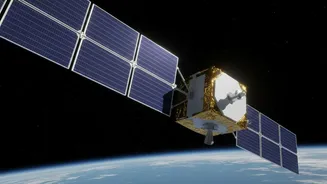
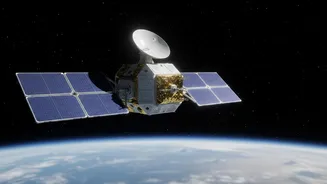
ISRO, the Astronautical Society of India (ASI), and the International Academy of Astronautics (IAA). The theme, "Innovative Operations for Smart and Sustainable Space Mission Management," set the stage for deep discussions on everything from large satellite constellations to human spaceflight and interplanetary exploration. At the heart of these conversations was the critical need for automation and artificial intelligence in shaping the next generation of mission operations.
The Necessity of Self-Thinking Spacecraft
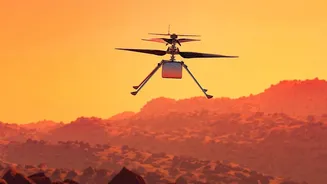
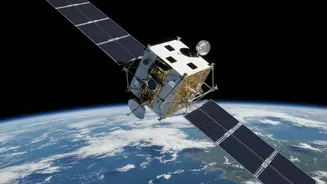
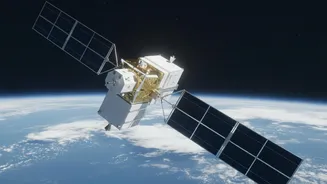
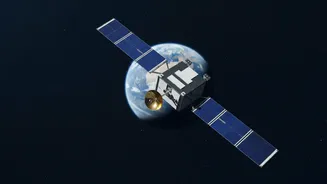
For decades, spacecraft have been guided by human operators on the ground. But as we venture further into the solar system, this model is becoming impractical. The communication delay between Earth and Mars, for instance, makes real-time control impossible. This is where autonomous operations come in. Spacecraft need to be able to make their own decisions to navigate terrain, diagnose internal faults, and respond to unexpected events without waiting for instructions from a distant mission control. This capability is crucial not just for deep-space exploration, but also for managing the growing number of satellites in Earth's orbit and ensuring resilience in increasingly contested space environments.
From Automation to True Autonomy
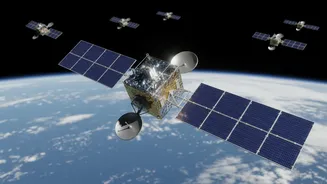
It's important to distinguish between simple automation and genuine autonomy. Early automation involved running pre-written scripts, a bit like a washing machine running through a cycle. The new frontier, heavily discussed at SMOPS-2026, is about AI-driven autonomy. This involves equipping spacecraft with neural networks and machine learning algorithms that allow them to learn, adapt, and make intelligent decisions. Recent breakthroughs, like the US Air Force Research Laboratory demonstrating a neural network controlling a satellite in orbit, show this is no longer science fiction. These systems can optimize performance, manage resources, and react to threats with a speed and precision beyond human capability.
Changing the Human Role in Mission Control
A common question is whether this new era of autonomous spacecraft will make human operators obsolete. The consensus among experts is no; instead, it will fundamentally change their role. Ground crews will transition from being moment-to-moment pilots to becoming high-level strategists and supervisors. Their job will be to set mission goals, define the rules for the AI, and intervene only when necessary. This allows human ingenuity to focus on bigger-picture problems and scientific discovery, while the AI handles routine operations and immediate crisis response. The partnership between human and machine is seen as essential for future mission success.
The Road Ahead and Its Challenges
While the promise of autonomous missions is immense, the path forward has hurdles. A major challenge is building trust in these complex AI systems, especially when a single error can lead to the loss of a billion-dollar mission. Experts are focused on developing rigorous testing, verification, and 'watchdog' systems that can monitor the AI and ensure it operates within safe parameters. Furthermore, there are significant considerations around cybersecurity to protect these smart spacecraft from potential threats. Conferences like SMOPS-2026 and other workshops are critical for the global community to collaborate on these challenges, setting standards and best practices for a future of smart and sustainable space operations.