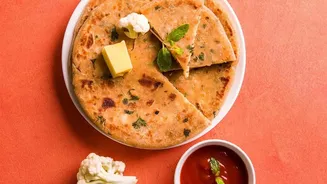


The humble paratha is a cornerstone of Indian comfort food. But when you hear 'reshmi', meaning silky, you know you're in for something special. Adding vegetable and paneer elevates it further, turning a simple flatbread into a decadent meal.
What Makes a Paratha ‘Reshmi’?
The secret
to a 'reshmi' or silky paratha lies in the dough. While a standard paratha dough is simple, a reshmi paratha dough often incorporates ingredients that tenderise it, creating a melt-in-your-mouth texture. Many recipes achieve this by adding milk, yoghurt, or even a small amount of boiled and mashed potato directly into the flour mix. These additions, along with a thorough kneading for at least 10-15 minutes and a crucial resting period of 30 minutes or more, help develop the gluten just enough to make the dough pliable and elastic. This results in a paratha that is not just soft but has a distinct, luxurious silkiness that sets it apart from its crispier cousins. Using lukewarm water and a touch of ghee or oil during kneading also contributes significantly to this coveted texture.
The Art of the Paneer Filling
Paneer is the star that brings protein and a creamy richness to the paratha. However, it can also be the source of common problems, like a soggy filling that tears the dough. The first 'fact' is to manage moisture. Always use fresh, firm paneer and grate it rather than crumbling it for a more uniform texture. If the paneer seems too moist, gently squeeze out the excess water. Some cooks even lightly sauté the crumbled paneer with spices for a few minutes to dry it out completely before letting it cool. It is crucial that the filling is at room temperature before you stuff the dough; a hot or even warm filling will cause the paratha to burst at the seams during rolling. Seasoning is also key. Simple spices like cumin powder, amchur (dry mango powder) for tang, and a bit of garam masala complement the mildness of the paneer perfectly.
Choosing the Right Vegetable Companions
Pairing vegetables with paneer requires a strategic approach, again focused on moisture control. The best vegetables are those with lower water content. Finely grated carrots, finely chopped capsicum, and cabbage are excellent choices. Vegetables with high water content, like onions or leafy greens, must be pre-treated. A common technique is to chop them, sprinkle them with salt, and let them sit for 10-15 minutes to draw out the excess liquid, which is then squeezed out. Alternatively, you can sauté the chopped vegetables until they are dry before mixing them with the paneer. This extra step is not just about preventing the paratha from tearing; it also concentrates the flavour of the vegetables, making the filling more robust and delicious. Ensure all vegetables are chopped or grated very finely to prevent sharp edges from piercing the delicate dough.
Technique for a Tear-Free Paratha
Once you have a silky dough and a perfectly dry filling, the final hurdle is assembly and cooking. The rule of thumb is to use a generous ball of dough for a moderate amount of filling; do not overstuff. After placing the filling in the centre of a small, rolled-out disc, bring the edges together and pinch them tightly to seal. It's a good idea to pinch off the small knot of excess dough at the top to avoid a thick, doughy centre. Allow the stuffed dough balls to rest for another 10 minutes before rolling. This lets the dough relax, making it more flexible and less prone to tearing. When rolling, use a light hand and start from the centre, gently working your way outwards. Cook the paratha on a medium-hot tawa. Cooking on too high a heat will burn the outside before the inside cooks, while a tawa that is not hot enough can make the paratha tough.