






From $600 Billion to $750 Billion
According to recent reports, OpenAI has significantly increased its budget for computing power, raising its projected spending to approximately $750 billion by 2030. This marks a 25% jump from the $600 billion figure that was outlined earlier this year.
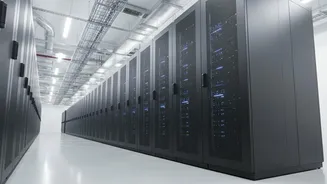
This massive budget is not for a single project but represents a web of commitments to secure the vast computational resources needed to train and operate next-generation AI models. The spending is spread across deals with major cloud providers like Microsoft, Oracle, and Amazon Web Services (AWS), as well as investments in its own custom data centers. The escalating cost underscores a fundamental reality in the AI industry: progress is now inextricably linked to immense capital expenditure on physical infrastructure.
The Dawn of AI Superfactories
At the heart of this spending spree are plans for massive data centers, sometimes referred to as 'AI superfactories'. An early, high-profile concept was a joint project with Microsoft codenamed 'Stargate,' with an estimated price tag of around $100 billion. While the specifics of Stargate have evolved, with some reports noting a pivot to a broader $500 billion initiative with partners like SoftBank and Oracle, the core idea remains the same: build infrastructure on an unprecedented scale. More recently, OpenAI announced 'Project Camellia,' a $20 billion data center campus it will design and lead in Georgia. This facility alone is expected to span 1,400 acres and require at least 3.2 gigawatts of power, roughly a third of a new capacity buildout planned by the local utility. This move from renting capacity to building its own infrastructure marks a significant strategic shift for the company.
Why So Expensive? It's More Than Chips
The nine- and twelve-figure sums are not just for buying advanced processor chips from companies like Nvidia and AMD. While securing millions of GPUs is a primary driver of cost, the budget also covers the enormous expense of building and powering the facilities to house them. A project on the scale of Stargate or Camellia requires vast tracts of land, complex cooling systems, and, most critically, massive amounts of electricity. The power demands are so great—measured in gigawatts, enough to power small cities—that they necessitate new energy generation infrastructure, potentially from sources like natural gas or even nuclear power. These costs, combined with the global competition for the same limited supply of specialized hardware and expertise, are what inflate the bill into the hundreds of billions.
The High-Stakes Bet on AGI
This level of investment is not merely to create a slightly better chatbot. It is a monumental wager on the future of artificial intelligence itself, specifically the pursuit of Artificial General Intelligence (AGI)—AI that can perform a wide range of intellectual tasks at or above human level. OpenAI's leadership, particularly CEO Sam Altman, has framed computing power, or 'compute,' as the currency of the future. From this perspective, spending hundreds of billions of dollars to secure an unparalleled advantage in compute is a necessary step to building the world's most advanced AI systems. However, it is a high-risk strategy. Reports indicate that OpenAI's own CFO, Sarah Friar, has raised concerns about whether the company's revenue growth can keep pace with its contractual spending commitments, which are rising even faster.
An Arms Race Reshaping the Industry
OpenAI's massive spending sets a daunting precedent for the rest of the tech world. It transforms the AI race into a battle of industrial capacity, where only a handful of players with access to immense capital can compete at the highest level. This dynamic benefits the companies that supply the essential components: chipmakers, data center operators, and utility providers. For competitors like Google, Anthropic, and Meta, it raises the bar for investment and forces them to re-evaluate their own infrastructure strategies. The sheer scale of OpenAI's financial commitments, backed by partners like Microsoft, may cement a market structure dominated by a few well-funded giants, making it increasingly difficult for smaller players or open-source alternatives to keep up.