




The Science of Fading Colour
The primary culprit behind green chutney losing its colour is oxidation. When the fresh herbs, typically coriander and mint, are chopped and exposed to air, the enzymes within them react with oxygen. This process, similar to how an apple turns brown after
being cut, degrades the chlorophyll that gives the leaves their green hue. The heat generated by the blender's blades can accelerate this process significantly. Over-blending is a common mistake that not only introduces more heat but can also make the chutney bitter, especially if you're using a lot of mint leaves. The goal, therefore, is to minimize both air exposure and heat.
Why a Glass Jar Is Your Best Friend
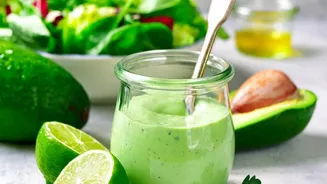
This brings us to the core tip: using a glass container for blending. Unlike the often-opaque plastic jars that come with many mixer-grinders, a transparent glass jar allows you to see exactly what’s happening inside. You can monitor the texture and, crucially, the colour in real-time. This visual feedback helps you stop blending the moment the chutney reaches a smooth consistency, preventing the over-processing that generates excess heat and darkens the herbs. While the material itself doesn’t stop oxidation, the ability to visually gauge the process gives you precise control, which is often the difference between a bright green and a murky brown chutney. When storing the finished product, an airtight glass jar is also recommended over metal containers, which can sometimes react with acidic ingredients like lemon juice.
Keep It Cool for Vibrant Results
Beyond the container, temperature is the most critical factor to control. A genius trick used by many chefs and home cooks is to add a few ice cubes or use ice-cold water when blending. This tactic serves two purposes. First, it keeps the overall temperature of the ingredients low, counteracting the heat from the friction of the blades. This dramatically slows down the oxidation process. Second, it helps achieve a smooth consistency without having to add too much room-temperature water, which can dilute the flavour. Blending in short bursts rather than continuously also helps to keep heat generation in check.
The Supporting Cast of Ingredients
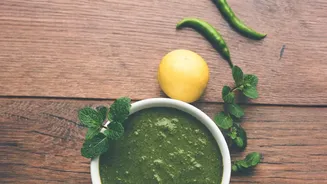
The ingredients you add play a huge role in preserving that coveted green shade. Acidity is a powerful ally. A generous squeeze of lemon or lime juice not only adds a tangy brightness to the flavour but also helps to slow down the browning process. Some recipes also suggest adding a pinch of sugar, which can help maintain the colour. To enhance thickness and colour stability, ingredients like roasted peanuts, a little yogurt, or even a few spinach leaves can be incorporated. Always start with the freshest possible herbs; bright green, perky coriander and mint will yield a much better result than wilted leaves.
Smart Storage for Lasting Freshness
Once you’ve made your perfect green chutney, proper storage is key to making it last. Store it in an airtight container in the refrigerator immediately to slow down oxidation. For the best results, press a piece of cling film directly onto the surface of the chutney before sealing the lid; this minimizes contact with air. While it should stay fresh for several days, the colour will inevitably darken over time. For longer-term storage, freezing is an excellent option. Pour the chutney into an ice cube tray, and once frozen, transfer the cubes to a freezer-safe bag. This allows you to thaw small, convenient portions as needed, preserving both the colour and fresh flavour for weeks.